
Jani Sales is setting up a 28,000 TPA virgin tissue paper machine at Sarigam, Gujarat, primarily catering to the HoReCa sector and the broader supply chain, which is expected to be operational by 2026. In an exclusive interaction with Paper Mart, Directors Abizer Jani and Abilfazal Jani shared that the company aims to strengthen its presence in both tissue and specialty paper segments, creating new opportunities in the paper industry.
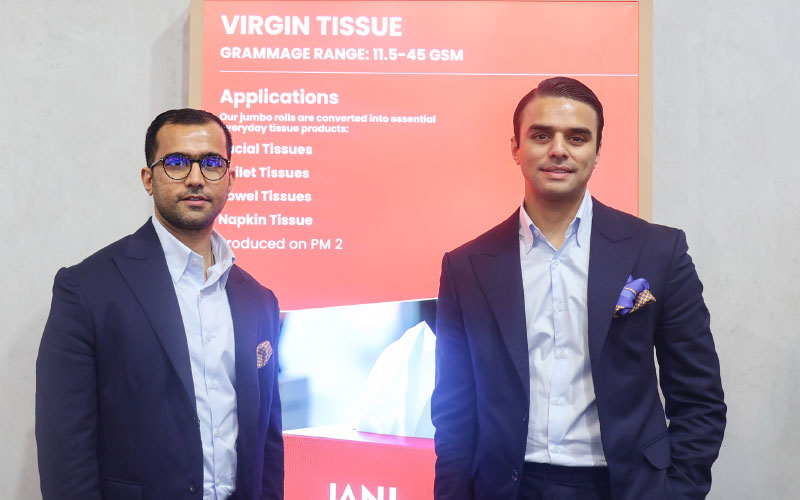
Paper Mart: Please tell us about your participation here at Paperex?
Abizer Jani: Paperex has always been an excellent platform to participate in as it is a large-scale event held every two years, bringing together significant and knowledgeable industry professionals. The exhibition showcases new technologies, machinery, products, and emerging manufacturers, consistently providing a valuable experience. We always look forward to participating in Paperex. It remains an important platform for networking and socializing.
PM: The company plans to install a new virgin tissue line in 2026. Can you tell us about its location, manufacturing capacity, and which market segments and geographies (domestic or international) this new line will serve?
Abilfazal Jani: Jani is setting up another virgin tissue paper machine at Sarigam, Vapi, with a capacity of 80 tonnes per day, which translates to approximately 28,000 tonnes annually. This new machine is intended to serve virgin tissue customers in both the Indian and export markets, with an expected 50:50 distribution between the two. It will primarily cater to the HoReCa segment and the broader supply chain.

Watch: Top Paper Companies 2023
PM: How do you see the growing hygiene and sanitation trend in India?
Abizer Jani: There has been a significant rise in awareness around hygiene and sanitation in India, especially after COVID-19. Before the pandemic, many people were not very comfortable using tissues. However, post-COVID, consumers have become more safety-conscious and health-aware, leading to greater use of single-use facial tissues, kitchen towels, and pocket tissues instead of handkerchiefs. This shift in behavior reflects a broader understanding of hygiene practices and the risks of bacteria and virus transmission when reusable napkins or cloths are used, particularly in clinical settings. This change in daily habits—especially after COVID-19—has led to consistent growth in tissue paper consumption across households, workplaces, and healthcare environments, thereby driving steady demand for the tissue paper segment.
PM: How do you see the market demands for speciality papers, especially in the packaging segment? What makes you stand apart from your competitors?
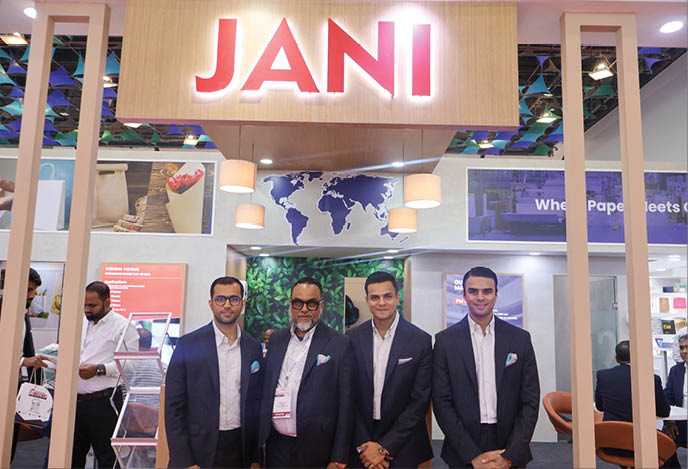
Abilfazal Jani: The demand for specialty papers is growing. With the rise of delivery companies and e-commerce businesses, consumption has increased, adding more value to our operations. We also appreciate the government’s ban on single-use plastic products, which has further encouraged the use of our paper-based solutions. As a result, we are seeing strong and sustained demand.
At the same time, we recognize that increasing competition presents certain challenges. Our focus remains on maintaining high quality, and consistency. This commitment continues to provide us with a competitive edge and added value in the market.
PM: What are the current challenges in the paper industry with regards to raw material import and price surge? How do you plan to overcome it?
Abilfazal Jani: Raw material procurement has always been a challenge for the Indian market. India is a net importer of waste paper, as the domestic collection does not fully meet industry standards. While prices surged over the past few years, the market is now gradually stabilizing.
India has become one of the largest importers of raw material. Raw material pricing remains volatile and is influenced by several factors, including higher self-consumption in export countries like the United States and Europe, as well as competition from markets such as Indonesia and Vietnam. Given this situation, India continues to buy consistently. I would advise mills to follow a regular procurement cycle rather than waiting for the lowest possible price, as it is better to plan inventory strategically than to delay purchases in anticipation of bottom-market pricing.
Also Read: Crown Paper Mill on Global Tissue Trends, Premiumisation and Growth Markets
PM: How do you foresee the future of the paper industry? What are your future plans in the next 5-10 years?
Abizer Jani: The paper industry continues to grow, although there have been periods of fluctuation in demand. Overall, the growth trend remains positive, and we see many promising opportunities ahead. At the moment, our focus is on the recently announced PM3, which will strengthen our position in the tissue paper segment. That remains our immediate priority, and any further expansion plans will be considered after this project is fully underway.
The paper industry continues to grow, although there have been periods of fluctuation in demand. Overall, the growth trend remains positive, and we see many promising opportunities ahead.