
Chandpur Paper has steadily evolved from a small-scale producer into a specialty-focused paper manufacturer catering to high-performance packaging and industrial applications. In an exclusive interview with Paper Mart, Mr. Amit Mittal, Founder & MD, Chandpur Paper, outlines the company’s growth journey, highlighting capacity expansion, advanced machine configurations, and a shift toward value-added grades such as MG poster and chromo C1S. He also discusses customer-led innovation, technology investments, quality systems, and Chandpur Paper’s strong emphasis on sustainability, efficiency, and customised paper solutions for evolving packaging needs.
Paper Mart: Could you outline Chandpur Paper’s current annual production capacity, machine configuration, and the key grades you manufacture, such as MG poster paper and chromo C1S?
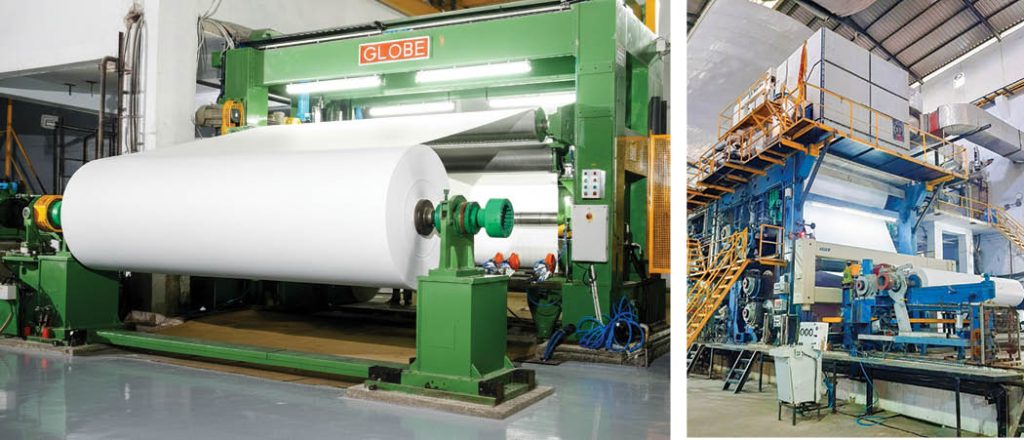
Amit Mittal: Chandpur Paper currently operates with an annual production capacity of approximately 40,000 metric tonnes. The facility is equipped with two paper machines supported by three offline coating stations, allowing flexibility across base paper and coated grades.
Our core product portfolio includes MG poster paper and chromo paper (C1S), which cater to a wide range of packaging, labelling, and industrial applications.

Watch: Top Paper Companies 2023
PM: How has your production capacity evolved since inception, and what strategic, market, or customer-led factors are driving your recent expansions? Are there any demand or application trends you are closely tracking?
AM: Since inception, Chandpur Paper has undergone a significant transformation in both scale and product complexity. We began operations with a monthly capacity of around 600 MT, focused on lower-value paper grades. Today, our manufacturing capacity exceeds 3,000 MT per month, with a clear emphasis on high-value, specialised paper products.
This evolution has been driven by a combination of customer-led demand for higher performance substrates, strategic investments in advanced manufacturing infrastructure, and continuous technology upgrades in collaboration with internationally reputed technology partners. We closely track application trends in flexible packaging, barrier coatings, and specialty wrapping solutions.
Key upgrades include a DCS controlled Voith Fiberline, Toscotec Yankee Cylinders, and a double-dilution headbox with automatic CD-profile control by ST Macchine.
PM: Which end-use industries and applications form your core customer base today, and how is the mix between packaging, labelling, and specialty applications evolving?
AM: Our core customer base spans flexible packaging and industrial coating applications, including soap wrapping, barrier-coated papers, food wrapping, and related specialty uses.
As packaging requirements continue to evolve, we actively work with customers to develop customised paper solutions aligned with changing functional, regulatory, and performance expectations. The application mix is gradually shifting toward higher-performance and specialty grades, reflecting broader industry trends.
PM: What quality certifications, testing protocols, and process controls are in place to ensure consistency, traceability, and compliance with customer and regulatory requirements?
AM: We are ISO 9001 certified, reflecting our commitment to robust quality management systems. In addition, we operate in-house quality testing laboratories supported by a central control centre that continuously monitors key process parameters. This integrated setup ensures process stability, consistent product quality, full traceability, and compliance with both customer specifications and regulatory requirements.
PM: How do you manage raw material sourcing, including fiber selection and supplier partnerships, and what role does recycled content play in balancing quality, sustainability, and cost efficiency?
AM: We source high-quality fiber from reputed domestic and international suppliers, with a strong focus on consistency and reliability. Advanced fiber preparation technologies and controlled processing allow us to ensure careful treatment of fiber to maintain its strength characteristics, enabling performance levels comparable to virgin-fiber grades.
Recycled fiber plays a strategic role in balancing quality, sustainability, and cost efficiency, without compromising on end-use performance.

Our core customer base spans flexible packaging and industrial coating applications, including soap wrapping, barrier-coated papers, food wrapping, and related specialty uses.
PM: Can you share insights into recent technology upgrades, automation initiatives, or equipment enhancements that have improved productivity, energy efficiency, or product performance?
AM: Chandpur Paper has made continuous investments in modern manufacturing technologies to enhance productivity, energy efficiency, and quality consistency. Key upgrades include a DCS controlled Voith Fiberline, Toscotec Yankee Cylinders, and a double-dilution headbox with automatic CD-profile control by ST Macchine.
In addition, several core processes have been upgraded with automatic control systems, enabling better efficiency and quality consistency.
Also Read: APP Strengthens Its Value-added Portfolio with Investments in Coating Plant and New Paper Machine
PM: As sustainability becomes central to packaging decisions, how is Chandpur Paper innovating in materials, processes, or product design to meet evolving environmental regulations and customer expectations?
AM: Sustainability is an integral part of Chandpur Paper’s manufacturing philosophy. We focus on responsible fiber sourcing, efficient resource utilisation, and process optimisation to reduce environmental impact. Continuous improvements in energy efficiency, water management, and waste reduction are supported by modern automation and process controls.
Our product development approach increasingly prioritises functional papers that support recyclable and sustainable packaging formats, helping customers meet evolving regulatory and environmental expectations.
We began operations with a monthly capacity of around 600 MT, focused on lower-value paper grades. Today, our manufacturing capacity exceeds 3,000 MT per month, with a clear emphasis on high-value, specialised paper products.