
Fibertec CEO Mr. JP Narain has entered a new phase in his professional journey, making a strategic transition from project consultancy to core manufacturing. As part of a carefully structured growth plan, he has taken over the 100 TPD Sambhu Board mill in Punjab through a newly incorporated entity, Bioprima Pvt. Ltd., and is currently leading a comprehensive operational overhaul ahead of its restart. The revived plant will initially focus on high-GSM kraft paper catering to industrial and packaging applications, while embedding strong green manufacturing practices such as recycled fiber utilization, zero liquid discharge (ZLD), and a significant shift toward renewable energy. In an exclusive interaction with Paper Mart, Mr. JP Narain, CEO, Fibertec, shares insights into the acquisition, sustainability roadmap, operational strategy, and his perspective on the evolving paper market.
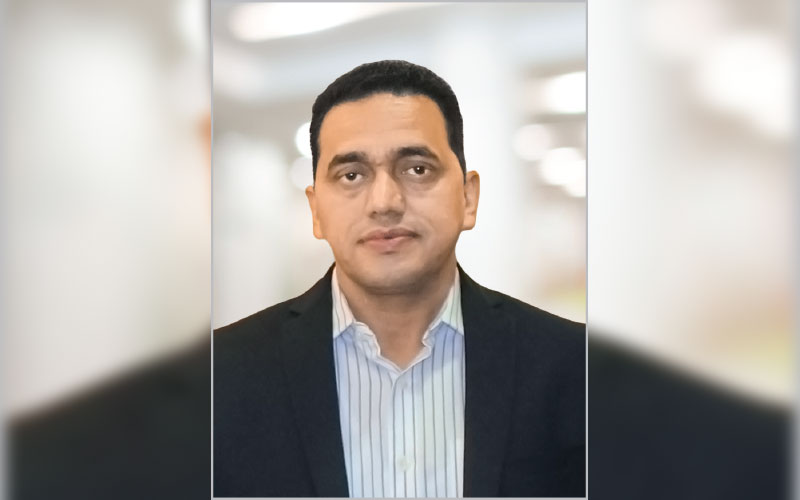
Paper Mart: Please tell us about your new venture—how it was conceptualized, how it evolved, and where it stands today?
JP Narain: This venture is part of a well-thought-out transition plan. While it may appear new, the journey has been gradual. After my tenure at Century, I began with pulp trading and later moved into project and business transformation advisory—work that I continue to undertake. However, advisory assignments are cyclical by nature. I had always intended to move into manufacturing when the right opportunity emerged.
Approximately six months ago, that opportunity materialized. We identified and acquired the asset formerly known as Sambhu Board, a 100 TPD mill. After detailed negotiations, we structured the acquisition by forming a new company—Bioprima Pvt. Ltd.—which acquired all assets of the earlier entity. We retained 52% equity, while the former promoter holds 48% in the new company. Importantly, all legacy liabilities were cleared, enabling us to take over operations with a clean balance sheet.
Currently, we are undertaking a comprehensive overhaul of the plant and expect to commence production around mid-May 2026.

Watch: Top Paper Companies 2023
PM: Could you elaborate on the asset—land, machinery, and infrastructure?
JPN: The asset has strong fundamentals. The main paper machine is in reasonably good condition. However, critical areas such as the boiler, effluent treatment plant (ETP), and pulping section require complete modernization.
We are installing a new boiler and leveraging the Punjab Government’s Prali Boiler Scheme, which promotes the use of agricultural residue as fuel. Simultaneously, we are upgrading wastewater treatment and water management systems to enhance sustainability and compliance.
Energy efficiency is a core focus. While certain components will be newly installed, others are being refurbished for optimal performance. The shed and structural infrastructure are sound, requiring only minor upgrades.
PM: You have consistently emphasized green manufacturing. What initiatives are planned in this direction?
JPN: Sustainability is foundational to our operations. We are already operating on recycled fiber, and this will remain central to our model.
On the energy front, we are working toward replacing nearly 60% of fossil or thermal energy with renewable sources, including a planned solar installation. This is our first major sustainability initiative.
Secondly, we are designing the plant to operate on a zero liquid discharge (ZLD) framework. We are also evaluating fiber reconfiguration strategies to enhance product strength and performance, though this remains under consideration.
All liabilities of the old company were cleared, and we took over operations with a clean balance sheet. Production is expected to commence by mid-May 2026.
PM: What products will you focus on, and which markets are you targeting initially?
JPN: Our initial product portfolio will comprise high-GSM kraft paper ranging from 200 GSM to 450 GSM. We also plan to manufacture high-BF kraft paper in the 35–50 BF range.
The primary focus will be on industrial customers and packaging applications, including segments where paper can effectively substitute alternative materials. The strategy is to position ourselves in value-added industrial applications rather than pure commodity markets.
PM: What is your long-term vision for this venture?
JPN: At present, this is a relatively small operation, but the facility has expansion potential. Over time, we intend to move toward specialty-grade products. This could involve enhancing strength parameters, modifying fiber configurations, or re-engineering product characteristics to shift from basic commodity grades to specialty offerings. While this roadmap is still under evaluation, the long-term objective is clear—value creation through differentiation.
We are planning to manufacture high-GSM kraft paper ranging from 200 GSM to 450 GSM, along with high-BF grades from 35 to 50 BF.
PM: You are known for driving operational efficiencies. What will be your focus areas here?
JPN: From day one, the plant will operate on a lean manufacturing philosophy. Automation will be integrated wherever feasible, with optimized manpower deployment.
Energy and water efficiency are non-negotiable priorities. We are implementing highly efficient, largely automated systems to ensure the lowest possible cost of conversion while maintaining best-in-class quality standards. Operational discipline, technological integration, and cost competitiveness will define our manufacturing model.
PM: How do you assess the current industry scenario and the outlook ahead?
JPN: The global paper industry is operating in a highly competitive and structurally evolving environment. Comparing current conditions with previous peak cycles can be misleading. In my view, what we are witnessing today is the “new normal,” influenced significantly by geopolitical shifts.
Localized production strategies across nations and China’s excess capacity have altered global trade flows. Chinese overproduction and lower domestic consumption have resulted in aggressive exports, affecting markets previously served by Indian manufacturers. Exports that once stood at 5–6 million tonnes have declined substantially.
This oversupply exerts downward pressure on pricing and compresses margins across the supply chain. Until geopolitical uncertainties ease—which remains unpredictable—the market is unlikely to witness a sharp rebound. The path forward lies in efficiency, cost leadership, and quality excellence.
Also Read: India’s Containerboard Transition: From Commodity Corrugation to Engineered Substrate
PM: Any final message for the industry?
JPN: This venture marks a transition phase in my journey and, at present, is modest in scale relative to the broader industry. However, it is strategically aligned with a larger vision. I intend to pursue bigger and more impactful initiatives in the future. When the time comes, the market will see that evolution clearly. My focus remains on building something stronger, more efficient, and future-ready.

Lean manufacturing, high automation, energy efficiency, and water optimization will be embedded from day one—without compromise.