
Ballarpur Industries (BILT) has transitioned from a legal-and-creditor phase to an operating-and-execution phase. In an exclusive interaction with Paper Mart, Mr. Hardik Patel, Managing Director, Finquest Group, says Yamunanagar is central to BILT’s turnaround, with emphasis on predictable operations, consistent delivery, and restoring market confidence. He adds that for Finquest, BILT is a marquee investment, a legacy brand with deep history and significant potential, showcasing that established industrial institutions can be rebuilt with the right intent and execution.
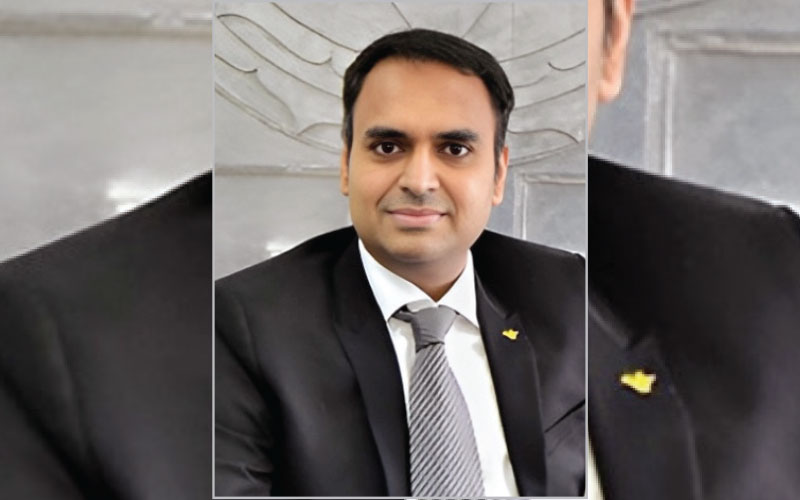
Paper Mart: From IBC filing to reopening in Yamunanagar, how would you summarise the mill’s transition in one narrative, and what does it signify for the company today?
Hardik Patel: In simple terms, we have transitioned from a legal-and-creditor phase to an operating-and-execution phase. The IBC process is demanding. It is not merely about resolving claims; it resets the organisation entirely.
For BILT, the real challenge was not only navigating courts and creditors, but restarting operations in a manner that restored confidence across stakeholders. Yamunanagar may not be the largest mill by capacity, but it has always been recognised for quality. It was the birthplace of premium grades such as executive bonds, and that legacy reflects what the mill can deliver when run with discipline. The reopening therefore marks a clear shift: ‘BILT is no longer a legacy name – it is an active, operating manufacturer once again.’

Watch: Top Paper Companies 2023
PM: With Yamunanagar now operational, how do you define BILT’s current business priorities: stability, selective growth, or scale? Please explain.
HP: Stability comes first, followed by selective growth. In any turnaround, the temptation is to pursue scale quickly. However, without a stable base, consistent output, disciplined quality, reliable supply, and tight working capital, scale can undermine progress rather than strengthen it.
Our current focus is straightforward: ‘operate predictably, deliver consistently, and rebuild market confidence.’ Once that foundation is secure, growth becomes both meaningful and sustainable.
PM: What is the strategic role of the Yamunanagar unit within BILT’s overall production and market positioning over the next two to three years?
HP: Yamunanagar is central to BILT’s turnaround. Over the next two to three years, its role is to serve as the benchmark for consistency and quality. While it may not be a capacity leader, its historic strength has been premium-grade production, and that is what we want the market to experience again. If Yamunanagar performs consistently, the broader turnaround gains credibility. Strategically, it is our anchor for trust, discipline, and long-term rebuilding.
PM: How is Finquest approaching capital deployment at BILT? Are current investments focused more on maximising existing assets or on selective upgrades to strengthen future competitiveness?
HP: Our approach is resolute and disciplined. In the initial phase, the priority is to stabilise operations and maximise performance from existing assets. Capex is being undertaken selectively, not through large, front-loaded expansion.
PM: Every investment is tested against a simple principle. Does it materially improve returns?
HP: If an upgrade enhances reliability, reduces downtime, improves quality, or strengthens energy efficiency, it is justified. We will not invest for scale alone. Capital allocation must strengthen competitiveness while preserving financial control.
The reopening therefore marks a clear shift: BILT is no longer a legacy name – it is an active, operating manufacturer once again.
PM: What internal metrics or milestones will you use to judge whether the turnaround is firmly on track, beyond top line growth?
HP: Topline growth is visible, but it doesn’t indicate if a turnaround is real. A genuine turnaround is reflected in stable, disruption-free operations, repeatable quality that drives customer reorders, disciplined working capital management, strong unit economics and contribution margins, cash generation and liquidity control, and structural cost improvements, particularly in energy, yield, and wastage. When a business becomes predictable and controllable, the turnaround is real. That is the phase we are focused on achieving.
PM:How do you see BILT aligning itself with emerging industry imperatives such as sustainability, fiber security, energy efficiency, and regulatory compliance?
HP: Sustainability, fiber security, energy efficiency, compliance-these are no longer optional considerations; they are fundamental to long-term competitiveness. Our approach is practical: fiber discipline, efficiency, and compliance are embedded into operational decision-making rather than treated as separate initiatives.
Even at Yamunanagar, a mill with a deep legacy, we are applying a modern operating lens: improving efficiency, compliance, and responsibility while preserving its core strength in quality.
PM: In a market that is becoming increasingly competitive and cost-sensitive, what will differentiate BILT from other domestic paper producers in the next phase?
HP: In the next phase, reliability will be as important as price. Customers value consistency, stable quality, dependable supply, and a partner they can plan around.
BILT’s differentiation will be driven by: quality-led positioning rooted in Yamunanagar’s heritage, operational discipline and predictability, targeted upgrades that strengthen performance, and a long-term perspective rather than short-term volume chasing. We are not focused on being the least priced supplier, we are focused on being reliable and respected.
Also Read: KRecycling Expands Into Thermal and Coated Paper
PM: In five years, what should the industry associate with the name ‘Ballarpur Industries’ once again?
HP: Five years from now, BILT should stand for credibility, quality, and professional execution. Not just nostalgia and legacy, but the industry should simply say: “BILT is back, and it is run with discipline.” A brand associated with strong manufacturing culture, sound governance, and products the market trusts.
PM: Finally, what does the revival of BILT mean for Finquest as a group, financially and philosophically?
HP: For Finquest, BILT is a marquee investment. It is a brand with deep history and significant potential. Financially, value creation is important, but not through short-term extraction. Our objective is to build value steadily through disciplined operations. Philosophically, the revival carries equal weight. Restarting a mill with nearly a century of history requires patience, responsibility, and long-term commitment.
For us, BILT’s revival is not only about returns, it is about demonstrating that legacy industrial institutions can be rebuilt properly, with intent and execution.

Yamunanagar may not be the largest mill by capacity, but it has always been recognised for quality. It was the birthplace of premium grades such as executive bonds, and that legacy reflects what the mill can deliver when run with discipline.