
India’s containerboard sector is being reshaped as fibre volatility tightens margins and import competition limits pricing flexibility. Lightweighting expectations are raising the bar on performance. Paper Mart presents a focused examination of this structural shift.

India’s containerboard, commonly known as “kraft paper,” segment has been traditionally viewed through a narrow lens: fragmented supply and intense price competition. It has also been characterised by volume-led expansion. These characterisations still capture part of the reality. However, what converters require and how customers evaluate performance are beginning to change the way mills compete.
Kraft as Engineered Substrate
The most visible indicator of this change is the way performance is now measured. Corrugators are increasingly evaluating substrate quality through Short-span Compression Test (SCT), Edge Crush Test (ECT), Ring Crush Test (RCT), moisture profile uniformity and runnability on high-speed lines, rather than relying predominantly on Burst Factor (BF). As Mihir Shah, Director, Aryan Paper Mills, observes, “We are witnessing a clear shift from the end-user perspective, where performance evaluation is moving away from traditional BF toward parameters such as Short-span Compression Test (SCT) and Edge Crush Test (ECT).”
Moreover, this change is closely linked to investment in modern corrugation plants. As machine speeds increase and handling becomes more automated, even small variations in the sheet become less acceptable. In such an environment, inconsistent formation or uneven moisture profiles directly affect conversion efficiency and box performance. Substrate reliability under operational stress becomes as important as nominal strength values.
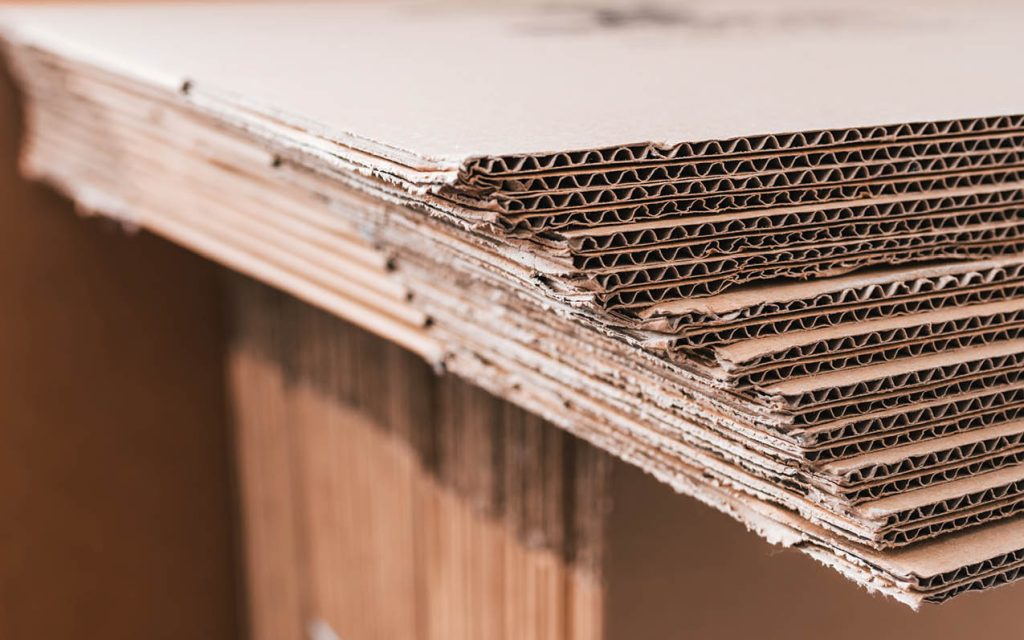
This shift in performance expectations also makes it important to clarify the terminology used in the segment. Kraft is a pulping process that produces strong fibres through chemical treatment. Containerboard is the functional category derived from either virgin or recycled fibre and includes kraftliner, testliner and fluting medium. Kraftliner typically serves as the outer facing layer of corrugated board, contributing to stacking strength and compression resistance. Testliner, usually made from recycled fibre, provides cost-effective facing solutions for lighter applications, while fluting medium forms the corrugated core that distributes load. The performance of a corrugated box depends not only on fibre strength but also on sheet formation and moisture balance. Compatibility with machine speeds is also essential.
Lightweighting has intensified this technical orientation. Customers increasingly seek lower GSM grades without compromising compression performance. Achieving that balance requires improved fibre blending, refining precision and tighter process control. Apollo Papers notes rising expectations for uniform strength, precise GSM and dimensional stability in e-commerce and FMCG packaging applications. Aryan emphasises reel build-up consistency and moisture uniformity for high-speed corrugation lines.
Taken together, the shift in performance metrics, the rise of lightweighting and the modernisation of conversion infrastructure indicate that kraft-based containerboard is being evaluated less as bulk paper supply and more as an engineered substrate within an integrated packaging system. The competitive variable is no longer grammage alone, but consistency under increasingly demanding operational conditions.
It is important to note that much of what is commercially referred to in India as “kraft paper” consists of recycled-fibre linerboard and fluting medium used in corrugation, rather than exclusively virgin kraftliner produced through chemical sulphate pulping. In functional terms, these grades fall under containerboard, even if trade terminology suggests otherwise. Accordingly, unless stated otherwise, “kraft” in this story refers to containerboard used in corrugated packaging, encompassing both linerboard and fluting medium.

Watch: Top Paper Companies 2023
The Drivers Behind Kraft Growth
While performance expectations at the substrate level are becoming more demanding, demand for kraft packaging, or containerboard, continues to expand across multiple segments of the economy. This growth reflects evolving consumption patterns and distribution systems.
India’s kraft paper market (roughly 11 million tonnes in 2024) is projected to grow at ~7.2% annually to exceed 21 million tonnes by 2033, underpinned by rising demand for recyclable and durable packaging across retail, logistics and industrial applications.
E-commerce remains one of the most significant demand drivers. Online retail depends on transit-ready corrugated packaging capable of withstanding extended logistics chains and variable handling conditions. The corrugated boxes segment itself is forecast to reach USD 18–23 billion by the mid-2030s as e-commerce and FMCG continue to drive parcel and protective packaging volumes. “E-commerce has emerged as the single biggest growth driver for kraft paper demand in recent years,” says Madhukar Mishra, Managing Director, Star Paper Mills. The expansion of direct-to-consumer delivery models has increased the volume of secondary and tertiary packaging required for safe product movement.
FMCG and organised retail continue to reinforce this trend. Dinesh Haripara, MD, Apollo Papers, notes that packaging has emerged as the fastest-growing segment within the paper industry, supported by expanding consumption across FMCG, food & beverage and pharmaceutical sectors. As product portfolios diversify and distribution networks widen, corrugated packaging requirements expand correspondingly.
Food processing and agricultural logistics represent an additional growth vector. The movement toward organised supply chains for fresh produce requires boxes that balance strength, ventilation and cost efficiency. Mihir Shah, Director, Aryan Paper Mills, anticipates sustained demand growth in this area, stating, “We foresee a significant demand upswing in fresh produce boxes, which will be an important growth segment in the coming years.” This reflects broader changes in farm-to-market integration and export-oriented packaging standards.
Industrial and automobile sectors also contribute to corrugated demand. Deept Agarwal, Director, Paswara Papers links growth momentum to Make in India initiatives and expansion across FMCG, automobile and food processing sectors. As domestic manufacturing scales, protective packaging requirements increase in parallel.
Beyond sectoral demand, regulatory and consumer shifts are influencing material preference. Efforts to reduce single-use plastics and the implementation of extended producer responsibility (EPR) frameworks have strengthened the position of paper-based packaging. Corrugated formats are increasingly seen as compatible with circular economy objectives, supporting their wider adoption across retail and distribution.
Demand expansion, therefore, is multi-sectoral and infrastructure-linked. Kraft-based containerboard now supports a logistics-intensive economy where packaging functions not merely as protection but as a structural component of distribution systems. However, expanding demand operates within economic constraints. Growth does not eliminate volatility in fibre sourcing, energy cost or pricing discipline. It instead raises the stakes for operational efficiency and competitive differentiation.
India’s kraft and containerboard landscape includes large integrated producers such as ITC Paperboards, JK Paper, West Coast Paper Mills, TNPL and Century Pulp & Paper, which influence scale economics and national pricing benchmarks. Recycled-fibre leaders like Emami Paper and N R Agarwal, alongside mid-sized players such as Star, Paswara, Apollo, Aryan, and Bhola Ram shape regional supply dynamics and grade evolution.

Structural Pressures Reshaping the Kraft Segment
Despite steady demand expansion, the Indian kraft segment operates under layered constraints that complicate margin stability and long-term planning.
The first and most visible stress is pricing pressure. While tonnage demand remains healthy, pricing power is constrained. Global uncertainty, along with tariff changes and uneven policy implementation, has affected packaging grades across segments. Naynesh Pasari, CEO, Shree Krishna Paper Mills, articulates the prevailing sentiment candidly: “Today, the paper mills are in a survival mode, hence reduction of cost is the focus area where major investments are going on.” This statement reflects not pessimism but realism. Volume growth does not automatically shield mills from input inflation or import competition.
Imports from ASEAN and China exert persistent discipline on domestic pricing. Apollo Paper acknowledges the competitive influence of lower-cost imports. Dinesh Haripara observes, “Cheaper imports, particularly from ASEAN and China, exert pricing pressure and reduce flexibility to fully pass on cost increases to the market.” Pricing, therefore, becomes a negotiation between cost structure and competitive elasticity rather than a function of demand alone.
Beneath pricing volatility lies the deeper issue of fibre insecurity. India remains structurally fibre-deficient. Domestic recovery rates for wastepaper remain below optimal levels, and supply chain inefficiencies affect collection quality. Consequently, the industry depends significantly on imported recovered fibre and, in some cases, virgin pulp.
The diversity of fibre models across mills reflects the absence of a structurally secure domestic fibre base. Even mills operating on virgin pulp remain exposed to wood cost cycles and plantation economics. This model reduces dependence on global wastepaper markets but introduces exposure to wood economics and plantation management cycles.
Aryan Paper Mills has established partnerships with major US wastepaper balers and benefits from proximity to ports, enhancing logistical flexibility. Paswara prioritises high-quality DSOCC imports from the United States, phasing out mixed waste streams to maintain consistent strength characteristics. Yet currency risk remains embedded in this model. As Deept Agarwal, Director, Paswara Papers Limited, notes, “While the global price of DSOCC remains relatively stable between USD 160–200, the primary risk is INR devaluation, which inflates our landing costs”.
Inventory buffers and supplier diversification reduce short-term volatility but do not eliminate exposure. Apollo balances domestic recovered fibre with strategic imports of wastepaper and virgin pulp. Across all models, however, fibre is continuously managed rather than structurally secured. Volatility is reduced, not eliminated.
For many mid-sized recycled-fibre mills, currency volatility remains a direct operating risk. As Harsh Goyanka, Managing Director, Bhola Ram Group, notes, “Dollar fluctuation is one of the biggest challenges, as we import a significant quantity of waste paper and pulp. Any sharp movement in exchange rates immediately impacts our raw material cost.” In a fibre-deficient market, such exposure narrows pricing flexibility and reinforces the need for disciplined procurement and inventory management.
Energy adds another layer of structural vulnerability. Power and fuel constitute a significant portion of finished paper cost. Operating margins are directly affected by fuel and coal costs, with environmental compliance adding further pressure. Mills reliant on thermal energy face both cost unpredictability and regulatory tightening. Shree Krishna Paper Mills points to power and fuel as significant cost pressures, while Aryan Paper Mills notes that wastepaper and energy remain key cost drivers requiring policy support.
Energy volatility directly affects cost per tonne, pricing flexibility and long-term capital planning. Unlike fibre, which may be diversified geographically, energy infrastructure demands capital-intensive transitions.
Taken together, pricing constraints, fibre dependency and energy volatility form the structural stress architecture of the Indian kraft segment. Demand growth exists. But growth operates within a constrained economic envelope.
Strategic Responses and Structural Realignment
Faced with these layered pressures, producers are not responding uniformly. Instead, the industry is stratifying into differentiated strategic models.
Star Paper has consciously positioned itself at the premium end of the kraft spectrum, avoiding participation in lower-end grades. Its strategy emphasises quality differentiation rather than volume-led expansion. As Madhukar Mishra explains, “As India’s economy expands and customer requirements become more sophisticated, Star Paper intends to deepen its focus on premium grades rather than chase volume-led growth”. This approach aims to insulate margins through performance-driven positioning rather than price competition.
Paswara Papers is increasing its emphasis on kraftliner as part of an import substitution strategy. Its current 60:40 kraft-to-kraftliner split is expected to evolve toward liner-led growth over the next five years. “Over the next five years, we anticipate kraftliner taking more dominant shares as we focus on import substitution,” says Deept Agarwal. This strategy seeks to replace imported high-performance liner with domestically engineered alternatives, leveraging both scale and technology.
Aryan Paper Mills represents a technology-intensive model focused on process optimisation. It has invested in critical process upgrades to ensure consistent sheet formation and reliable corrugation performance. “We have installed Kadant stock preparation systems, Valmet headboxes and a Bellmer shoe press,” says Mihir Shah. The objective is not merely to produce paper, but to produce performance-compatible substrate.
Apollo Papers adopts a multi-pronged approach combining automation and digital quality controls, along with fibre optimisation and renewable energy investments. “We have already made a major investment in a solar power plant, expected to be commissioned by April 2026, which will significantly reduce our energy costs and dependence on grid power,” says Dinesh Haripara. Its strategy emphasises enhanced speciality grades and balanced domestic-export positioning. This model seeks resilience through operational efficiency and portfolio differentiation.
Shree Krishna Paper Mills emphasises disciplined cost management while investing selectively in product differentiation such as Packmate, positioned as India’s first chemical-free paper. In a market experiencing oversupply in certain segments, survival requires cost compression and careful capital allocation.
At the technical level, lightweighting has become central to competitive positioning. Customers demand lower GSM grades without sacrificing compression strength. Paswara highlights the aggressive market push toward lightweighting while maintaining performance metrics. Aryan stresses reel build-up and moisture uniformity as critical for high-speed corrugation compatibility. Apollo emphasises dimensional stability and compression resistance.
Lightweighting requires more than grammage reduction. It demands improved fibre blending and tighter refining control. It also requires better sheet formation and more consistent quality assurance. Value creation now shifts from tonnage supply to structural engineering.
Capital allocation patterns also reveal structural adaptation. Apollo’s investment in solar energy, Paswara’s transition toward RDF-based waste-to-energy systems, Star Paper’s exploration of renewable energy and captive cogeneration, and Shree Krishna’s chemical-free production initiative collectively demonstrate that sustainability is embedded in cost strategy. As Dinesh Haripara succinctly states, “Sustainability is no longer a ‘nice-to-have’ — it’s now central to both investment decisions and customer expectations in the Indian paper and packaging industry.”
Globally, producers are expanding their presence in packaging board segments in response to structural demand shifts. As Anil Kumar Sharma, Head Product Research and Development, Asia Pulp & Paper, notes, “We are strengthening our presence across packaging grades, especially into brown paper portfolios in response to the strong growth in packaging boards.” Such expansion reflects the broader momentum behind fibre-based packaging as demand continues to diversify across applications.”
Strategic response, therefore, is not homogenous expansion but differentiated recalibration across fibre, energy, technology and portfolio mix.
Also Read: Chandpur Paper Builds Scale with Specialty Focus and Sustainable Manufacturing
Capability as the Future Differentiator
The coming decade will not be defined by capacity alone, but by overall capability. Mills that can manage fibre risks, improve energy efficiency, maintain process consistency and produce lighter yet reliable grades will be better positioned to compete.
Sunil Shah, Managing Director, Aryan Paper Mills, encapsulates this succinctly: “The key will be mastering lightweighting while maintaining high RCT values and ensuring excellent runnability on modern corrugation lines.” That statement captures the essence of the capability test ahead.
Fibre sourcing will need to become more stable and structured rather than relying on short-term adjustments. Energy systems will also have to shift toward more sustainable and cost-efficient options over time. Consistent quality will depend increasingly on machine capability and better process monitoring. At the same time, mills will need to balance domestic opportunities with a selective presence in export markets.
India’s kraft packaging sector continues to grow, with the nature of competition changing alongside it. Mills are placing greater emphasis on consistent performance rather than volume alone. Fibre sourcing is becoming more disciplined, and energy choices are receiving closer attention. The focus is gradually moving toward reliability, efficiency and long-term competitiveness.
In that sense, kraft in India is no longer simply brown paper feeding corrugation lines. It is evolving into an engineered substrate serving a logistics-intensive, sustainability-conditioned economy. The industry’s future will depend not just on expansion, but on how effectively producers secure fibre, manage energy costs, use technology and maintain cost discipline in their operations.