
Riddhi Siddhi Gluco Biols Limited has made a strategic re-entry into the starch and sweeteners segment by signing an agreement to acquire Cargill India’s corn wet-milling assets in Davangere. In an exclusive interaction with Paper Mart, Mr. Siddharth Chowdhary, Executive Director, Riddhi Siddhi Gluco Biols Ltd (RSGBL), says this acquisition has strengthened the company’s presence in the Indian starch industry, enhancing its ability to serve the paper sector with advanced starch-based solutions.

Paper Mart: Can you tell us about the journey of Riddhi Siddhi Gluco Biols Ltd. (RSGBL), along with the company’s history, evolution, and gradual product portfolio diversification?
Siddharth Chowdhary: Established in 1990, Riddhi Siddhi Gluco Biols Ltd. (RSGBL) was founded to address India’s growing demand for starch and value-added derivatives. The company scaled rapidly into a distinguished agro-based specialty processing enterprise, serving food, pharmaceutical, paper, textile, and industrial sectors. By 2007, the company had emerged as India’s largest starch manufacturer, with a strong global footprint and over 25 percent market share.
Over time, RSGBL has evolved into a diversified enterprise with sustainability being integral to its growth philosophy. The company makes focused investments in renewable energy and other sustainable, value-accretive initiatives that create long-term value for farmers, customers, communities, and shareholders.
RSGBL’s journey has been defined by innovation, resilience, and bold decision-making, underpinned by a strong commitment to building sustainable businesses and creating long-term impact across industries.

Watch: Top Paper Companies 2023
PM: RSGBL has signed an Asset Purchase Agreement (APA) to acquire the assets of Cargill India’s Starch & Sweeteners business. What is the long-term growth vision behind this move?
SC: The acquisition represents RSGBL’s strategic re-entry into the starch and sweeteners segment, which continues to be a core, high-growth area globally. The long-term vision is to build scale, enhance backward integration, and expand our presence in starch and value-added ingredients that serve food, pharmaceutical, paper, and industrial markets.
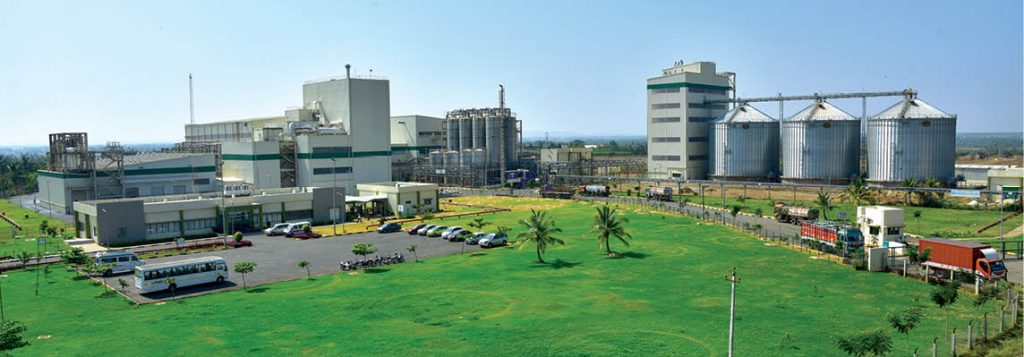
The Davangere state-of-the-art facility provides a readily operational, high-quality asset base, enabling us to accelerate growth, improve supply chain efficiencies, and create a strong platform for future capacity expansion and product innovation.
We are the largest producers of paper-grade starch and also offer the largest range of modified starches in India with a portfolio of over 15 variants catering to the specialised needs of paper manufacturers.
PM: How do you support India’s pulp and paper industry? Tell us about your clientele. Are there any plans to expand your footprint internationally?
SC: RSGBL has been a long-standing and trusted partner to India’s pulp and paper industry, supplying starch-based ingredient solutions that enhance strength, surface properties, and process efficiency across writing & printing, packaging, and specialty paper grades. We work closely with leading paper manufacturers, supporting them through consistent quality, technical expertise, customized solutions, and reliable supply.
As RSGBL expands its footprint in the Indian starch industry through the acquisition of Cargill India’s corn wet-milling assets in Davangere, it unlocks greater scope and scale to serve the paper industry with advanced starch-based ingredient solutions more efficiently. Globally, the paper industry is the largest non-food consumer of starch, where it is a critical, high-volume additive used to improve paper strength, surface quality, and production efficiency.
Exports from India are already a part of our business across product categories. As we scale manufacturing capabilities, we see further opportunities to expand our global presence, particularly across Asia, the Middle East, and Africa.
PM: What are the challenges in the starch business and what are your business strategies to overcome them?
SC: The starch business is capital-intensive and sensitive to factors such as raw material availability, energy costs, and market volatility. Ensuring consistency in quality while managing cost pressures is a key challenge.
Our strategy is built around scale, diversified sourcing, operational efficiency, with a strong focus and deliberate shift towards value-added derivatives instead of pure commodity offerings. For instance, we are the largest producers of paper-grade starch and also offer the largest range of modified starches in India with a portfolio of over 15 variants catering to the specialised needs of paper manufacturers.
We believe investments in diversified products, integrated manufacturing, technology upgrades, and long-term supplier relationships help us remain competitive and resilient across cycles.
At the Davangere unit, sustainability will be a key priority, aligned with our broader sustainability commitments to operate the plant through 100% renewable energy resources.
PM: How do you ensure that sustainability remains central to your company’s operations?
SC: Sustainability is integral to RSGBL’s growth philosophy and operational framework. We focus on energy efficiency, increased use of renewable energy, responsible water management, and waste-to-value initiatives across our facilities.
At the Davangere unit as well, sustainability will be a key priority, aligned with our broader sustainability commitments as we intend to operate the plant through 100% renewable energy resources. We believe responsible manufacturing is essential for long-term competitiveness, resilience, and stakeholder value creation.
PM: What are your plans for stability and profitability amid the disruptions in supply chain and trade volatility?
SC: Our approach is built around diversification across raw-material sourcing, finished products, customer segments, and geographies, which helps mitigate risks arising from supply chain disruptions or trade volatility. Strong execution discipline, cost control, operational efficiencies, and a focus on skillful domestic sourcing further support stability.
By serving multiple end-use sectors such as food, pharmaceuticals, paper, and industrial applications, we are better positioned to maintain steady growth even in uncertain global environments.
Also Read: MillMind™: JMC Paper Tech’s AI-Led Platform Redefining Mill Visibility
PM: What are your future plans in the next 5-10 years?
SC: Over the next 5 to 10 years, RSGBL aims to significantly scale its core ingredient businesses, with starch and derivatives playing a central role. Our focus will be on capacity expansion, development of higher-value products and derivatives, and strengthening our export presence.
Alongside growth, we will continue to invest in sustainability, advanced technology, and operational excellence to build a purpose-led enterprise rooted in creating long-term value for farmers, customers, employees, communities, and stakeholders.

Exports from India are already a part of our business across product categories. As we scale manufacturing capabilities, we see further opportunities to expand our global presence, particularly across Asia, the Middle East, and Africa.