
West Coast Paper Mills Limited and subsidiary Andhra Paper Limited together address key writing, printing and board markets, while expanding into the tissue paper market. Paper Mart speaks with Mr. Saurabh Bangur, Vice Chairman, West Coast Paper Mills Limited and Managing Director, Andhra Paper Limited on navigating a tough market cycle, investment thinking, and the group’s entry into the tissue paper sector. He also reflects on sustainability and growth priorities at subsidiary Andhra Paper Limited.
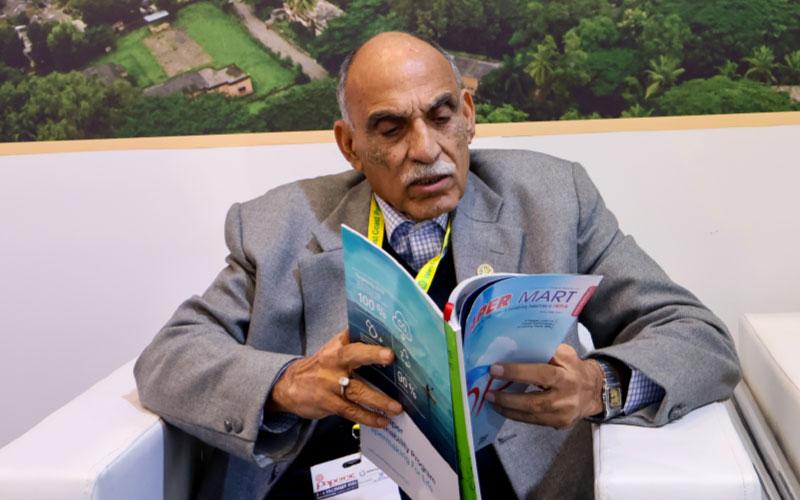

As no major capacity addition is coming up in paper mills currently, we expect good potential for growth in time to come. Hopefully raw material prices should soften in time to come hence industry should have healthy bottomline. As the economic environment improves, we expect significant investment in the years to come at group level in both at WCPM & APL.
– Shree Kumar Bangur, Chairman and Managing Director, West Coast Paper Mills Limited & Chairman, Andhra Paper Limited
Paper Mart: Given the current industry conditions, what are the immediate priorities at West Coast Paper Mills, and how are you approaching future capacity planning?
Saurabh Bangur: On West Coast Paper Mills (WCPM), given the current industry scenario, we are totally focusing on improving operational efficiency. Our plant has been running at 98 to 100% capacity for many years with a healthy bottom line.
We are developing plans for a new paper machine at our unit in Dandeli. However, given the current industry conditions, it is too premature to move forward with any concrete plan. We are preparing everything on paper today, so that when the environment is conducive, we can take it forward.
The new machine we are evaluating is for specialty paper. At this stage, it is too early to share details on volume or investment. We are firming up plans with suppliers, and when the timing is right, we shall share the details. That is where things stand for West Coast Paper at present.

Watch: Top Paper Companies 2023
PM: You mentioned evaluating a new paper machine for specialty grades. What is the thinking behind this, and where do these plans stand today?
SB: WCPM is currently operating at a rated capacity of 3,20,000 MT per annum, which is effectively 100% utilisation. We are already operating at this level, so any new additions would be incremental capacity. Once the technical details are frozen, I will be able to share exact figures. Until then, it would not be appropriate to speak about volumes or investments. Our presence in specialty grades of paper is negligible compared to other variants. Looking at the growth in this segment, we have decided to invest in specialty segment.
If all plans move ahead as envisaged, total investments in APL would be around INR 1,800 crore, covering efficiency improvements, modernisation and tissue paper, which will add new volumes.
PM: Turning to Andhra Paper Limited, could you outline the investments made since the takeover and the areas these investments are focused on?
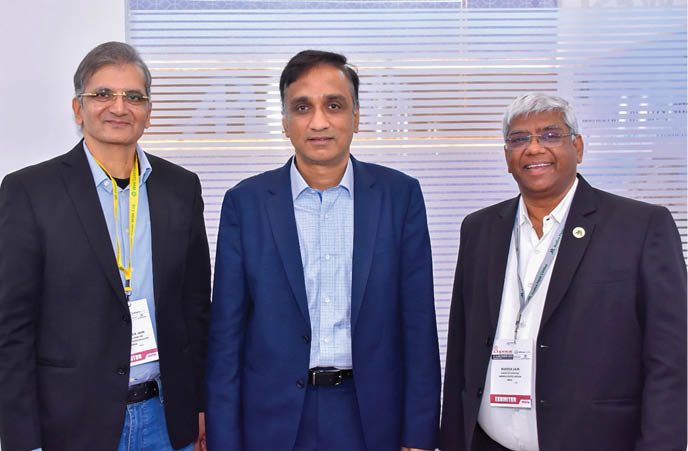
SB: As far as Andhra Paper Limited (APL) is concerned, since our takeover, we have invested more than INR 1,200 crore. Around INR 800 crore has gone into process efficiencies, the full benefits of which are yet to be realised. We have invested around INR 250 crore in a new tissue paper machine, which is scheduled for commissioning around April 2026.
We have also finalised a modernisation plan for our PM3 with an investment of around INR 150–175 crore, and we are working on modernisation plan for another existing machine, involving an investment of about INR 175 crore. If all these plans move ahead as envisaged, total investments in APL would be around INR 1,800 crore, covering efficiency improvements, modernisation and tissue paper, which will add new volumes.
There are discussions at the plant level on a new project as well, but that is too premature to talk about at this stage.
PM: Tissue Paper is a new segment for both West Coast Paper and Andhra Paper. What prompted the group to enter tissue, and how do you assess the opportunity?
SB: At the group level, tissue paper is a completely new segment for us. Neither WCPM nor APL has been present in tissue paper so far. It is a growing market with good potential.
After conducting market surveys, we found most of the paper verticals to be overcrowded and highly competitive. Tissue paper, on the other hand, has limited players. With changing lifestyles and awareness of improved hygiene level everywhere we see good growth prospects going forward; which is why we decided to enter this segment. The demand for tissue is just 400,000 MT per annum with a size of country like India which we feel will increase substantially in the years to come.
We have ordered a brand-new machine, and we are confident about the quality of the product. It will be a state-of-the-art installation.
Copier and maplitho remain strong segments for us. With an estimated domestic writing paper demand of around 5 million MT and growth of around 3%, there is good long-term potential.
PM: And how do you see the balance between domestic sales and exports for tissue paper?
SB: This will be virgin tissue paper, and the Indian market for virgin tissue is still not fully mature. We do not expect to sell the entire quantity domestically. Our target is a 50:50 split between domestic sales and exports, which will also help in balancing pricing.
PM: Farm forestry appears to be a key pillar of your sustainability strategy. How are you strengthening raw material security through farm forestry at Andhra Paper and West Coast?
SB: On sustainability, our clear focus is on the farm forestry route. With raw material prices rising sharply over the last one to two years, which has impacted profitability across the industry, we have significantly scaled up our farm forestry initiatives.
This year at APL, we will be planting around 93 million saplings, a mix of clones and seeds. Next year, we plan a similar scale but with a higher proportion of clonal plantations. Our objective is that 75 to 80 percent of our raw material requirement should come from farm forestry within a 150-kilometre radius. We are working very seriously and diligently on this.
At West Coast Paper, progress on farm forestry has been slower because acceptance among farmers in that region has been limited. However, this year at WCPM, we will be planting around 20 million saplings. Andhra Paper shall become fully self-sufficient in raw materials in the next 2-3 years’ time, while West Coast Paper will take a little more time.
The new machine we are evaluating is for specialty paper. At this stage, it is too premature to share details on volume or investment.
PM: From an energy perspective, how are your mills positioned in terms of captive power generation and renewable energy usage?
SB: We are fully self-sufficient in power through captive generation. Around 59 percent of our energy comes from renewable sources. We have recovery boilers where the lignin generated is used as fuel. The balance energy requirement is met through coal-fired boilers to ensure energy security.
PM: Across West Coast Paper Mills and Andhra Paper Limited, which product segments are currently most important, and how do you view demand trends in different product areas?
SB: Across APL and WCPM together, our main focus is on white paper, which includes maplitho, copier, and cup stock, which is part of the board segment.
Cup stock is currently going through a very challenging phase. Following the plastic ban announced a couple of years ago, many players expanded capacity, but that growth did not materialise as expected. While demand exists, pricing remains under pressure, and the segment will take time to normalise.
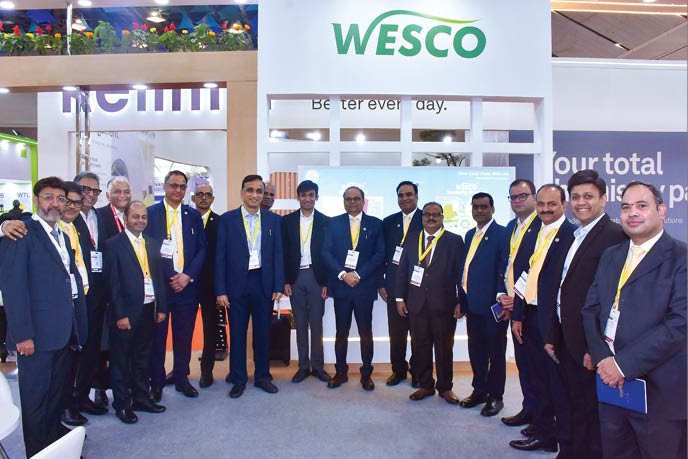
Copier and Maplitho remain strong segments for us (>50% of our volume comes from these varieties). With an estimated domestic writing paper demand of around 5 million MT and growth of around 3%, there is good long-term potential. No major new capacities are coming up, apart from debottlenecking by existing organised players. Incremental demand is likely to be met through imports.
Overall, we see a relatively stable outlook, with copier paper expected to grow at a better pace, driven by urbanisation and growth in education & population. The impact of digitisation remains uncertain, but the overall trend appears stable to positive.
PM: You have been vocal about industry perception and policy challenges. What are your key concerns regarding imports, taxation and how the paper industry is viewed?
SB: At various forums, we have consistently conveyed to the government that the paper industry is wrongly perceived as a green destroyer and a polluting sector. This is a misnomer.
While paper is made from wood, the industry survives only because whatever is harvested is replanted. If forests were being destroyed by the paper industry, India’s green cover would have declined over time. Instead, green cover has increased even as the industry has grown.
On pollution, the industry operates under strict discharge norms set by central and state pollution control boards. All organised players adhere to these norms, which have become increasingly stringent over time. Some discharge is inherent to the process, but compliance is strict and monitored.
The industry’s contribution to education, literacy, employment and overall economic growth is significant, but this is often not adequately recognised. We believe the sector deserves greater acknowledgment rather than being viewed negatively.
Imports continue to be a challenge. We are actively engaging with the government, and our concerns have been heard. While immediate corrective action may not be taken due to pressures in other sectors, we are confident that these issues will be addressed over time.
GST-related changes have added to the pressure, but we remain hopeful that with time, corrective measures will be put in place.
PM: Finally, despite the current pressures on margins, how do you see the medium-term outlook for the Indian paper industry?
SB: The organised paper industry consists largely of listed companies with strong compliance and governance standards. However, over the last year, imports from FTA countries, GST anomalies and raw material challenges have put severe pressure on margins.
With pressure on top line and middle line, the bottom line which is profitability has been impacted. For the industry to remain sustainable, healthy margins are essential. The overall literacy level in India is at around 80%. The industry has to play an active role to increase the overall literacy level of the nation as well adhere/cope with any changing lifestyle patterns of the consumers.
This pressure phase, we hope, is short-lived. The paper industry supports a large ecosystem of farmers, workers and allied industries. If the industry becomes financially healthy, the entire value chain benefits. We remain optimistic that better times lie ahead and that the industry will prosper again.
WCPM is currently operating at a rated capacity of 3,20,000 MT per annum, which is effectively 100% utilisation. We are already operating at this level, so any new additions would be incremental capacity.