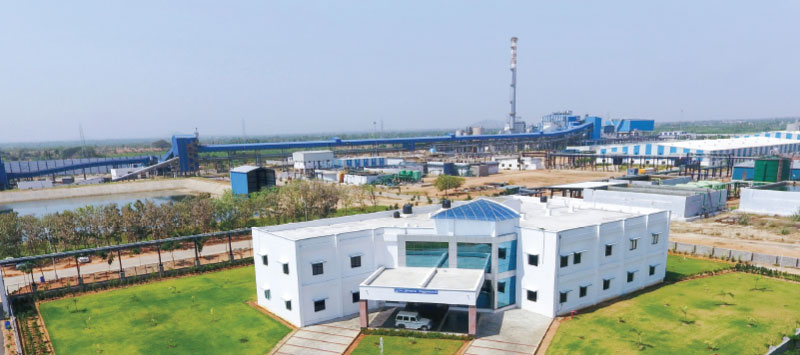
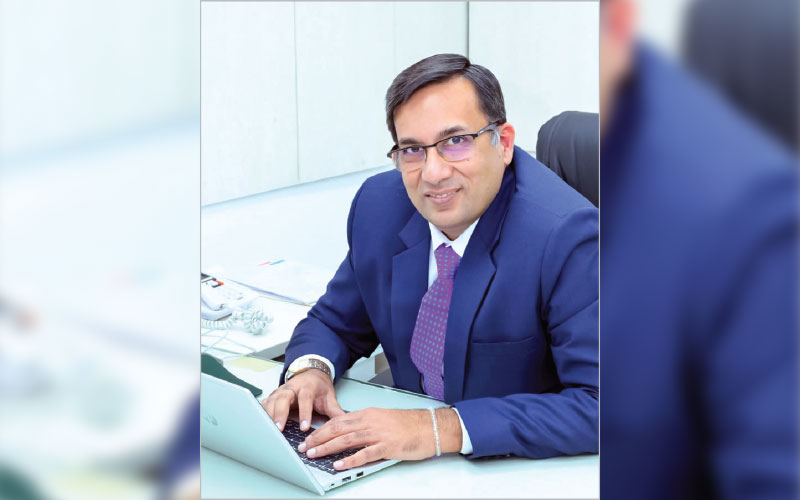
Tamil Nadu Newsprint and Papers Limited (TNPL) is known for its strong focus on sustainability. Paper Mart interviews Mr. Yogesh Gupta, Executive Director (Marketing), Tamil Nadu Newsprint and Papers Limited, on its sustainability-driven operations anchored, recent efforts to recalibrate its product mix across writing and printing and packaging board, and entry into the tissue paper segment.
Paper Mart: Sustainability has long been central to TNPL’s philosophy. How does the company approach sustainability in terms of raw materials, water, energy and environmental compliance?
Yogesh Gupta: In the Indian context, paper is often not treated as a favored commodity. As an industry, we must constantly explain that we are not cutting forests, but producing paper using the greenest possible resources. As a responsible company, it is our duty to manufacture products that are sustainable and fully compliant. Under this philosophy, TNPL has reached new milestones in FY 2024-25.
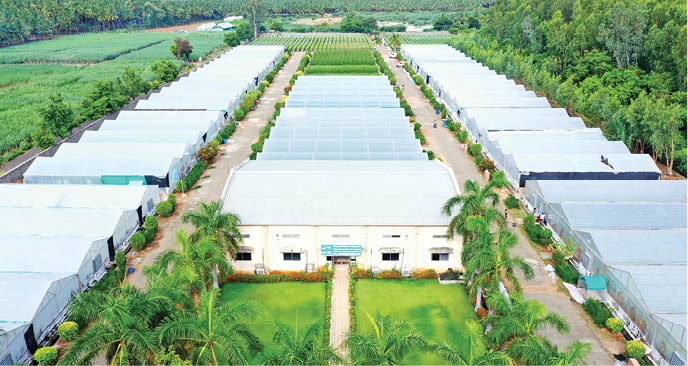
We are one of India’s leading green companies, having expanded our plantation footprint to over 3.06 lakh acres. We have significantly reduced water consumption, maintaining one of the lowest global benchmarks for integrated mills. Our 169.12 MW wind and solar initiatives continue to reduce our carbon footprint.
We draw water responsibly, using it with the lowest possible consumption, and return treated water to irrigate 1,700 acres of local farmland. We remain conscious of our responsibilities, as seen in our FSC-certified plantation sources. Sustainability is a continuous process for us, not a one-time activity, but an ongoing program that will continue.

Watch: Top Paper Companies 2023
PM: From an operational standpoint, what challenges is the paper industry currently facing, and how is TNPL navigating this phase?
YG: The paper industry is currently navigating a period of significant structural strain. In FY 2024-25, the unrelenting surge of low-priced imports, particularly from ASEAN countries and China, remained our primary challenge. This influx has suppressed domestic realisations despite our stable operational performance. Recent GST changes—particularly the 18% levy on paper and boards—have created cost pressure. Since paper for notebook production is taxed at 0% GST, input tax credit remains unutilized, leading either to margin erosion or price escalation.
While policy support in the packaging board segment has provided some relief, it has not been sufficient to counter the sharp rise in input costs, especially wood prices. To navigate this, TNPL is focusing on what we can control: manufacturing discipline and cost optimization. We reached a record production of 6.14 lakhs MT this year, leveraging our high capacity utilization to mitigate these external pressures. We continue to represent our case to the government regarding import duties and taxation asymmetries. Overall, while the industry remains under pressure, we are managing the situation through operational agility and a shift toward high-value segments like copier paper.
PM: With changing market dynamics, how has TNPL been reworking its product mix across writing and printing papers, copier grades and packaging board?
YG: Given changing market dynamics, TNPL has actively reworked its product mix over the last three to four years, achieving record production in FY 2024-25.
In writing and printing papers, we have introduced new products with better bulk, particularly for the notebook segment. In copier paper, we have strengthened our premium category with brands like Copy Crown and New Spectrum, improving opacity, brightness, and bulk to make them more user-friendly.
In the packaging board, we are optimizing our mix to align with market requirements while improving margins. A significant shift in our strategy is the progress on our 100 TPD tissue paper facility, which will diversify our portfolio into high-growth hygiene segments. This is not just about volume, but about evolving our product mix to ensure TNPL remains future-ready and resilient in a competitive landscape.
PM: TNPL has recently entered the tissue paper segment. Could you share details on the project, timeline and the thinking behind this diversification?
YG: Our entry into the tissue paper segment is a strategic move to diversify our portfolio into high-growth hygiene markets. The installation of our 100 TPD (34,000 TPA) tissue machine at Unit II in Mondipatti is currently underway. We expect to launch this product line in the early of 2026–27, with April 2026 being the likely start for commercial operations. With increasing urbanization, higher hygiene awareness, and institutional demand, tissue represents a structurally growing category compared to the relatively mature writing and printing segment.
The machine is a state-of-the-art ANDRITZ PrimeLine™ S 2000, sourced from one of the world’s leading manufacturers. We are quite optimistic about this segment; it aligns perfectly with our vision of being a future-ready, sustainable brand. By entering the hygiene sector, we are building resilience against the volatility in traditional writing and printing paper markets.
PM: What will be the capacity and fiber base for the tissue operation, and how do you view the growth potential of this segment in India?
YG: The new tissue machine at Unit II will have a capacity of approximately 34,000 tonnes per annum. Crucially, the production will be based on virgin fiber, utilizing our own high-quality hardwood pulp. This ensures a premium product that meets the hygiene standards today’s consumers demand.
We view the growth potential as exceptional. The tissue segment is currently one of the fastest-growing categories in the Indian paper industry, with a CAGR of around 14–15 percent. Despite this, there remains a significant gap in the domestic availability of high-quality, virgin-grade tissue paper. Being strategically located in the southern region—a primary consumption hub—provides us with a distinct logistical advantage. We see this as a robust opportunity to capitalize on evolving lifestyle trends and the increasing focus on health and hygiene across the country.
PM: How do you see the balance between domestic sales and exports for tissue, especially in the initial years?
YG: At present, our primary focus will be on the domestic market. As we enter this new segment with our Unit II expansion, our priority is to stabilize operations and establish a strong presence within the high-growth Indian hygiene sector. We want to ensure that our capacity first addresses the quality gap in the domestic supply chain.
Given our strategic location in the South, we are well-positioned to serve major domestic consumption hubs efficiently. However, we have designed the project with global standards in mind. Once we have optimized our product mix and achieved consistent operational benchmarks, we will leverage our existing export networks—which currently span over 30 countries—to evaluate international opportunities. Wherever synergies emerge with global demand, we will gradually scale our export footprint, but for the initial years, the domestic opportunity remains our most compelling driver for growth.
PM: Looking across different paper segments, which one do you see as the most promising going forward?
YG: If we broadly classify the industry into writing and printing, packaging board, and tissue, TNPL is strategically present across the most resilient categories. Looking ahead, packaging board remains the most promising segment for long-term growth. Our multilayer double coated board plant at Unit II continued to be a significant driver of our performance, catering to the booming e-commerce and healthcare sectors.
Despite the challenge of increasing international capacities and import pressures, the fundamental shift away from single-use plastics ensures this segment offers immense potential. While writing and printing remains our core—achieving a record 4.25 Lakh MT production this year—the scalability of packaging boards and the high margins of tissue are where we see the future. Ultimately, a balanced, multi-product portfolio is what will allow TNPL to sustain its leadership.
Also Read: Trident Group Strengthens Paper Portfolio with Fresh Investment
PM: TNPL has a wide domestic and international presence. How are you strengthening your market footprint, particularly in underserved and tier-2 markets?
YG: TNPL has covered over 60 international markets and maintains a robust pan-India presence. While our distribution network is expansive, we are now focused on deepening penetration in previously underserved regions.
We are aggressively expanding into tier-2 markets, where we see immense growth potential for our premium copier brands like Copy Crown. By leveraging our strengthened supply chain and digital stockist management, we aim for a more granular reach. While our network covers most of India, significant scope remains for deeper, localized penetration to sustain our market leadership.
PM: Any closing thoughts?
YG: We are optimistic that the paper industry will emerge from this current challenging cycle stronger and more resilient. It is important to remember that this sector is a massive engine for rural empowerment; at TNPL alone, our activities support a workforce of thousands and provide a sustainable livelihood to over 40,000 farmers through our plantation schemes.
As we move toward a “Future-Ready” TNPL, our focus remains on the circular economy. With the upcoming launch of our tissue paper facility and our record-breaking production levels this year, we are proving that growth and sustainability can go hand-in-hand. We are hopeful that with the right policy support and continued operational excellence, much better times lie ahead for the entire Indian paper sector.