
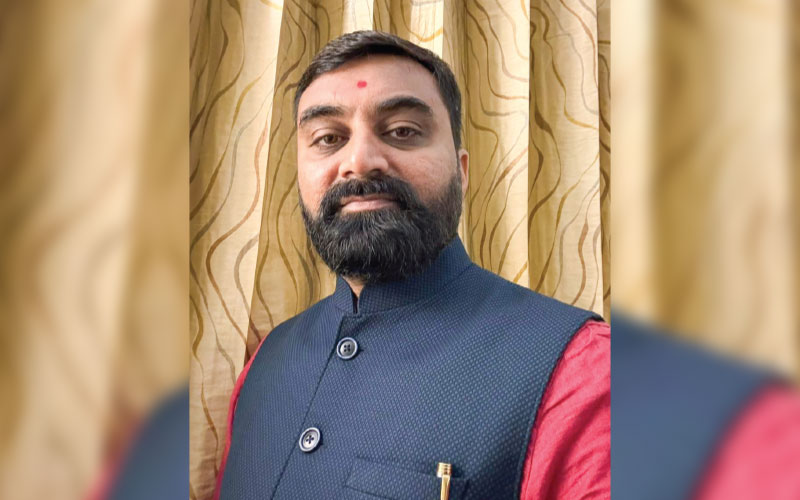
In an exclusive interaction with Paper Mart, Mr. Dinesh Haripara, Managing Director, Apollo Papers LLP, shares that the company’s investment strategy is multi-pronged, driven by long-term market demand, cost efficiency, and sustainability goals. The company plans to expand and modernise its production lines to cater to the growing demand for packaging and speciality grades, focusing on efficiency through automation, process optimisation, and digital quality control systems to boost productivity, reduce waste, and ensure consistent product performance.
Paper Mart: If we look at your kraft paper and kraft liner business today, how would you characterise its scale and mix? How do you see that portfolio evolving over the next few years?
Dinesh Haripara: Today, our kraft paper and kraft liner business is a key growth engine with a well-balanced portfolio that serves both standard and specialty packaging needs.
We have scaled capacity to support a wide spectrum of customers—from heavy-duty industrial users to converters seeking higher-performance liners and kraft grades. Our product mix combines high-strength kraft liner and versatile kraft paper grades, ensuring reliability for domestic markets while also meeting stringent quality expectations in select export segments.
Looking ahead, we see our portfolio evolving in three clear ways: enhanced speciality grades, sustainable solutions, and balanced market focus.
We are increasing our focus on higher value, performance-driven products that address evolving customer requirements. Moreover, we are putting greater emphasis on recyclable, eco-friendly offerings that support circular economy goals and finally we continue to strengthen our domestic demand complementing it with strategic export growth. In summary, we are moving toward a more differentiated, sustainability-oriented portfolio that aligns with long-term industry trends and customer needs.

Watch: Top Paper Companies 2023
PM: What’s driving demand in India right now? Are there particular segments that stand out, and which ones do you think will shape the next phase of growth?
DH: Demand in India today is being driven strongly by the packaging segment, with kraft paper, kraft liner, and paperboard at the forefront of growth. Packaging has emerged as the largest and fastest-growing segment within the paper industry, supported by expanding consumption across key end-use sectors.
We see three core demand drivers:
Rapid growth of e-commerce and logistics: The ongoing boom in online retail and quick delivery services continues to fuel demand for robust, transit-ready packaging solutions such as corrugated boxes and kraft-based materials—essential for protecting products through complex supply chains.
FMCG, food & beverage, and retail expansion: Consumer goods, packaged foods, pharmaceuticals, and organised retail remain major growth engines. These sectors require a mix of sustainable, high-performance packaging formats, and this demand trajectory is expected to strengthen as consumption patterns evolve.
Sustainability and regulatory push: Government measures to reduce single-use plastics and corporate commitments to environmental goals are accelerating the adoption of recyclable, paper-based alternatives. This is broadening demand from traditional industrial uses to higher-value, eco-friendly applications.
Looking ahead, sustainable packaging formats, higher-value speciality grades, and solutions tailored to e-commerce and FMCG logistics are likely to shape the next phase of growth, firmly anchoring India’s paper industry as a key partner to expanding domestic demand and export competitiveness.
PM: Fiber security is a recurring concern in India. How are you thinking about long-term access to virgin pulp and/or wastepaper, and what are you doing to reduce exposure to quality and price volatility?
DH: Fiber security is a long-term strategic focus for our industry because India remains fiber-deficient and heavily relies on imports of waste paper and pulp to meet demand.
Domestic recovery rates for recovered fiber are still below their full potential, and supply chain inefficiencies mean mills often need to supplement (DIVERT) with imported fiber to maintain quality and continuity.
To address this, we are taking a multi-pronged approach: We are diversifying supply, balancing domestic recovered paper with strategic imports of both wastepaper and virgin pulp to reduce exposure to price swings and shortfalls.
We are also strengthening our domestic recovery. We are working with partners to improve wastepaper collection, sorting and enhancing quality, which helps lower our reliance on volatile global markets.
We are optimising fiber blends and technology, investing in processing upgrades and fiber mix so we can use a broader range of raw materials without compromising product performance.
We are also ensuring risk-aware procurement by disciplining our inventory planning and contractual strategies to help us smooth cost volatility in global fiber markets.
Together, these steps help us secure a reliable, cost-efficient fiber base while improving resilience to market volatility and supporting long-term growth.
PM: What are the biggest cost pressures you’re dealing with today — whether it’s raw materials, energy, logistics, or compliance? How are Indian producers responding to stay competitive?
DH: Today, Indian paper producers are navigating multiple cost pressures that are shaping industry economics:
High and volatile costs for fiber (raw material), especially imported wastepaper and pulp, remain the single largest cost component. Supply disruptions and freight volatility have pushed wastepaper and pulp prices higher, squeezing margins.
Further, energy costs, particularly coal and power, have risen significantly, increasing production expenses. Domestic mills often rely on thermal energy, and recent regulatory changes around captive power and fuel usage add to cost pressures.
Rising freight and transportation expenses, driven by global shipping challenges and higher fuel prices, add further cost burdens for both inbound raw materials and outbound finished products.
Stricter environmental and emission norms necessitate investments in cleaner technologies and sustainable operations, which is adding to capital and operating costs. And finally, cheaper imports, particularly from ASEAN and China, exert pricing pressure and reduce flexibility to fully pass on cost increases to the market.
To stay competitive, many mills are optimising operations and cost structures by phased price adjustments on finished products, partially offsetting input cost inflation while balancing demand sensitivity. The mills are also strengthening its supply chains and procurement planning to manage raw-material volatility and logistics costs more efficiently.
They are investing in energy efficiency and cleaner technologies to lower long-term operating costs and comply with stricter norms, and focusing on value-added segments where quality and performance can command better realisations and absorb cost pressures more sustainably. Together, these measures are helping Indian paper producers protect margins, maintain competitiveness, and continue investing in future growth.
PM: From your conversations with customers, how are expectations evolving in India, especially around performance, consistency, and lightweighting?
DH: Customer expectations in India are evolving rapidly as brands and converters seek packaging that delivers higher performance, consistent quality, and greater sustainability.
For performance & consistency across segments, customers now demand uniform strength, precise GSM, dimensional stability and reliable moisture and compression resistance, especially for e-commerce, FMCG and food packaging where product protection is critical. This push for consistency is driving investments in tighter process controls and quality assurance across the supply chain.
There’s a clear trend toward lighter, stronger paper and board grades that reduce material use, logistics costs and environmental impact without sacrificing performance. Advanced designs and higher-strength substrates enable brands to optimise packaging structures and improve overall sustainability profiles.
Further, customers are increasingly prioritising recyclable, eco-friendly materials, aligning with regulatory shifts away from plastics and rising consumer environmental consciousness. This expectation extends to functional performance such as barrier properties and printability while remaining compatible with circular economy goals.
In short, Indian buyers are no longer just price-driven; they are looking for technically robust, consistent and lightweight paper solutions that help them achieve their performance, cost and sustainability objectives.

Indian buyers are no longer just price-driven; they are looking for technically robust, consistent and lightweight paper solutions that help them achieve their performance, cost and sustainability objectives.
PM: Where are you really choosing to invest right now — capacity, efficiency, sustainability, or something else? What’s guiding those decisions?
DH: Our investment strategy today is multi-pronged and guided by long-term market demand, cost efficiency, and sustainability commitments.
Our key focus is on energy savings and cleaner operations. We have already made a major investment in a solar power plant, expected to be commissioned by April 2026, which will significantly reduce our energy costs and dependence on grid power. This project strengthens cost competitiveness while supporting our environmental goals. Renewable energy investments like solar energy can lower long-term energy costs and reduce carbon footprint — a benefit recognised across paper mills globally.
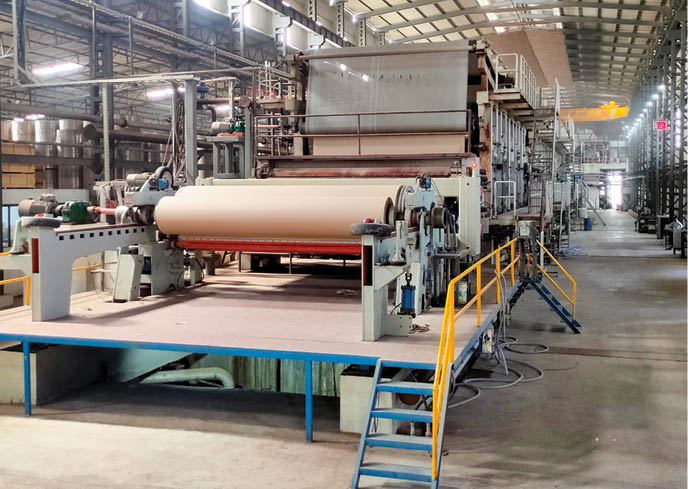
We continue to expand and modernise production lines to meet growing demand in packaging and speciality grades, ensuring we stay aligned with customer needs.
We are focusing on efficiency & technology by investing in automation, process optimisation and digital quality controls to enhance productivity, reduce waste and support consistent product performance.
Alongside energy projects and technology upgrades, we also ensure resource optimisation. We’re investing in water efficiency and smarter supply-chain practices to improve overall sustainability and resilience.
What guides these decisions is a clear business imperative: to build capacity where demand is growing, lowering cost through better efficiency, and meeting increasing customer and regulatory expectations around sustainability.
PM: Sustainability is becoming a much bigger part of the conversation in India. How is that changing the way you think about investments and customer relationships?
DH: Sustainability is no longer a “nice-to-have” — it’s now central to both investment decisions and customer expectations in the Indian paper and packaging industry.
Across the sector, there is a strong shift toward eco-friendly, circular solutions supported by government initiatives and rising market demand for greener packaging alternatives.
Nearly three-quarters of India’s paper production already comes from recovered and recycled fiber, and sustainability is increasingly embedded in industry growth narratives. This evolution is influencing our business in clear ways such as investment focus, product development, and customer engagement.
We’re prioritising projects that reduce environmental impact, such as energy-efficient technologies, renewable energy (solar installations), water-use reduction and recycling infrastructure. These investments not only align with regulatory and ESG expectations, but also enhance long-term cost efficiency and risk management.
There’s increasing demand from customers — from FMCG brands to e-commerce players — for recyclable, lightweight and sustainable packaging solutions. This is shaping our R&D efforts and portfolio strategy to deliver products that meet both functional performance and environmental goals.
Sustainability has become a shared value with our customers. They are seeking partners who can deliver consistent quality while helping them reduce lifecycle impacts, comply with circular economy standards, and enhance brand reputation. This is deepening collaboration and long-term relationships.
In essence, sustainability is reshaping how we invest, innovate and partner with customers, moving beyond compliance toward value creation across the entire value chain.
Also Read: Shree Krishna Paper Mills Invests in Chemical-Free Paper ‘Packmate’
PM: Over the next decade, what do you think Indian kraft and containerboard producers will need to get right in order to stay ahead?
DH: To stay ahead over the next decade, Indian kraft and containerboard producers will need to focus on four core areas that reflect both market realities and long-term industry trends:
Innovating and Differentiating Products: Producers must move beyond commodity grades and develop higher-value, performance-driven offerings such as high-strength, moisture-resistant and lightweight materials that meet evolving converter and brand expectations. This includes investing in process technology and quality controls to deliver consistent performance at scale.
Deepening Sustainability and Circularity: With sustainability increasingly central to customer choices and regulatory frameworks, the industry must accelerate eco-friendly production, increased recycled content and improved recyclability. Aligning with national and global sustainability missions will not only meet customer demands but also open up premium segments. India’s packaging sector is investing in sustainable solutions and circular economy principles, supporting long-term growth.
Strengthening Supply Chains and Costs: Raw material security, logistics resilience and cost management will remain key. Producers should continue to optimize fiber sourcing, improve domestic wastepaper recovery infrastructure, and enhance logistics efficiency to manage volatility and protect margins in the face of fluctuating inputs and import competition.
Embracing Advanced Technologies: Digitisation, smart manufacturing and new packaging technologies (e.g., smart labels, advanced coatings) will help boost efficiency, reduce waste and create differentiated offerings that improve customer value and brand trust.
In essence, product innovation, sustainability leadership, efficient supply chains and technological excellence will define who succeeds in India’s kraft and containerboard industry over the next decade.
To sum it up, the Indian kraft and containerboard sector is poised for continued strong growth as packaging becomes an increasingly vital part of the economy, driven by booming demand across FMCG, e-commerce and sustainable solutions. With innovation, quality focus and strategic investments, we are confident in our ability to support customers and contribute to the industry’s future success.
We are optimising fiber blends and technology, investing in processing upgrades and fiber mix so we can use a broader range of raw materials without compromising product performance.