
Orient Paper Industries Limited highlighted its strong focus on innovation, capacity enhancement, and sustainable growth across key paper segments. In an exclusive conversation with Paper Mart, Mr. Saikat Basu, Chief Marketing & Sales Officer, Orient Paper Industries Limited, outlined the company’s latest product launches, declared the introduction of color tissues- black and red variants, ultra-soft facial and toilet tissues, manufactured in India for the first time. The company also showcased its expanded copier paper capacity, enabled by a new Linomatic sheeter, and its growing presence in plastic substitution products such as cup stock and carry bags, reinforcing OPIL’s long-term vision of becoming a specialty paper-focused company.
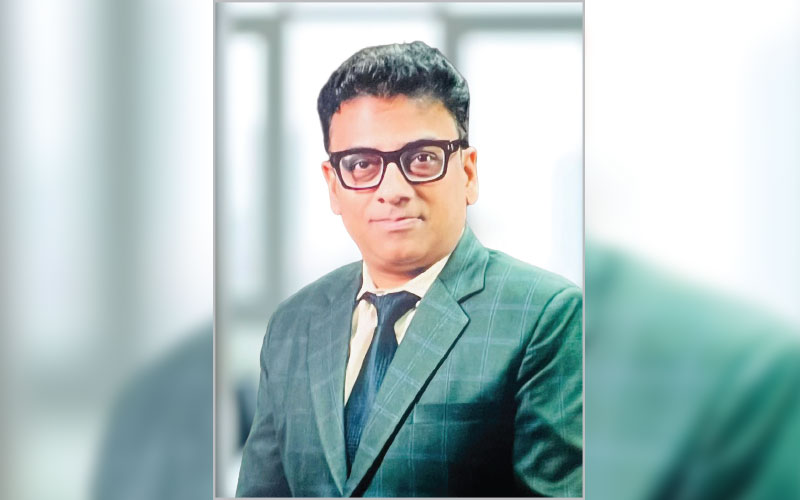
Paper Mart: Tell us about your participation at Paperex 2025. What are you showcasing?
Saikat Basu: At Paperex 2025, OPIL is primarily focusing on new product launches, especially in tissue and plastic substitution segments. For the first time in India, we have launched color tissues, including black and red variants. Along with this, we are introducing ultra-soft facial and ultra-soft toilet tissue, which are significantly softer than conventional tissues available in the Indian market. Until now, such ultra-soft variants were largely imported; this is the first time they are being manufactured in India. We are positioning this entire range as “Bharat ki Tissue.” This emphasizes both innovation and indigenous manufacturing.
PM: Are there other product highlights beyond tissue?
SB: Yes. Another major focus is copier paper. About six to seven months ago, we relaunched the copier brand with new packaging and commissioned a new Linomatic sheeter, which offers precision sheeting. As a result, our copier capacity has doubled from around 1,000 tonnes per month to nearly 2,000 tonnes per month. This capacity expansion and improved product quality are our key highlights at Paperex.

Watch: Top Paper Companies 2023
PM: You also mentioned plastic substitution products. Could you elaborate?
SB: Certainly. We are increasingly focusing on plastic substitution products, an area where OPIL earlier had limited presence. Products such as cup stock and carry bags are now a strategic focus area for us, driven by sustainability and regulatory trends.
PM: Have these developments required significant investments?
SB: Investments have happened in multiple areas in our manufacturing line for modernization and debottlenecking. A part of it has been towards the Linomatic sheeter for copier capacity expansion. Another portion has been invested in modernization of two tissue machines, enabling us to manufacture ultra-soft tissues and color variants. While I cannot disclose exact numbers, some projects are already completed, and others are partially commissioned and progressing toward completion.

We commissioned a new Linomatic sheeter also, which offers precision sheeting. As a result, our copier capacity has doubled.
PM: What are the key challenges facing the tissue industry today?
SB: The Indian tissue market is growing at around 12–13%, which is encouraging. However, challenges include imports impacting coastal areas share and rapid capacity additions by competitors. For a brief period post capacity by two new manufacturers, multiple suppliers started competing for the same customer base, creating price disruption. But given the growth potential in this segment, the market can comfortably absorb this capacity over a brief period of time.
We are increasingly focusing on plastic substitution products, an area where OPIL earlier had limited presence.
PM: Where do you see the biggest opportunities going forward?
SB: Opportunities in tissue are significant, as India’s per capita tissue consumption is still far below the global average. Writing and printing paper, on the other hand, is growing only at 1–2% and is largely plateaued. Within writing & printing, growth is stronger in segments like copier paper (around 5%) and plastic substitution products (8–9%), which are helping to offset slower growth in traditional grades.
Also Read: Jani Sales Strengthen its Presence in Tissue Paper and Specialty Paper Segments
PM: What are OPIL’s long-term plans?
SB: Our long-term vision is to become a specialty paper-focused company. OPIL was the first company in India to introduce virgin tissue in the 1990s, and we intend to consolidate and expand further in tissue. At the same time, we aim to shift more of our writing and printing capacity toward plastic substitution and sustainable products, while continuing to expand copier paper capacity and branding.
For the first time in India, we have launched color tissues, including black and red variants. Along with this, we are introducing ultra-soft facial and ultra-soft toilet tissues.