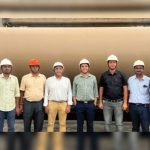
Paswara Papers Limited is reshaping its kraft paper and kraftliner portfolio to align with India’s evolving packaging landscape. With a clear pivot toward high-performance kraftliner, lightweight grades, and energy decarbonization, the company is positioning itself at the intersection of import substitution and sustainability. In an exclusive interaction with Paper Mart, Mr. Deept Agarwal, Director, Paswara Papers Limited, shares how demand from e-commerce, FMCG, and food processing, along with investments in RDF-based energy and low-GSM capacity, are guiding Paswara Papers’ next phase of growth.

Paper Mart: If we look at your kraft paper and kraftliner business today, how would you characterise its scale and mix? How do you see that portfolio evolving over the next few years?
Deept Agarwal: Currently, our business maintains a 60:40 split between kraft paper and kraftliner. However, we are strategically pivoting toward a higher-growth mix. Over the next five years, we anticipate kraftliner taking more dominant shares we focus on import substitution. By scaling domestic production of high-performance liners, we aim to meet the rising demand for premium packaging in India’s e-commerce and FMCG sectors, reducing the industry’s reliance on foreign imports.

Watch: Top Paper Companies 2023
PM: What’s driving demand in India right now? Are there particular segments that stand out, and which ones do you think will shape the next phase of growth?
DA: The ‘Make in India’ initiative is the primary driver of current packaging demand, with the FMCG, e-commerce, and automobile sectors leading the charge. Looking ahead, we expect the food processing industry to define the next growth phase. As the market shifts toward sustainable alternatives to single-use plastics, the demand for high-quality, food-grade paper packaging will grow substantially, becoming a cornerstone of our future portfolio.
PM: Fiber security is a recurring concern in India. How are you thinking about long-term access to virgin pulp and/or wastepaper, and what are you doing to reduce exposure to quality and price volatility?
DA: Fiber security is a constant challenge. To ensure premium strength, we have prioritized importing DSOCC from the USA while phasing out ‘Hard Mix’ and mixed waste to maintain quality standards. While the global price of DSOCC remains relatively stable between USD 160–200, the primary risk is INR devaluation, which inflates our landing costs. We are managing this volatility through tighter sourcing cycles and a focus on high-yield, high-quality feedstock to offset currency-driven cost increases.

Over the next five years, we anticipate kraftliner taking more dominant shares and we focus on import substitution. By scaling domestic production of high-performance liners, we aim to meet the rising demand for premium packaging in India’s e-commerce and FMCG sectors, reducing the industry’s reliance on foreign imports.
PM: What are the biggest cost pressures you’re dealing with today: whether it’s raw materials, energy, logistics, or compliance? How are Indian producers responding to stay competitive?
DA: Energy and compliance are our primary cost drivers. With fuel costing reaching INR 4,500 PMT of finished paper, traditional fuels are no longer economically or environmentally viable under strict CPCB standards. To remain competitive, we are investing heavily in waste-to-energy boilers and transitioning to RDF (Refuse-Derived Fuel). This shift allows us to lower operational costs while ensuring full regulatory compliance through sustainable manufacturing practices.
PM: From your conversations with customers, how are expectations evolving in India, especially around performance, consistency, and lightweighting?
DA: The market is aggressively pursuing lightweighting, with a clear demand to move from high-GSM to lower-GSM grades without compromising Burst Factor (BF). This trend is driven by the need to reduce material while meeting sustainability goals. For us, the challenge and opportunity lie in providing high-strength, low-basis-weight products that perform consistently on modern, automated packaging lines.
Our current investment strategy focuses on expanding low-GSM kraft capacity and energy decarbonization. We are scaling production of lightweight, high-performance grades to meet evolving market needs. Simultaneously, we are transitioning to waste-to-energy boilers and adopting international best practices by utilizing RDF.
PM: Where are you really choosing to invest right now? Capacity, efficiency, sustainability, or something else? What’s guiding those decisions?
DA: Our current investment strategy focuses on expanding low-GSM kraft capacity and energy decarbonization. We are scaling production of lightweight, high-performance grades to meet evolving market needs. Simultaneously, we are transitioning to waste-to-energy boilers and adopting international best practices by utilizing RDF. This pivot away from fossil fuels significantly reduces our energy costs while ensuring our growth remains sustainable and fully aligned with CPCB standards.
PM: Sustainability is becoming a much bigger part of the conversation in India. How is that changing the way you think about investments and customer relationships?
DA: Sustainability is pivoting our investments toward waste-to-energy boilers and circular economy practices to eliminate fossil fuel reliance. We are strengthening customer relationships by providing low-GSM, high-strength alternatives that help brands meet plastic reduction goals. Ultimately, we are moving beyond being a supplier to becoming a strategic partner in our customers’ decarbonization journeys.
Also Read: Apollo Papers’ Multi-Pronged Investment Strategy Targeting Growth in Packaging and Speciality Grades
PM: Over the next decade, what do you think Indian kraft and containerboard producers will need to get right in order to stay ahead?
DA: To stay ahead, Indian producers must invest in high-speed, automated machinery to maximize output and ensure consistent product quality. Success depends on improving energy efficiency by transitioning to waste-to-energy systems to drastically lower operational costs. Finally, manufacturers must master lightweighting and high-strength engineering to meet the evolving demands of a sustainable, cost-conscious market.
Production
• Kraft Paper Grades Manufactured: Medium Paper, Test Liner, Kraft Paper
• Kraft Paper Manufacturing Capacity and Mill location: 160,000 MTPA, Mill located in Meerut
• Actual Kraft Paper Produced in the year 2024-25: 1,48,000 MTPA