In an exclusive interaction with Paper Mart, Mr. José Soares, Commercial Director of Paper shares Klabin is a flexible producer and exporter of packaging paper capable of shifting volumes between kraftliner and paperboard according to market demands, while maintaining efficiency, competitiveness, and high quality standards. He further shares his perspective on the Kraftliners innovation describing its progress not as a single disruptive event, but as the ongoing evolution of products and processes, consistently guided by application, performance, and sustainability. With a total production capacity of 4.4 million metric tonnes per year, the company stands out for its applied innovation such as Eukaliner® which is the world’s first kraftliner produced from eucalyptus fibers that delivers high strength at a lower density.

Paper Mart: Could you briefly explain your current kraft paper production capacity and how you foresee this mix changing over the next three to five years?
José Soares: Klabin is Brazil’s largest producer and exporter of packaging paper, leading the domestic corrugated packaging sector and serving as a global benchmark in market pulp, operating in short fiber, long fiber, and fluff segments. The company has a total installed capacity of 4.4 million metric tonnes per year of paper and market pulp, positioning us as one of the key integrated players in the global paper and packaging industry.
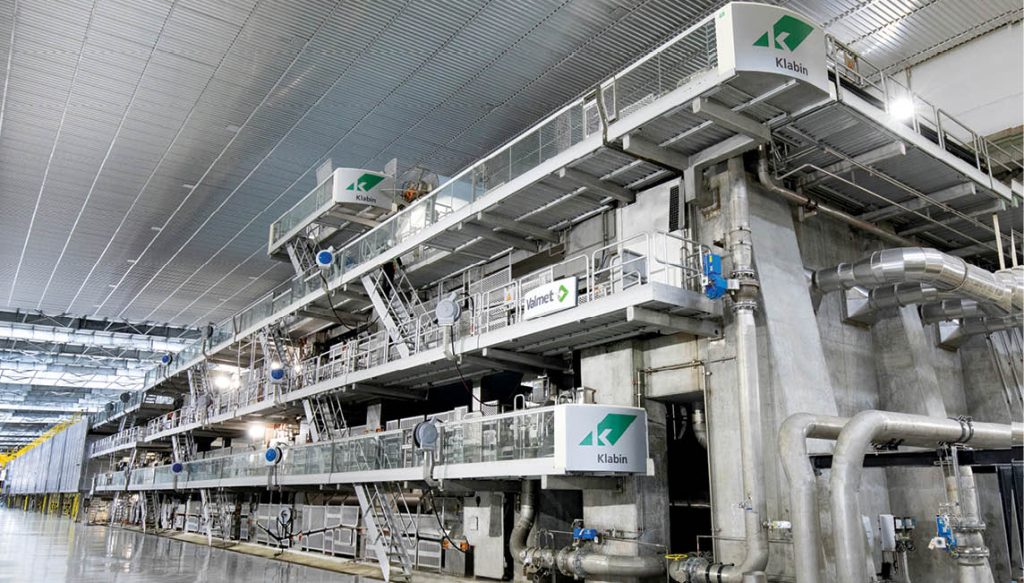
Within our paper portfolio, we produce kraftliner, sack kraft, and paperboard. In the kraftliner segment, we have a highly competitive platform, supported by modern industrial assets and the production of differentiated solutions, such as Eukaliner®, the world’s first kraftliner produced from eucalyptus fibers, which combines high strength, lower density, and efficiency gains throughout the entire chain. Our operations are guided by performance, reliability, and consistency, serving different global markets.
Looking ahead to the next three to five years, we do not expect significant structural changes in total capacity, but rather a continuous evolution of the mix, supported by our integrated, diversified, and flexible business model, which allows the company to adapt production to the dynamics of the global market. Klabin has a robust and versatile industrial platform, capable of shifting volumes between kraftliner and paperboard according to demand, while maintaining efficiency, competitiveness, and high quality standards. This flexibility, combined with the efficient use of fibers, the optimization of density while maintaining performance, and the focus on renewable solutions, positions us to consistently meet the structural growth of the paper packaging market in different regions of the world.

Watch: Top Paper Companies 2023
PM: What raw materials do you use in your products?
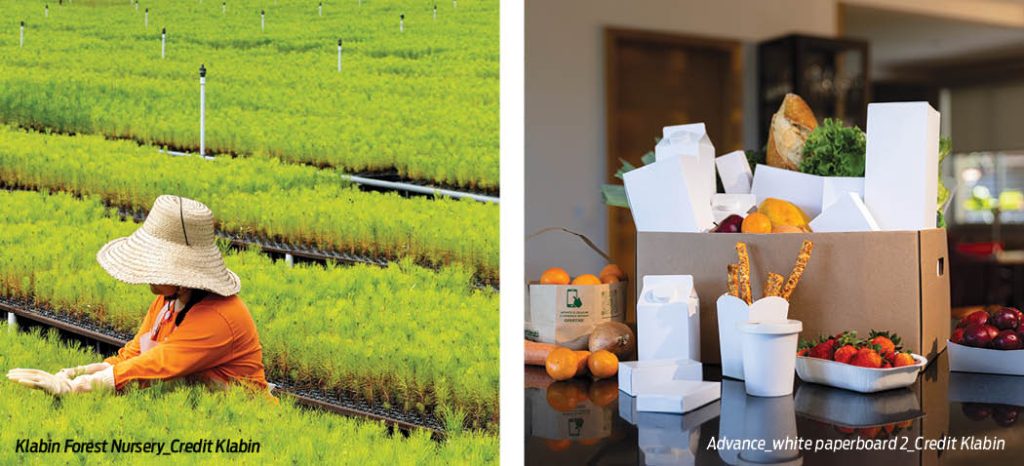
JS: Klabin’s main raw material is renewable pulp fiber, derived from sustainably managed, internationally certified pine and eucalyptus plantations. Our business model ensures full traceability, reliable supply, and high quality pulp, with a forest base spanning over 900,000 hectares in Brazil’s South and Southeast regions.
Note that the combination of long pine fibers and short eucalyptus fibers is a relevant technical advantage in our portfolio. The long fibers ensure strength and structure, while the short fibers contribute to better formation, surface, and print quality, enabling the development of high-performance papers with efficient use of resources. Additionally, we use recycled fibers in specific lines, increasing the circularity of the portfolio and meeting different market demands in a sustainable manner.
PM: What are the unique selling points (USPs) that make Klabin a preferred supplier compared to other European manufacturers?
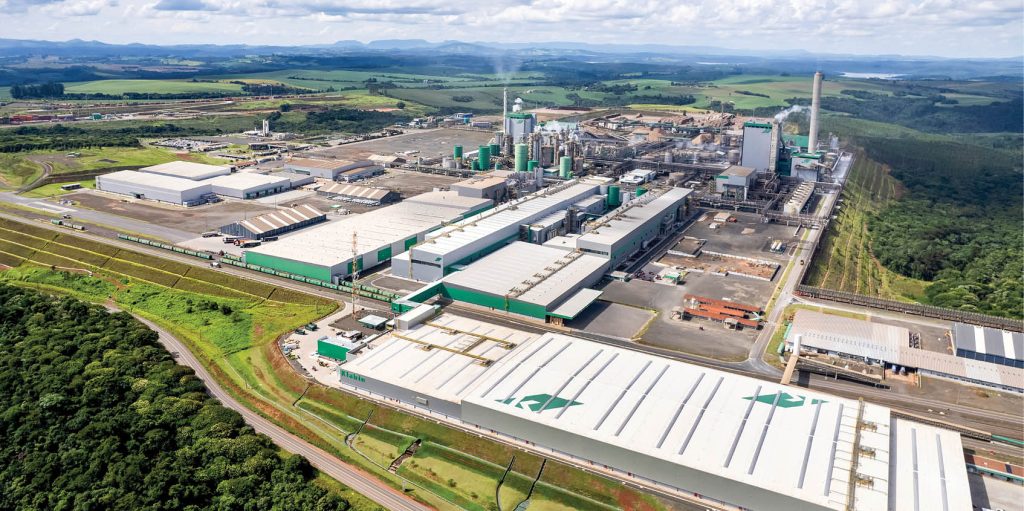
JS: Klabin brings together a set of structural differentiators that support its global competitiveness and position it as a strategic partner for customers in different markets, even when compared to European producers. Among the key factors is our unique business model, which is integrated, diversified, and highly adaptable. This means we operate our own certified, planted forests, maintain state-of-the-art industrial assets, benefit from strategically located mills, and leverage integrated logistics, while offering a comprehensive and versatile portfolio for a wide range of applications and markets. In addition, our total installed capacity, which is currently 4.4 million metric tonnes per year of paper and market pulp, is a key factor in providing supply security, traceability, and consistent quality for our customers.
Klabin also stands out for its applied innovation and its ability to drive efficiency across the customer supply chain. One example is Eukaliner®, the world’s first kraftliner produced from eucalyptus fibers, which delivers high strength at a lower density, supporting efficiency gains in both conversion processes and logistics.
In summary, customers choose Klabin because we offer a unique blend of reliability, innovation, and competitiveness, supported by an integrated platform and efficient logistics, ready to serve international markets with consistency and high quality standards.
Asia stands out as a growth engine, especially China, India, and Southeast Asian countries, driven by urbanization, expansion of domestic consumption, and the rise of e-commerce.
PM: In your view, which applications are driving the global demand for kraft paper? Which regions are emerging as the main drivers of growth?
JS: Global demand for kraftliner has been driven primarily by applications related to food packaging, consumer goods, e-commerce, and industrial uses, in addition to the continued growth of industrial bags for segments such as construction (cement), chemicals, and food. A relevant structural factor is the trend of replacing fossil-based materials with renewable solutions, which increases the use of kraftliner in packaging that requires strength, performance, and recyclability. At the same time, customers look for papers that deliver efficiency across the supply chain, with better performance in conversion, lower density, and logistical gains.
Asia stands out as a growth engine, especially China, India, and Southeast Asian countries, driven by urbanization, expansion of domestic consumption, and the rise of e-commerce. Latin America also shows consistent growth, supported by industrial development and the expansion of the packaging market. In Europe and North America, more mature markets, growth is more closely associated with the sophistication of applications, the sustainability agenda, and the demand for solutions with higher added value. In this context, producers with scale, integration, and flexibility, such as Klabin, are well positioned to respond to the unique demands of each region.
PM: With the increasing expectations regarding recycled content, how do you plan to preserve the performance advantages of virgin fiber in different regulatory environments?
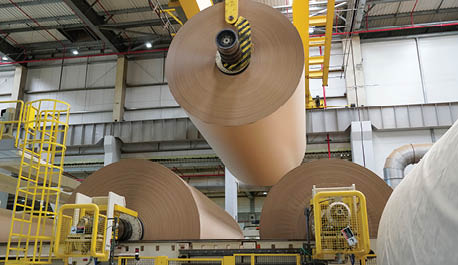
JS: At Klabin, we believe that developing high-performance papers requires the optimal technical combination of fibers tailored to each application. Virgin fiber is essential for ensuring microbiological control, mechanical strength, stability, and reliability – particularly in demanding applications such as food packaging and those facing significant logistical challenges – with the benefit of being a renewable resource. Recycled fiber, in turn, plays a significant role in contributing to the circular economy and meeting regulatory and market expectations, especially in applications where technical requirements allow its use.
With this perspective and a robust portfolio of packaging papers, our focus is on delivering solutions that best adapt to the needs of our customers. Through product engineering, we evaluate optimal fiber combinations and develop solutions that maximize machine performance while ensuring efficient resource utilization. This pragmatic approach enables Klabin to serve global customers with high-quality, high-performance solutions, aligned with regulatory requirements and sustainability commitments throughout the entire chain.
PM: From a cost perspective, what is really weighing on the global kraft paper market today? Which of these pressures seem structural, and not temporary?
JS: Costs in the packaging paper sector have been under pressure due to a combination of factors, such as energy, logistics, chemicals, and other industrial raw materials, in addition to increased regulatory complexity in different regions. Energy remains a relevant component, especially in markets more dependent on fossil sources, while international logistics presents higher costs and greater volatility. It is also necessary to consider increasing investments in environmental compliance, operational efficiency, and decarbonization, which have become a permanent part of the industry’s cost structure.
Part of these pressures are structural, not cyclical. The sustainability agenda and environmental regulations are expected to accelerate, along with the drive for greater resource efficiency and carbon footprint reduction. In this context, integrated models based on planted forests, with greater control over raw material, energy, and logistics, are becoming increasingly competitive. This integration allows Klabin to mitigate volatility, preserve margins, and maintain consistency in supply and quality, even in a global environment with more challenging and structurally demanding costs.
PM: When we analyze innovation in the world of kraft paper, where do you see the greatest opportunities emerging today?
JS: The greatest opportunities for innovation in the packaging paper sector are in developing solutions that improve technical performance while using resources more efficiently, enabling the industry to meet increasingly demanding applications. A good example of our efforts in this area is Eukaliner®, which was developed based on research carried out at the Klabin Technology Center (CTK) following years of studies and industrial testing with eucalyptus fiber. The product emerged from the strategic decision to explore the full potential of this fiber in an application traditionally dominated by pine, resulting in the world’s first kraftliner made exclusively from eucalyptus fiber, now manufactured on a large scale at the Ortigueira Unit, in Paraná, Brazil.
The development of Eukaliner® demonstrates that short fiber, when applied with the appropriate technology, can deliver good stacking resistance, better print quality, and logistical gains, as well as greater industrial efficiency and reduced use of resources. This kind of innovation, developed from forestry expertise, applied research, and state-of-the-art industrial assets, exemplifies Klabin’s perspective on the progress of kraftliner: not as a single disruptive event, but as the ongoing evolution of products and processes, consistently guided by application, performance, and sustainability.
This same rationale guides innovations in other categories of our portfolio, with solutions such as Klamulti®, a paperboard developed for multipack packaging that incorporates microfibrillated pulp (MFC) to increase structural strength and allow for density reduction without loss of performance. In this way, innovation at Klabin is based on the ability to evolve materials and fiber combinations, delivering renewable, efficient, and high-performance solutions for different markets and applications.
PM: In your experience, how are digital tools and automation being integrated in day-to-day operations? Are they already moving the needle in efficiency, consistency, and machine availability?
JS: Digital tools and automation are integrated into Klabin’s daily operations, with significant advances in the integration of technologies such as IoT, smart sensors, real-time monitoring, and analytics. The use of this technology significantly expands the control of process variables, reduces operational variability, and increases production consistency throughout the entire chain.
This higher level of control leads to improved efficiency, greater availability, and enhanced machine reliability. The intensive use of data enables faster responses to deviations, better maintenance planning, and greater operational stability, especially in large-scale assets. For Klabin, digitalization is a pillar of operational excellence, supporting the competitiveness, predictability, and quality of our products.
PM: We are seeing a much stronger focus on carbon adjustment, forest management, and transparency globally. How has this pressure influenced your product choices, investments, and the demands of your customers?
JS: Klabin has established itself as a global reference in sustainability, supported by a business model based on responsible forest management, transparency, and low-carbon operations. These principles are intrinsic to our operation and guide the company’s trajectory over its 127 years, influencing strategic decisions and the way we develop our products and assets.
This guidance is embodied, for example, in our emission reduction targets approved by the Science Based Targets initiative (SBTi), which inform our decision-making in the short, medium, and long term. Our commitment includes: reducing Scope 1 and 2 emissions by 42% up to 2030; reducing Scope 3 emissions by another 42% up to 2030; and achieving Net Zero by cutting absolute emissions by 90% up to 2050. These goals are directly reflected in the development of more efficient products, the responsible management of the forest base, and continuous investments in energy efficiency and industrial processes.
Additionally, Klabin has a public and structured sustainability agenda, materialized in the Klabin Sustainable Development Goals (KODS), which sets clear, measurable, and transparent targets aligned with global benchmarks such as the UN SDGs. This agenda guides strategic decisions on topics such as climate, use of natural resources, forest management, circularity, safety, and social impact, with transparent monitoring through the Klabin ESG Panel.
From the market perspective, this positioning results in more discerning customers who look for suppliers able to provide reliable renewable solutions, ensuring traceability and transparency across the entire supply chain. We are witnessing a growing demand for packaging papers that contribute to reducing emissions within our customers’ scope, replace fossil-based materials, and comply with increasingly specific regulatory requirements, all without compromising performance or competitiveness. In this context, Klabin is able to turn this pressure into a competitive advantage by leveraging its scale, integrating forestry and industrial operations, and offering a portfolio aligned with global sustainability and performance expectations.
Also Read: Balaji JMC Paper Mill in Mexico Completes 1 Year
PM: Looking ahead to the next decade, what do you believe will truly set global leaders in kraft paper and containerboard apart?
JS: For Klabin, based on a century of experience in the pulp and paper segment, the differentiation of global leaders in papers for packaging will increasingly depend on the ability to combine scale with flexibility, supported by integrated and resilient models. Control over the forest base, operational efficiency, asset reliability, and supply security will no longer be differentiators and will become basic conditions to compete in a more volatile and demanding market. At the same time, the ability to quickly adjust the production mix to changes in demand will be a critical factor for competitiveness.
Another decisive element we identify is the ability to transform innovation, technology, and sustainability into tangible value for the customer. This includes the intensive use of data and automation to increase efficiency and asset availability, the development of products with improved technical performance and lower resource use, and a clear and measurable agenda for decarbonization, forest management, and transparency. The leaders of the future will be those capable of consistently delivering performance, efficiency throughout the chain, and verifiable environmental attributes, helping their customers achieve their own competitiveness and sustainability goals.
The combination of long pine fibers and short eucalyptus fibers is a relevant technical advantage in our portfolio. The long fibers ensure strength and structure, while the short fibers contribute to better formation, surface, and print quality, enabling the development of high-performance papers with efficient use of resources.