
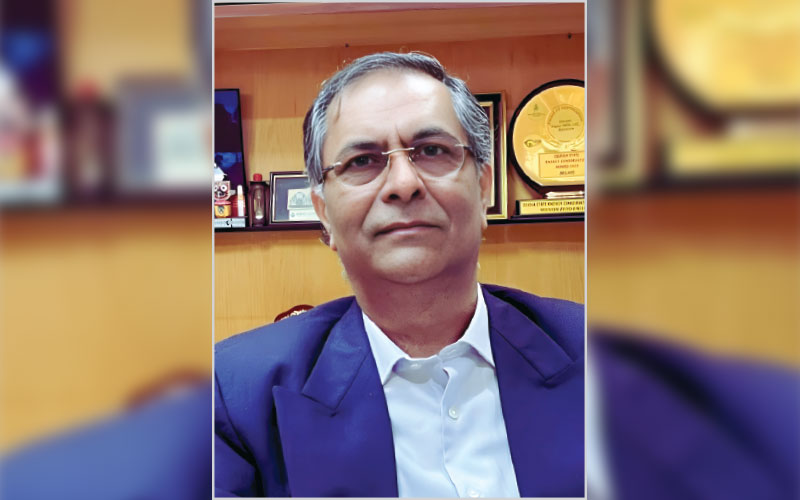
In an exclusive interaction with Paper Mart, Mr. Ashish Gupta, Unit Head and Senior President, Emami Paper Mills, shares that the mill has stabilized its water consumption at 10.9 m³/tonne in 2025-26, by adopting a comprehensive recycling and reuse model. He emphasizes that real-time online flow meters and digital consumption monitoring devices across the mill represents a significant investment in operational intelligence, allowing proactive water conservation in the paper making process.
Paper Mart: After implementing water reuse, recycling, and closed-loop systems across your mill, what is your current specific freshwater consumption (m³/tonne), and has this figure stabilized in recent years?
Ashish Gupta: Since 2021-22,Emami Paper Mills has successfully achieved a significant reduction in freshwater consumption from 12.6 m³/tonne to 10.9 m³/tonne – a sustained reduction of 13.5%. This achievement is the outcome of a multi-year strategic transformation, progressing from basic conservation protocols to a comprehensive recycling and reuse engineering philosophy. We rigorously adhere to water conservation processes and systems; and are thereby able to effectively maintain and stabilize the water consumption at 10.9 m³/tonne.

Watch: Top Paper Companies 2023
PM: Under your present operating regime, where water reuse and recycling systems are already in place, what operational challenges have emerged in terms of process stability, machine performance, or water quality?
AG: Paper industry is a highly competitive industry and maintaining best product quality and achieving efficiency is essential for survival and growth. We have adopted water saving measures considering that quality cannot be compromised while maintaining productivity and efficiency. To this end, the mill operates a tiered water allocation model, directing the highest-purity freshwater exclusively to those process points where substitution would compromise product quality and machine integrity. This is the reason that we are able to maintain the benchmark of less than 11m³/tonne water consumption consistently.
PM: At your current level of system closure and reuse, what process, raw material, or product quality requirements limit further reduction in freshwater consumption?
AG: In paper manufacturing, water quality is one of the most critical ingredients that determines the brightness and shade of the final product, where variation is non-negotiable. Further, wastepaper is increasingly becoming heavily printed with dark and multi-color inks, which makes production of recycled paper and newsprint more challenging.
The technical complexity of de-inking intensifies considerably. Additionally, the chemical preparation processes and pressurized showers used in forming sections of paper machine require 100% fresh water for maintaining product quality and machine runnability. Given this dynamic operating scenario, sustaining a stable sub-11 m³/tonne figure is not a passive outcome — it requires ongoing vigilance and continuous process adaptation in response to shifts in feedstock quality or changes in the finished paper grade. The mill’s ability to hold this number stable is therefore a far more significant operational achievement than the headline figure alone might suggest.

The mill operates a tiered water allocation model, directing the highest-purity freshwater exclusively to those process points where substitution would compromise product quality and machine integrity. This is the reason, we are able to maintain the benchmark of less than 11m³/tonne water consumption consistently.
PM: In highly recycled operating conditions such as yours, do you periodically purge water from the system? What operational factors make this necessary, and how does it define your minimum freshwater intake?
AG: In recycled operation, the rejects, ink and contamination in wastepaper are purged at low consistency from the system. Further changing over from one grade to another grade of paper manufacturing occasionally requires system wash/boil out. Both are inevitable for maintaining essential parameters of the paper and paperboard we produce.
To minimize our freshwater intake, we use available back water of the machine during quality change to the maximum extent.
PM: With closed-loop and reuse systems already implemented, how do you determine where freshwater must still be used versus where recycled water can be used within different sections of the mill?
AG: The allocation of freshwater versus recycled water across mill sections is guided by a water quality tiering approach. Critical sections—such as high-pressure shower circuits in wire and press parts, and dilution water for final product quality control require freshwater. For all remaining stages of the manufacturing process, loop water or back water is reused.
We use reclaimed ETP-treated water for auxiliary uses like dust suppression, floor washing, ash conditioning, etc.
PM: Under these highly recycled conditions, what water quality or system parameters do you monitor most closely, and how do they influence decisions related to reuse levels, purging, or freshwater intake?
AG: We track four primary water quality parameters in its recirculated streams, each triggering specific operational responses:
Total Suspended Solids (TSS): The most operationally critical parameter. When TSS in recirculated streams exceeds thresholds for specific reuse points, the stream is routed to additional filtration (MGF, ACF, DAF) or diverted to the ETP. Elevated TSS is the most common trigger for freshwater supplementation.
Chemical Oxygen Demand (COD): A proxy for organic contamination load. Elevated COD in backwater accelerates microbiological activity, increases slime risk, and can interfere with chemical dosing efficacy in the stock preparation and de-inking systems.
Biological Oxygen Demand (BOD): It is monitored for compliance with consent-to-operate discharge norms and as an indicator of ETP performance. High BOD in recirculated water would compromise long-term environmental compliance.
Process pH: Process pH is critical in DIP chemistry the peroxide bleaching of de-inked pulp operates within a tight alkaline window. Deviation from target pH in backwater directly affects pulp brightness, a parameter of existential commercial importance in newsprint production.
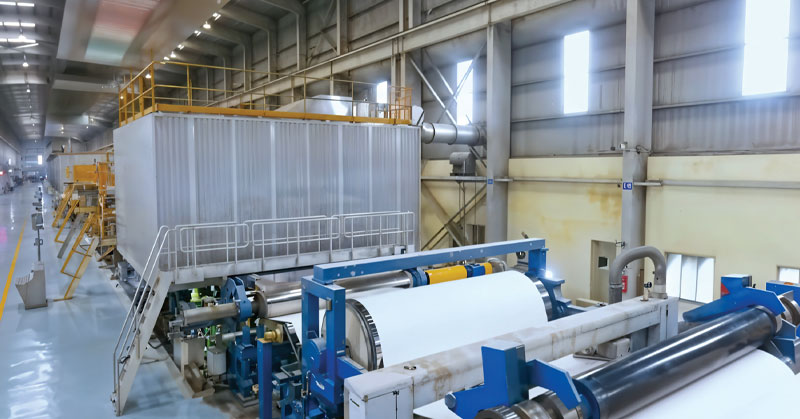
The deployment of real-time online flow meters and digital consumption monitoring devices across the mill represents a significant investment in operational intelligence. The ability to see water flow data continuously — rather than relying on periodic manual readings — allows process engineers to detect anomalies, pre-empt quality deviations, and intervene before a water quality excursion becomes a production quality event.
The technical and operational factors that define the practical limit for reduction in water consumption are: high purity water requirements for sensitive grades, equipment and system design constraints, and build-up of dissolved contaminants and microbiological load.
PM: After implementing available water reuse and recycling measures, have you reached a practical limit to further water reduction under your current operating configuration? What technical or operational factors define this limit?
AG: Given the present level of system closure and infrastructure constraints, we are operating close to the practical minimum achievable freshwater consumption. At 10.9 m³/tonne, this is well below the Indian industry average and well ahead of CPCB benchmark of 15 m³/tonne for September 2027. This level of performance is also approaching the benchmarks reported by leading European recycled-fiber mills, which typically operate with superior raw material quality and substantially higher capital investment.
That being said, we are continuously on the lookout for scope to incrementally improve upon the same. The technical and operational factors that define the practical limit for reduction in water consumption are purity of water required for sensitive paper grades; equipment and system design constraints, and the progressive buildup of dissolved contaminants and microbiological load in re-circulated water circuits.
Also Read: Sripathi Paper and Boards Stabilizes Water Consumption at 2 m³/tonne for 18 Months
PM: Beyond your existing systems and processes, what types of improvements or changes would be necessary to reduce water consumption further?
AG: The next frontier of water conservation will require the deployment of membrane-based treatment technologies to upgrade recirculated backwater to a quality suitable for reuse within the manufacturing process itself. While the high capital and operating expenditure associated with these technologies currently limits their commercial viability at scale, rapid advances in membrane engineering and energy efficiency are steadily improving their cost-performance ratio. As this technology continues to evolve, it holds strong promises of becoming operationally viable for recycled-fiber paper mills in the near term.
In paper manufacturing, water quality is one of the critical ingredients that determines the brightness and shade of the final product, where variation is non-negotiable.