
In an exclusive interview with Paper Mart, Mr. Supratim Pan, Sales Manager at Voith Paper Technology India Pvt. Ltd., and Mr. Henning Laubrock, Head of Sales & Technology at Meri Environmental Solutions GmbH (a Voith company), revealed that the competitive water intensity benchmark for Indian waste-paper-based (RCF) mills is expected to go below 10 m³/tonne. They shared that a critical approach to reduce freshwater consumption is to use clarified whitewater or super-clear filtrate for pulping, dilution, and low-pressure showers. Further, Voith backed its AquaLine Flex solution, which combines advanced biological treatment with filtration systems, enabling packaging paper mills to bring freshwater consumption down to below 5.5 m³/tonne.


Paper Mart: Based on your experience with mills that have already implemented water reuse, recycling, and closed-loop systems, what specific water consumption range are most Indian mills currently operating in?
Supratim Pan: In our experience, the Indian paper industry is currently navigating a significant performance gap between legacy operations and the new regulatory benchmarks. As per some articles and studies available online, historic water intensity for waste-paper-based (RCF) mills in India reached as high as 59 m³/tonne, while the current industry average has improved to approximately 39 m³/tonne.
However, we are seeing a “tiering” of the market:
Regulatory Leaders: Mills in water-stressed regions, such as the Ganga river basin, are already operating within the CPCB-mandated range of 1520 m³/tonne for RCF grades.
Integrated Mills: Larger integrated units typically operate in the 2540 m³/tonne range, though they face stricter upcoming enforcement under the 2025 Seventh Amendment Rules.
Voith Technological Benchmarks: In contrast, when we deploy AquaLine Flex architectures, we can stabilize the freshwater consumption for packaging paper production at below 5.5 m³/tonne.
As we move toward the September 2027 regulatory deadline, we expect the competitive benchmark for Indian RCF mills to shift decisively toward the sub-10 m³/tonne range.

Watch: Top Paper Companies 2023
PM: In mills operating with high levels of water reuse, what operational and water quality challenges typically emerge?
Henning Laubrock: Depending on the starch content in the recovered paper, high levels of Chemical Oxygen Demand (COD) can provide a breeding ground for biological activity. This results in acidification of the process water and thus dissolving of Calcium-Carbonate, slime formation, unpleasant odor even in the final product, and degraded runnability. The dissolved calcium carbonate can precipitate due to pH, temperature or pressure-changes causing severe scaling problems in the effluent treatment plant, at heat exchangers, pipes or spray nozzles. Furthermore, the system becomes highly sensitive to fluctuations in raw material quality. For instance, varying contamination levels in recovered paper bales can cause sudden spikes in dissolved contaminants that destabilize the entire wet-end chemistry
PM: After implementing conventional reuse and treatment technologies, what technical or process factors limit further reduction in freshwater consumption?
SP: Conventional mechanical treatment such as sedimentation and standard filtration is excellent for removing suspended solids but is ineffective against dissolved organic and inorganic Non-Process Elements (NPEs). Once these elements reach saturation in the process water, they interfere with the functional chemistry of the paper machine, leading to quality defects and frequent breaks. A fundamental physical limit is also imposed by the mill’s mass balance. Mills require a minimum intake to compensate for water lost through evaporation in the dryer section. Additionally, water carried away in solid rejects (which can be up to 80% moisture) defines a baseline intake that conventional systems cannot bypass.
In many mills, the missing or wrongly designed counter current principle or the unbalanced sizing of stock & water towers limits a further reduction in freshwater consumption. Many mills have trouble with full sewer water towers, broken towers etc. As they need to keep these levels low, this volume is pumped to the next ‘‘free’’ tower which is mostly located in the stock preparation. Here towers/tanks overflow and bring excessive water peaks to the effluent treatment plant which can cause problems. In addition, the ‘‘lost’’ water is later backed up by freshwater intake into the paper machine.
With a clear counter current flow principle and properly sized stock & water buffers such overflows are basically eliminated. The whole system will be stabilized and can run permanently at the lowest possible freshwater intake.

As the Indian pulp and paper industry faces tightening regulatory standards, specifically the ‘Environment (Protection) Seventh Amendment Rules, 2025,’ which will strictly enforce new freshwater consumption limits by September 2027the transition to closed-loop systems is no longer optional. At Voith, we are leveraging our global expertise and technologies like AquaLine to help Indian mills reconcile high production targets with extreme water stress.
PM: In highly closed-loop systems, why does periodic purging remain necessary, and what determines the minimum freshwater requirement?
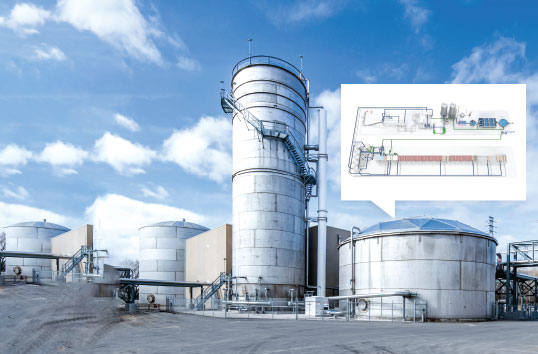
HL: Periodic purging is essential to prevent the prohibitive buildup of dissolved contaminants that would otherwise poison the process chemistry. The absolute minimum freshwater requirement is determined by the “evaporation threshold.”
For example, in a packaging paper mill, the theoretical limit is approximately 1.5 litres per kg of paper (~1.5 m³/tonne). At this stage, the only freshwater added is the exact amount required to replace water lost to the atmosphere during the drying process and chemical preparation. Achieving this benchmark requires a sufficiently sized, advanced and complex effluent treatment system. In addition, efficient filtration technologies must be used for process water treatment to replace fresh water at the high-pressure showers. Also, the usage of aeration in water towers might need to be considered.
PM: How can mills further optimize water use within their existing closed-loop systems, without simply adding new recycling capacity?
SP: Mills can further optimize existing loops without major capacity expansions by focusing on internal process discipline. A key strategy is replacing freshwater with clarified whitewater or super-clear filtrate for pulping, dilution, and low-pressure showers. Mechanical upgrades also play a vital role. For example, a case study from a tissue mill showed that installing Voith’s HydroSeal device reduced suction pressure roll water consumption by 75%.
Additionally, using advanced press fabrics like +Peak can enhance dewatering performance, reducing the moisture load entering the dryer section.
Voith’s Papermaking 4.0 and the MillOne ecosystem allow for real-time tracking of COD levels, flow rates, and chemical dosages. This data-driven approach enables the system to identify potential errors in the biological treatment plant before they impact paper quality.
PM: In mills already operating under high reuse conditions, how does monitoring and control help maintain system stability and manage water quality limits?
HL: Stability in high-reuse systems is maintained through advanced digitalization. Voith’s Papermaking 4.0 and the MillOne ecosystem allow for real-time tracking of COD levels, flow rates, and chemical dosages. This data-driven approach enables the system to identify potential errors in the biological treatment plant before they impact paper quality. For example, the OnEfficiency.DIP solution dynamically adjusts chemical dosing to maintain constant quality despite fluctuations in incoming raw material.
PM: What types of technological or process improvements can help mills operate safely at lower freshwater consumption levels than currently achieved?
SP: To operate safely at significantly lower consumption levels, Voith recommends a tiered approach through our AquaLine architectures. AquaLine Flex integrates advanced biological treatment (anaerobic + aerobic) with filtration units to reduce freshwater consumption to below 5.5 l/kg.
Additionally, the innovative R2S Anaerobic Reactor technology, when combined with Lime Trap, removes approximately 3 tonnes of lime daily (as seen at the Leipa mill, effectively managing scaling issues in closed loops).
Also Read: Kemira India Advocates for ETP, Online Monitoring to Maximize Water Reuse in Paper Mills
PM: Based on current industry experience, what is the realistic lower limit of freshwater consumption achievable in practice, and what factors ultimately define this limit?
HL: Based on current industry experience, the realistic lower limit for freshwater consumption is approximately 2.5 liters per kg of paper produced (~2.5 m³/tonne). 1.5L/kg seems in reach as this limit is ultimately defined by evaporation; at this stage, the only fresh water added is the amount required to replace what is lost to the atmosphere during the drying process and for chemical preparation of some additives. Achieving this benchmark requires high-level process expertise on the customer side, a properly sized effluent treatment plant, and the successful implementation of the anaerobic treatment in combination with LimeTraps. Some other smaller adaptations such as membrane filtration technologies or aeration should be considered.
Based on current industry experience, the realistic lower limit for freshwater consumption is approximately 2.5 l/kg of paper produced (~2.5 m³/tonne)