
In an exclusive interaction with Paper Mart, Ms. Veronika Renyaan, Stakeholder Engagement & Advocacy Manager – Sustainability, APP Group, shared that the company has reduced its freshwater consumption by approximately 8% over the past five years through sustained efforts in water reduction, reuse, and recycling. Going forward, APP Group plans to further lower its freshwater demand by transitioning from high water-intensive technologies to more water-efficient alternatives, process redesign, and improved segregation of water streams, enabling effective water reuse and optimization across operations.

Paper Mart: After implementing water reuse, recycling, and closed-loop systems across your mill, what is your current specific freshwater consumption (m³/tonne), and has this figure stabilized in recent years?
Veronika Renyaan: Over the past five years, our freshwater consumption intensity has decreased by approximately 8% following the implementation of water reduction, reuse and recycling. Over the last three years, freshwater intensity has largely stabilized, indicating that the mill is approaching a practical operating limit under the current configuration.
PM: Under your present operating regime, where water reuse and recycling systems are already in place, what operational challenges have emerged in terms of process stability, machine performance, or water quality?
VR: Water reuse and recycling are embedded in our production processes, including the reuse of treated effluent returned to the water treatment plant. Increased water reuse presents operational challenges such as variability in recycled water quality, accumulation of dissolved solids, and higher risks of fouling and scaling which may affect machine stability and performance. These challenges are managed through enhanced monitoring and process control.

Watch: Top Paper Companies 2023
PM: At your current level of system closure and reuse, what process, raw material, or product quality requirements limit further reduction in freshwater consumption?
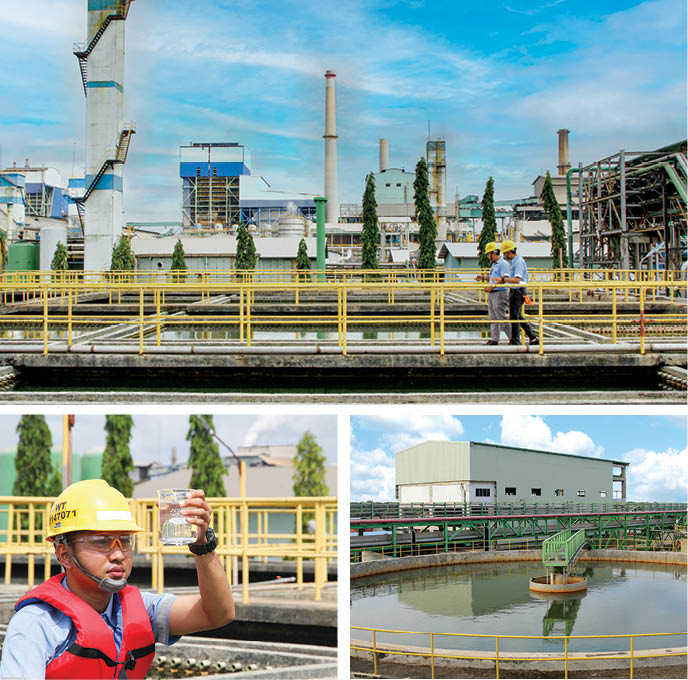
VR: At our current level of system closure and water reuse, further reductions in freshwater consumption are constrained primarily by the quality of raw water sourced from the river. In many parts of Indonesia, river water is characterized by relatively high levels of mud and suspended solids, which are further influenced by weather conditions and seasonal changes.
During periods of high rainfall and seasonal transitions, increased mud and suspended solids exceed the effective treatment capacity of the water treatment plant. As the existing treatment system is not designed to process all incoming water, approximately 5–15% of the abstracted river water must be returned to the river to maintain stable treatment performance.
PM: With closed-loop and reuse systems already implemented, how do you determine where freshwater must still be used versus where recycled water can be used within different sections of the mill?
VR: Recycled water is prioritized and used in areas where its quality continues to meet the minimum operational and product quality standards. These standards are defined by key parameters such as suspended solids, turbidity, and conductivity, depending on the sensitivity of the process.
As water circuits become more closed, recycled water may reach a saturation point, where the accumulation of contaminants exceeds acceptable limits. When this occurs, controlled freshwater injection is applied to dilute the system, restore water quality to within operational standards, and maintain process stability.
PM: Under these highly recycled conditions, what water quality or system parameters do you monitor most closely, and how do they influence decisions related to reuse levels, purging, or freshwater intake?
VR: Under recycled operating conditions, water quality and system parameters are closely monitored to ensure stable operations, protect equipment, and maintain product quality. Key parameters routinely tracked include pH, total suspended solids (TSS), total dissolved solids (TDS), and conductivity, as these directly reflect the suitability of recycled water within process areas.
Recycled water is reused as long as measured values remain within defined process-specific thresholds. When those indicators approach or exceed acceptable limits, freshwater intake is applied to dilute the system and restore water quality.
Also Read: Indian RCF Mills’ Water Intensity Benchmark to Shift Below 10 m³/Tonne; Voith Backs AquaLine Flex to Reduce Freshwater Use
PM: Beyond your existing systems and processes, what types of improvements or changes would be necessary to reduce water consumption further?
VR: Beyond our existing systems and processes, further reductions in water consumption would require a combination of technological upgrades, process redesign, and enhanced water management strategies.
Advanced wastewater treatment plants would enable higher-quality effluent, allowing treated wastewater to be recycled back into process more extensively and reliably. In addition, replacing high water-consuming technologies with lower water-consumption alternatives would further reduce overall freshwater demand. Increasing condensate return to the power plant also represents a significant opportunity, as higher condensate recovery reduces the need for freshwater makeup water in boiler and utility systems. This includes process redesign, improved water‑efficient equipment, and better segregation of water streams based on quality requirements. Finally, enhanced real-time monitoring, automation, and process control would be essential to sustain higher levels of water efficiency.

Under recycled operating conditions, water quality and system parameters are closely monitored to ensure stable operations, protect equipment, and maintain product quality. Key parameters routinely tracked include pH, total suspended solids (TSS), total dissolved solids (TDS), and conductivity, as these directly reflect the suitability of recycled water within process areas.