
In an exclusive interview with Paper Mart, Ms. Clara Gazzinelli Cruz, Head of Operational Sustainability, Suzano, shared that the company achieved a specific water consumption of 7 m³/tonne across its Brazilian sites in 2025, and is focused on reducing operational water withdrawal across its operations, which is currently close to 25 m³/tonne. Going forward, Suzano aims to further optimize freshwater use through advanced treatment technologies, digital tools, and integrated long-term planning, aligning water efficiency with operational resilience and product quality.

Paper Mart: After implementing water reuse, recycling, and closed-loop systems across your mill, what is your current specific freshwater consumption (m³/tonne), and has this figure stabilized in recent years?
Clara Gazzinelli Cruz: In 2025, the specific water consumption at our Brazilian sites was 7 m³/tonne. Our wider corporate goal is actually focused on water withdrawal in our operations, which is closer to 25 m³/tonne. We have been introducing process improvements and new technologies to continue reducing this, and making good progress since 2020. Around three-quarters of all the water we withdraw is used in the process, treated and returned to water bodies, in line with strict quality parameters.
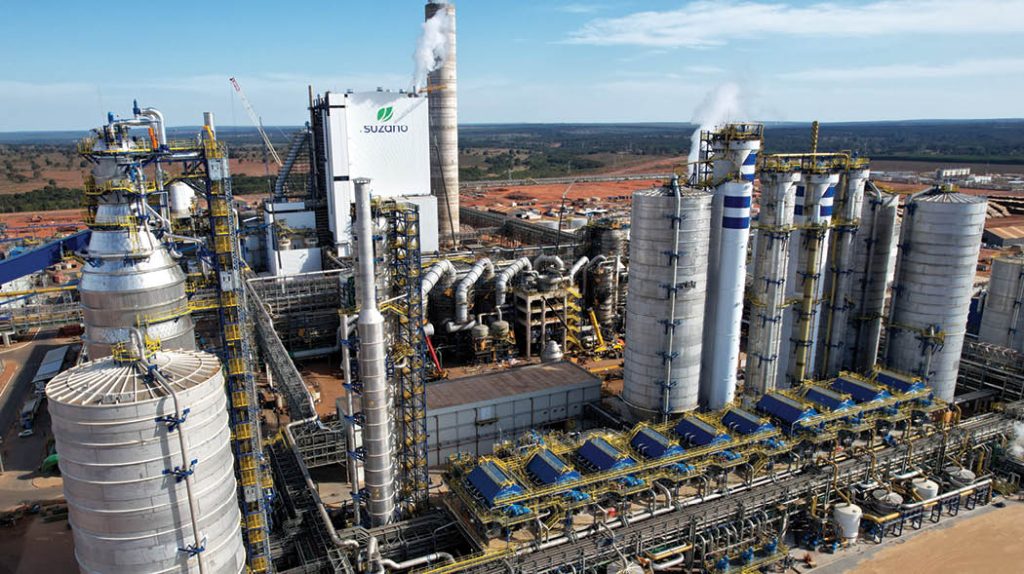
Our newest mill in Ribas do Rio Pardo is an internal benchmark of what is possible, using the best technologies available. Despite the fact this is a huge site, we only increased our absolute water withdrawal by 12% when this came into operation.
In recent years, this indicator has been stable, reflecting the effectiveness of our water management strategy. Rather than relying on isolated efficiency gains, the stabilization of freshwater consumption demonstrates that reuse and recycling practices are fully integrated into day-to-day operations and embedded in operational discipline. Ongoing improvements now focus on maintaining reliability, process stability and resilience under increasingly closed operating conditions, while continuing to pursue incremental efficiency gains where technically feasible.

Watch: Top Paper Companies 2023
PM: Under your present operating regime, where water reuse and recycling systems are already in place, what operational challenges have emerged in terms of process stability, machine performance, or water quality?
CGC: When you have extensive water reuse and recycling systems in place, it requires a higher level of operational discipline and system control. One of the main challenges is managing the increased concentration of dissolved and suspended substances within water circuits, which can influence process stability and equipment reliability if not properly controlled.
From an operational standpoint, higher closure levels demand more robust monitoring of water quality parameters and closer integration between process control, maintenance and water treatment systems. Aspects such as scaling, fouling, corrosion and microbiological growth require special attention, calling for adaptive operational strategies, preventive maintenance and, in some cases, additional treatment steps to safeguard machine performance.
These challenges are not limiting factors but rather key considerations when managing mature, highly recycled systems. Addressing them successfully depends on continuous monitoring, data-driven decision making and ongoing optimization to balance water efficiency goals with long-term operational reliability and product quality.
PM: At your current level of system closure and reuse, what process, raw material, or product quality requirements limit further reduction in freshwater consumption?
CGC: At advanced levels of system closure and water reuse, further reductions in freshwater consumption are mainly limited by process robustness and product quality requirements. Certain stages of production require water with tightly controlled physicochemical characteristics to protect process stability, equipment integrity and final product performance.
As water circuits become more closed, substances that are not fully removed by internal treatments – such as salts, dissolved organics and trace contaminants – tend to accumulate over time. While this is managed within defined operational limits, exceeding certain thresholds may impact raw material interactions, process efficiency and key product quality attributes. These constraints define the technical boundaries within which freshwater reduction remains feasible without introducing operational or quality risks.
Therefore, additional reductions are not only a matter of water balance optimization, but also of ensuring that critical process and product specifications continue to be met under increasingly recycled operating conditions.
Beyond our existing water reuse and recycling systems, achieving further reductions in water consumption would require a combination of structural, technological and operational advancements.
PM: In highly recycled operating conditions such as yours, do you periodically purge water from the system? What operational factors make this necessary, and how does it define your minimum freshwater intake?
CGC: Controlled water purging is an inherent and necessary practice for highly recycled or closed-loop systems. As systems become increasingly closed, certain dissolved inorganic salts, organic compounds and non-process elements gradually accumulate within the water circuits and cannot be fully eliminated through internal reuse alone.
Periodic purges are therefore required to maintain water quality within defined operational thresholds, ensuring process stability, equipment protection and consistent product quality.
The need for purging is driven by factors such as concentration cycles, scaling and corrosion risks, microbiological control, and the preservation of stable operating conditions across different process stages.
These technical requirements ultimately define a minimum level of freshwater intake, which is continuously optimized but cannot be fully eliminated under current operating configurations. Managing this balance is a key aspect of operating mature, highly recycled systems, where water efficiency objectives must be aligned with long-term reliability and performance.
PM: With closed-loop and reuse systems already implemented, how do you determine where freshwater must still be used versus where recycled water can be used within different sections of the mill?
CGC: The decision on where freshwater is still required versus where recycled water can be safely applied is guided by a combination of water quality specifications, operational risk assessment and product requirements. In practice, we segment water uses across the mill based on how sensitive each process step is to variability in parameters such as dissolved solids, suspended matter, organic load, temperature, pH and microbiological activity.
Freshwater is prioritized for high‑criticality applications where water quality directly influences equipment integrity, process stability or product performance. Recycled water is applied broadly in less sensitive uses and wherever treatment and control measures ensure that quality remains within predefined limits. This allocation is not static. Instead, it is continuously refined through monitoring, process control and targeted treatment, so that reuse levels can be maximized without compromising reliability.
Ultimately, the approach is to treat freshwater as a strategic input reserved for points of greatest technical need, while expanding safe reuse through operational discipline, fit‑for‑purpose water quality management and ongoing optimization across different mill functions.
PM: Under these highly recycled conditions, what water quality or system parameters do you monitor most closely, and how do they influence decisions related to reuse levels, purging, or freshwater intake?
CGC: Close monitoring of water quality and system performance parameters is essential to maintaining stable and reliable operations. Key parameters typically include conductivity, total dissolved solids, suspended solids, organic load, microbiological activity, pH and temperature, as these directly reflect the degree of system closure and the accumulation of non‑process elements.
These indicators are used as operational decision tools rather than standalone metrics. Trends and threshold deviations help determine when reuse levels can be safely increased, when additional treatment adjustments are required, or when controlled purging is necessary to prevent adverse impacts on process stability and equipment integrity. Likewise, freshwater intake is adjusted to ensure that critical quality limits are respected while maximizing reuse wherever feasible.
By continuously integrating water quality data with process control and operational experience, highly recycled systems can be managed proactively, allowing water efficiency targets to be met without compromising long‑term performance or product quality.
The practical limit to further water reduction is primarily defined by water quality thresholds, system closure effects, and the need to maintain consistent process performance and product quality.
PM: After implementing available water reuse and recycling measures, have you reached a practical limit to further water reduction under your current operating configuration? What technical or operational factors define this limit?
CGC: Our operations are reaching an advanced level of efficiency under our current operating configuration. This does not indicate a lack of opportunity, but rather reflects the technical boundaries associated with operating highly closed and integrated water systems in a stable and reliable way.
This practical limit is primarily defined by water quality thresholds, system closure effects, and the need to maintain consistent process performance and product quality. As reuse levels increase, the accumulation of dissolved salts, organic compounds and other non‑process elements imposes constraints that cannot be fully addressed through operational optimization alone. Equipment protection, corrosion and fouling control, microbiological stability and process robustness all play a role in defining these boundaries.
Within this context, opportunities for further reduction tend to be incremental rather than transformational, requiring careful balancing between water efficiency gains and operational reliability. Meaningful additional reductions would likely depend on structural changes, advanced treatment solutions or process redesign, rather than further optimization of the existing configuration.
Also Read: APP Group Stabilizes Freshwater Intensity Through Enhanced Monitoring and Process Control
PM: Beyond your existing systems and processes, what types of improvements or changes would be necessary to reduce water consumption further?
CGC: Beyond our existing water reuse and recycling systems, achieving further reductions in water consumption would require a combination of structural, technological and operational advancements. As systems approach high levels of closure, incremental optimization has limited reach. Transformative solutions are required to expand possibilities and overcome current technical limits.
Potential pathways include the adoption of advanced water treatment technologies capable of selectively removing dissolved salts and specific contaminants, greater segregation of water loops according to quality requirements, or process redesign aimed at reducing water dependency at the source. Digital tools and advanced analytics can also play an important role by enabling predictive water management, early detection of system imbalances, and more precise control of reuse and purge strategies.
Further progress depends on long‑term investment and integrated planning, aligning water efficiency objectives with operational resilience, asset integrity and product quality. Reducing water consumption beyond current levels is less about maximizing short‑term efficiency and more about redesigning systems to operate reliably under increasingly constrained water conditions.