
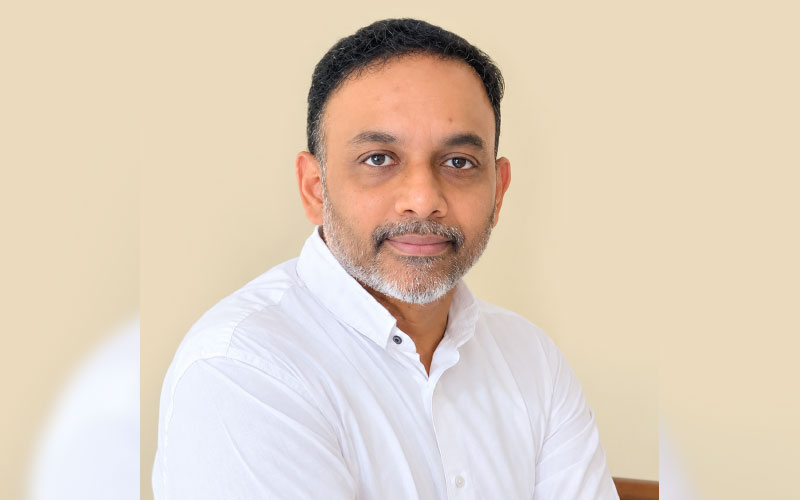
In an exclusive interview with Paper Mart, Mr. Rajesh Ponnuru, Divisional Chief Executive, Paperboards and Specialty Papers Business, ITC Limited, discusses the company’s approach to sustainable growth. As one of India’s leading players in the sector, ITC has been integrating environmental stewardship with manufacturing excellence through investments in energy efficiency, renewable energy, process modernisation and digitalisation. Over the past five years, the company has increased renewable energy use by 8% while reducing emission intensity by 25%. Its initiatives also span responsible fibre sourcing through social and farm forestry, water conservation, circular resource management and waste recovery. Alongside these efforts, ITC is expanding its portfolio of fibre-based packaging alternatives, including the Filo and Omega series, to support the shift away from plastics. Looking ahead, Mr. Ponnuru highlights the role of innovation and value-chain collaboration in advancing sustainable manufacturing.
Paper Mart: ITC has been pursuing sustainability across its pulp, paper and paperboard operations. What are the key priorities shaping the company’s green growth strategy today?
Rajesh Ponnuru: For ITC, green growth means improving environmental performance, fibre security and resource efficiency while strengthening competitiveness and long-term business resilience. ITC’s social and farm forestry programmes contribute to sustainable fibre security, carbon sequestration and livelihood opportunities for rural communities. The Company’s water stewardship initiatives enable rainwater harvesting equivalent to approximately six times its net water consumption, while renewable sources account for more than half of its total energy requirements.
Going forward, our priorities are to develop low-carbon products, improve water and energy efficiency, build climate resilience, strengthen sustainable fibre security, advance circularity and expand our portfolio of sustainable products including plastic-substitution products. Through these priorities, ITC seeks to create enduring environmental, social and business value across its pulp, paper and paperboard operations.

Watch: Top Paper Companies 2023
PM: How is ITC reducing the environmental footprint of its manufacturing operations, particularly through energy efficiency, renewable energy and resource optimisation?
RP: ITC is systematically reducing the environmental footprint of its operations through a combination of energy efficiency, renewable energy adoption, fuel switching, process optimisation and modernisation, supported by digitalisation and advanced analytics. Investments in modern technologies, including high-pressure recovery boilers, high-pressure and high-temperature cogeneration systems, and energy-efficient evaporators, have improved overall energy performance.
Process optimisation and modernisation measures cover key energy-intensive operations, including pulp cooking, paper-machine steam and condensate systems, hood and pocket ventilation systems, pumping systems, compressed-air networks and heat-recovery systems. ITC has also modernised equipment such as compressors, chillers and motors, while upgrading boilers to enhance biomass utilisation.
ITC has invested in wind and solar energy installations and sources renewable electricity from off-site wind farms through open-access arrangements. Industry 4.0 tools and data analytics are being deployed to increase biomass utilisation and improve cogeneration performance, enabling higher power generation from the same high-pressure steam input.
Collectively, these interventions have supported lower energy and emission intensity, improved resource productivity and the progressive decarbonisation of operations. Over the past five years, renewable energy use has increased by 8%, while emission intensity has declined by 25%.
PM: ITC has placed strong emphasis on responsible fibre sourcing and social forestry. How is this approach helping address the industry’s growing fibre requirements sustainably?
RP: ITC’s social and farm forestry initiatives support the creation of a renewable fibre base while generating rural livelihoods and contributing to carbon sequestration. Spread across approximately 1.48 million acres, these initiatives have generated around 270 million person-days of employment and enabled GHG removals of approximately 7.6 million tCO₂e.
ITC also focuses on the continuous development and deployment of site-specific, high-yielding and disease-resistant clonal saplings to improve plantation productivity and resilience. Innovative plantation approaches, including agroforestry and bund-plantation models, enable small and marginal farmers to cultivate agricultural crops and trees on the same land. Under the agroforestry model, suitable agricultural crops are cultivated within widely spaced tree plantations, thereby contributing to both wood and food security. This enables farmers to earn regular income from seasonal crops, together with periodic lump-sum income from tree harvesting, typically after a four-year cultivation cycle. These interventions are designed to improve plantation productivity, survival rates and farmer returns.
As fibre demand grows, sustainable fibre security will depend not only on expanding plantation coverage but also on increasing productivity per unit of land, continuously developing improved clonal varieties, strengthening farmer collaboration, enhancing traceability and promoting landscape-sensitive forestry practices. This integrated approach can help meet the industry’s growing fibre requirements while creating enduring environmental and socio-economic value.

ITC is systematically reducing the environmental footprint of its operations through a combination of energy efficiency, renewable energy adoption, fuel switching, process optimisation and modernisation, supported by digitalisation and advanced analytics.
PM: Water stewardship is a critical priority for the paper industry. What measures has ITC adopted to reduce water consumption and increase reuse across its operations?
RP: ITC follows an integrated water stewardship approach based on the principles of avoid, reduce, reuse, recycle, replenish and collaborate. The priority is to avoid water use wherever technically feasible. This includes replacing conventional liquid-ring vacuum pumps with water-efficient vacuum systems and adopting dry mechanical seals that eliminate sealing-water requirements.
Water demand is further reduced through the optimisation of paper-machine showers using efficient nozzles and automated high-pressure robotic showers and the optimisation of water use in pulp-mill heat exchangers through digital and process controls. These measures are complemented by the reuse of paper-machine backwater for pulp dilution and hot water generated in pulp mills for paper-machine operations. To enhance circular water use, treated effluent is recycled as cooling-tower make-up water and in pulp-mill heat exchangers. Treated effluent is also utilised for irrigation, thereby reducing freshwater requirements.
Beyond the factory boundary, ITC contributes to water replenishment through rainwater harvesting and catchment-level watershed interventions. Recognising that water is a shared resource, the Company collaborates with employees, local communities, farmers and knowledge partners to address common water challenges and strengthen catchment-level water security. Collectively, these interventions have contributed to a 19% reduction in water intensity over the past five years.
ITC’s Bhadrachalam and Kovai facilities have achieved Platinum-level certification under the Alliance for Water Stewardship (AWS) Standard, the highest certification level. The Kovai unit is the world’s first paper mill to achieve the AWS Platinum rating. The Company has also received an ‘A’ rating for water security from CDP, reflecting leadership in water-related governance, risk management, action and disclosure.
PM: How is ITC advancing circularity through recycling, waste recovery and resource efficiency across its paper and paperboard businesses?
RP: ITC promotes circularity across its operations by minimising waste generation at source, recovering materials and energy, and creating productive applications for manufacturing residues. At ITC’s Kovai facility, nearly one lakh tonnes of post-consumer wastepaper are sourced and utilised annually as raw material. Across ITC’s operations, nearly 99% of the waste generated is reused or recycled, helping divert waste from disposal and recover its residual value.
Beyond manufacturing operations, ITC’s Well-Being Out of Waste programme strengthens source segregation, collection and recycling systems. During the year, the programme collected approximately 69,750 tonnes of dry waste across more than 2,055 wards. Since its inception, it has reached over 32.4 million citizens across 8.12 million households, engaged around eight million schoolchildren and 2,310 corporates, and supported sustainable livelihoods for more than 18,200 waste collectors and over 150 social entrepreneurs.
Together, these initiatives demonstrate ITC’s integrated approach to circularity, combining resource-efficient manufacturing, recycled-fibre utilisation, productive recovery of process residues and inclusive post-consumer waste-management systems.
PM: With sustainable packaging gaining momentum, how is ITC innovating its paperboards and packaging solutions to support the shift away from plastics?
RP: ITC is advancing sustainable packaging through material science, product innovation and application-specific paper and paperboard solutions designed to reduce dependence on single-use plastics. Its plastic-substitution portfolio includes the Filo and Omega series, developed to deliver the barrier properties, strength, printability and converting performance required across food-service, food-delivery and other packaging applications.
The Filo series, comprising FiloPack, FiloServe, FiloBev, FiloTub and FiloBowl, offers paperboard-based solutions for applications such as food-delivery packs, plates, trays, beverage cups, tubs and bowls. These products incorporate specialised barrier technologies that provide resistance to water, oil and grease while reducing or replacing conventional plastic and polyethylene-coated structures in suitable applications.
The portfolio is developed around end-use functionality, product safety and circularity. Depending on the product and application, these solutions are designed to support recyclability through appropriate paper-recycling systems while meeting applicable food-contact, performance and converting requirements. The paperboard uses wood fibre sourced from sustainably managed plantations, with selected products available with FSC certification. Through this integrated approach, ITC is expanding its portfolio of fibre-based packaging solutions that combine environmental performance with functionality, scalability and consumer convenience, supporting the transition towards more sustainable packaging systems.
Across ITC’s operations, nearly 99% of the waste generated is reused or recycled, helping divert waste from disposal and recover its residual value.
PM: What role do technology and innovation play in helping ITC achieve greater efficiency and lower environmental impact across its manufacturing processes?
RP: Technology and innovation are central to ITC’s efforts to improve operational efficiency and reduce the environmental impact of its operations. The Company continues to invest in process modernisation and advanced technologies to reduce steam, electricity, water and chemical consumption across energy-intensive processes such as pulp cooking, black-liquor evaporation and paper-machine drying. Advanced process controls, online quality measurement, machine learning and predictive analytics are being progressively deployed to improve operations, optimise energy and chemical consumption, improve product quality and reduce off-specification production.
Deep decarbonisation of the industry will require further innovation to reduce steam demand, enhance heat recovery and enable access to reliable, round-the-clock renewable electricity. Advanced water-treatment and recycling technologies that deliver higher recovery with lower energy consumption than conventional reverse-osmosis and evaporation systems will also be important for increasing water circularity.
By integrating process expertise with digitalisation, automation and next-generation clean technologies, ITC aims to improve resource efficiency, lower energy and emission intensity, enhance operational reliability and progressively reduce the environmental footprint of its operations.
PM: How do you see ITC’s sustainability experience contributing to the wider transition of India’s paper industry towards greener manufacturing?
RP: ITC’s experience demonstrates that environmental performance and business competitiveness can be advanced together through commercially viable interventions in energy efficiency, renewable energy, responsible fibre sourcing, water recycling, circular resource use, digital manufacturing and sustainable packaging. These experiences and learnings can support the wider paper industry’s transition towards greener manufacturing.
However, achieving transformation at scale will require collaboration among manufacturers, technology providers, government institutions, research organisations, financial institutions, recyclers, farmers and customers.
PM: What are the biggest challenges that still need to be addressed for the Indian paper industry to achieve meaningful decarbonisation?
RP: The most significant challenge is the sector’s dependence on continuous process heat. Reducing associated emissions will require a progressive transition towards lower-carbon fuels such as biomass. However, the availability, quality, affordability and long-term sustainability of biomass remain key challenges as demand increases across industries.
Another major challenge is access to dependable and affordable low-carbon electricity. While renewable energy capacity is expanding, round-the-clock availability, grid reliability, energy storage and commercial viability remain important considerations for continuous manufacturing operations.
Technology limitations and the capital intensity of the transition present additional barriers. Electrification of several steam-intensive processes is not yet technically or commercially viable at scale. Moreover, paper mills have long asset lives, making major equipment upgrades and technology replacement, capital-intensive. The sector will therefore require proven technologies, access to affordable green finance and supportive policy frameworks to accelerate decarbonisation while maintaining operational reliability and competitiveness.
Also Read: Paper Mart Emagazine Oct-Nov, 2026
PM: Looking ahead, what does a truly sustainable paper industry look like to you, and where does ITC see itself in that transformation?
RP: A truly sustainable paper industry would operate within climate-, water- and nature-related limits while meeting society’s growing demand for renewable, recyclable and high-performance paper and paperboard products. It would source fibre responsibly from traceable plantations, social and farm forestry systems, and recovered-paper streams. It would progressively transition towards lower-carbon energy, maximise resource and water efficiency, minimise waste and embed circularity into product design. Such an industry must also be socially inclusive, enabling farmers, employees, local communities and suppliers to participate in and benefit from the transition.
ITC sees itself playing an important role in this transformation by demonstrating scalable approaches to responsible fibre sourcing, resource-efficient manufacturing, water stewardship, circularity, renewable energy adoption and sustainable paperboard and packaging solutions. Its social and farm forestry programmes, investments in lower-carbon manufacturing, water stewardship initiatives and development of fibre-based alternatives to plastics demonstrate how environmental performance can be integrated with livelihood creation, resource security and business competitiveness.
Looking ahead, ITC will continue to strengthen value-chain collaboration, expand the application of lifecycle assessments and invest in next-generation technologies. The objective is to demonstrate that industrial growth and environmental stewardship can be mutually reinforcing, creating enduring value for business, society and the environment.
The Company’s water stewardship initiatives enable rainwater harvesting equivalent to approximately six times its net water consumption, while renewable sources account for more than half of its total energy requirements.