With over 34 years of experience in the Indian Administrative Service (IAS), Mr. Kumar Jayant has recently been appointed as the Additional Chief Secretary/Chairman & Managing Director, Tamil Nadu Newsprint & Papers Ltd (TNPL). In an exclusive interview with Paper Mart, Mr. Jayant shares TNPL is moving beyond traditional paper manufacturing to build a circular economic model. The company is driving its next phase of growth through infrastructure modernization, product innovation, and operational excellence, thereby expanding its market reach, accelerating capacity growth, and scaling its circular economy. Looking ahead, Mr. Jayant’s vision is to transform TNPL into a diversified global leader in sustainable paper, packaging, hygiene, and allied businesses while strengthening its position as India’s leading environmentally responsible paper manufacturer.
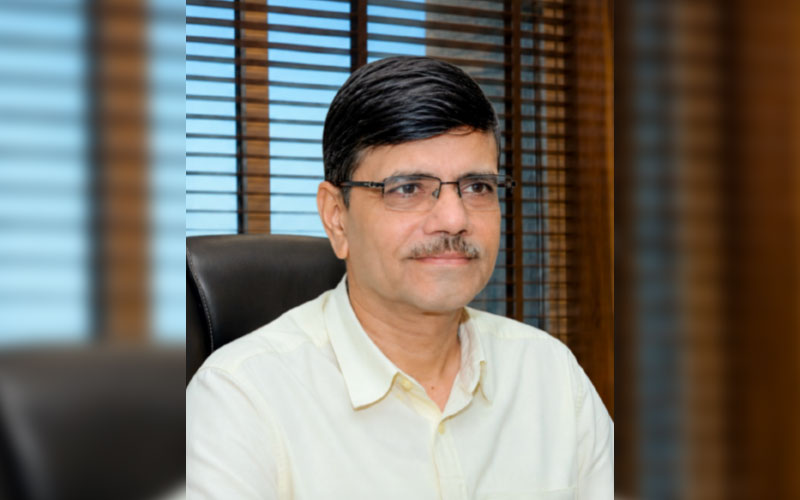
Paper Mart: Congratulations on being appointed as the Chairman and MD of TNPL. Tell us about your new role and how your previous experience in administrative services and other key governmental positions will help in current company’s growth and advancement?
Kumar Jayant: Thank you for the warm wishes. Assuming the leadership of Tamil Nadu Newsprint and Papers Limited (TNPL) is both a privilege and a significant opportunity to steer an industry pioneer towards its next phase of growth.
TNPL is globally recognized for its environmentally responsible manufacturing practices, transforming by-products into value-added products across high-grade writing and printing papers, multi-layer packaging boards, advanced tissue paper lines, and premium grade cement. As Chairman and Managing Director, my primary mandate is to drive strategic growth, infrastructure modernization, and operational excellence across our manufacturing units.
Over my 34-year career in the Indian Administrative Service (IAS), spanning 22 assignments, including as Additional Chief Secretary, I have overseen large-scale financial, technical, and regulatory ecosystems. Drawing on leadership experience across sectors such as Information Technology, handlooms, and textiles, I intend to leverage this governance expertise to advance TNPL’s three strategic priorities.
Expanding Market Reach: Strengthening the global footprint of TNPL’s premium printing papers and packaging boards, which are already exported to more than 60 countries.
Accelerating Capacity Growth: Commissioning our 100 TPD tissue paper production line to capitalize on expanding domestic and global hygiene markets.
Scaling the Circular Economy: Scaling our premium cement business by utilizing enriched in-process materials to produce premium cement, further strengthening TNPL’s sustainability commitment.
By combining the strengths of sound public sector governance with corporate agility, we will continue to modernize our steam and power infrastructure, expand our captive plantation initiatives, and ensure that TNPL remains India’s benchmark for sustainable, innovation-driven, and high-value industrial manufacturing.

Watch: Top Paper Companies 2023
PM: What made you decide to join the paper sector? How do you envision the future of the Indian paper industry?
KJ: The opportunity to lead TNPL as Chairman and Managing Director represents a meaningful continuation of my public service journey. As an administrator, my objective has always been to create sustainable economic value while ensuring long-term societal benefits.
The modern pulp and paper industry occupies a unique position where advanced industrial manufacturing intersects with rural livelihoods, captive plantation, resource efficiency, and climate stewardship. TNPL has proven that a globally respected brand can thrive on circular economy principles and value-added manufacturing, transforming natural cellulose fiber from sugarcane and sustainably sourced wood pulp into premium paper, packaging boards, tissue products, and premium-grade cement.
Looking ahead, I envision a vibrant, technologically advanced, and globally competitive future for the Indian paper industry, anchored on three key transformations:
Sustainable Fiber Security: By expanding scientifically managed captive plantation initiatives, the sector can ensure a reliable and sustainable fiber supply while uplifting the farmers’ livelihood.
Accelerated Multi-Segment Growth: Steady demand for writing and printing paper, coupled with the rise of e-commerce, sustainable packaging, and hygiene awareness, is driving growth in premium paperboard and tissue segments.
Hyper-Green Circular Operations: The future of manufacturing lies in low-carbon, closed-loop operations that maximize water conservation, reuse, and the utilization of in-process materials, reinforcing environmental stewardship and circularity.
By combining institutional governance with advanced manufacturing technologies and automation, the Indian paper sector is evolving far beyond its traditional role. It is steadily emerging as a cornerstone of the nation’s circular economy and sustainable industrial growth story.

TNPL aspires to adopt select rural hamlets and transform them into model communities by facilitating access to quality education, healthcare, livelihood opportunities, and essential infrastructure.
PM: TNPL is not only a leading Indian paper mill but has been actively involved in CSR and other initiatives for the betterment of the state. How do you plan to take this legacy forward?
KJ: TNPL has been deeply committed to community development since its inception. Following the introduction of Section 135 of the Companies Act, 2013, the company established a comprehensive CSR policy aimed at enhancing the well-being of communities in and around our areas of operation.
Our CSR initiatives are primarily focused on five key pillars: Education, healthcare, community development and infrastructure, environment & soil quality, and culture & heritage preservation.
Over the years, TNPL has undertaken impactful programmes benefiting children, senior citizens, farmers, livestock rearers, unemployed youth, entrepreneurs, and spiritual communities through initiatives such as quality education, daily mobile medical camps, community medical centres, farmer capacity-building programmes, cattle care camps, infrastructure development, skill training, and the renovation of historic temples, churches, and mosques.
As we move forward, our focus will be on making our CSR interventions increasingly need-based, measurable, and sustainable. We plan to undertake comprehensive community surveys to identify gaps and emerging needs, enabling us to transition from a broad-based approach to a more targeted and micro-level intervention strategy.
Looking ahead, TNPL aspires to adopt select rural hamlets and transform them into model communities by facilitating access to quality education, healthcare, livelihood opportunities, and essential infrastructure. Our objective is not merely to implement CSR projects, but to create lasting social impact and contribute meaningfully to inclusive and sustainable development across Tamil Nadu.
The industry can expect several significant developments from TNPL in the coming years such as a 100 TPD tissue paper expansion, plastic alternative innovation, infrastructure modernisation, and scaling circular manufacturing by maximizing the utilization of enriched in-process materials for commercial premium-grade cement.
PM: What is your vision for the company and how do you plan on achieving it? Are there any major developments that we will witness in the coming years?
KJ: My overarching vision for TNPL is to transform the company into a highly diversified, multi-product global leader in sustainable paper, packaging, hygiene, and allied businesses, while further strengthening our position as India’s benchmark for environmentally responsible industrial manufacturing.
We are steadily moving beyond traditional writing and printing papers to build a resilient circular economy model, expanding our presence across premium paperboards, tissue paper products, and premium-grade cement.
The industry can expect several significant developments from TNPL in the coming years such as a 100 TPD tissue paper expansion at Unit-II, Mondipatti, where we have commissioned a INR 340 crore, 34,000 TPA state-of-the-art tissue paper facility, backed by our integrated hardwood pulp mill, to manufacture premium hygiene products for expanding domestic and international markets.
We are also coming up with plastic alternative innovation to address the growing demand for sustainable packaging. Our R&D and packaging board teams are developing TAMBAG paper carry bag, digital printing paper, liquid packaging boards, and barrier-coated biodegradable boards for the retail, food service, and e-commerce sectors.
We are also undertaking infrastructure modernisation by implementing a INR 250 crore phased steam and power upgrade at Unit-I, featuring a 125 TPH high-pressure boiler, fuel handling plant, and accessories to improve energy efficiency, operational reliability, and lower carbon emissions.
As part of our long-term sustainability roadmap, we have commissioned 1MW rooftop solar power systems across both production units, reinforcing our commitment to renewable energy adoption and low-carbon manufacturing.
We are also scaling circular manufacturing by maximizing the utilization of enriched in-process materials for commercial premium-grade cement. We are further strengthening the synergy between our paper and cement businesses and advancing TNPL’s circular manufacturing objectives.
Through these strategic investments, infrastructure expansions, product innovations, and an enhanced focus on captive plantation, TNPL is well-positioned to deliver sustainable, high-value growth while contributing meaningfully to Tamil Nadu’s industrial development and environmental stewardship.
At TNPL, we believe that the future competitiveness of the sector will depend on a synchronized approach encompassing advanced technologies, operational excellence, and progressive policy interventions.
PM: What is your outlook on the current scenario of the paper industry in terms of geo-political crisis, raw material volatility and price fluctuations, impacting the industry and what are your strategies for overcoming these obstacles?
KJ: The global paper industry is currently operating in an increasingly complex and volatile environment. Ongoing geopolitical uncertainties have disrupted international supply chains, resulting in elevated ocean freight costs, delays in the delivery of critical equipment, and fluctuations in global pulp markets. Simultaneously, domestic manufacturers continue to face pressure arising from variability in raw material, chemical, and energy prices, coupled with increased competition from low-priced paper imports.
At TNPL, we view these challenges not as constraints, but as opportunities to strengthen our self-reliance, enhance operational resilience, and reinforce our long-term competitiveness.
To mitigate exposure to global market uncertainties and maintain sustainable margins, we are pursuing a comprehensive de-risking strategy across our manufacturing ecosystem:
Pulp Self-Sufficiency: TNPL is expanding captive plantations in Tamil Nadu and leveraging natural cellulose fiber from sugarcane, complemented by record hardwood pulp production at Unit-II, to strengthen raw material security, improve cost competitiveness, and support the sustained operation of our upcoming 100 TPD tissue paper line.
Thermal and Energy Autonomy: TNPL has undertaken a INR 250 crore steam and power modernization project, increasing the use of in-house methane gas, biomass, and alternate fuels for lime kilns to improve energy efficiency and reduce fossil fuel dependence.
Strategic Procurement and Spot Tendering: TNPL has adopted a dynamic procurement strategy, including spot tendering, to mitigate geopolitical supply chain disruptions, ensuring greater flexibility and uninterrupted availability of critical inputs through FY 2026–27 and beyond.
Eliminating Dependence on Imported LPG: To minimize exposure to international fuel market volatility, TNPL has eliminated its dependence on imported LPG by adopting efficient electrical heating systems for industrial canteens and sustainable in-house energy solutions for guest house operations, strengthening operational continuity and supporting our sustainability objectives.
By progressively replacing external dependencies with domestic fiber security, integrated pulp capabilities, energy self-sufficiency, and circular manufacturing practices, TNPL is well-positioned to transform market volatility into a sustainable competitive advantage and continue delivering long-term value to all stakeholders.
Also Read: The New Value Equation: Extracting More from Every Investment
PM: What technological advancements, operational improvements and policy reformation can further boost the paper industry?
KJ: To unlock the next phase of growth, the Indian paper industry must evolve from conventional manufacturing into a highly efficient, technology-driven and resource-conscious bio-economy. At TNPL, we believe that the future competitiveness of the sector will depend on a synchronized approach encompassing advanced technologies, operational excellence, and progressive policy interventions.
The future of paper manufacturing lies in automation and intelligent production systems, with Industry 4.0, IoT-enabled monitoring, and AI-driven analytics optimizing fiber composition, chemical dosing, energy use, and process stability, while advanced barrier-coating technologies enable biodegradable, food-grade packaging solutions to replace single-use plastics and meet evolving consumer expectations.
Sustainable growth requires closed-loop and circular manufacturing, supported by investments in oxygen delignification technologies, advanced process controls, and water conservation systems to reduce chemical consumption, improve resource efficiency, and lower environmental impact, while utilizing enriched in-process materials for value-added applications to enhance self-reliance and circularity.
The sector would also benefit from forward-looking policies promoting organized and contract plantations on degraded and underutilized lands with appropriate agricultural status and incentives to ensure long-term fiber security, alongside stronger safeguards against unfairly priced imports and incentives for renewable energy, bio-energy, and green manufacturing to accelerate the transition to low-carbon, globally competitive operations.
By integrating smart manufacturing technologies, operational efficiencies, and growth-oriented policy support, the Indian paper industry has the potential to further strengthen its position as a globally competitive, environmentally responsible, and innovation-led manufacturing sector.
We are steadily moving beyond traditional writing and printing papers to build a resilient circular economy model, expanding our presence across premium paperboards, tissue paper products, and premium-grade cement.