
Process variability remains most persistent in the wet-end approach flow, press section and cross-machine direction profiles. In an exclusive interaction with Paper Mart, Mr. Kumar Jayant, Additional Chief Secretary/Chairman & Managing Director, Tamil Nadu Newsprint & Papers Ltd (TNPL), discusses TNPL’s shift from reactive, single-loop control to integrated, predictive automation through APC, MPC, AI/ML and advanced measurement systems. He highlights the transition towards a highly integrated “Smart Mill” infrastructure through the integration of the Valmet Auto Paper Lab with ERP and AI, advanced fibre line upgrades and mill-wide APC. He further elaborates on the evolving role of operators as proactive system supervisors and process strategists, while identifying wet-end stabilisation, AI/APC integration and digital reliability as key investment priorities for the next phase of mill automation.

Paper Mart: Where does process variability remain most persistent in paper manufacturing today, and how does it affect quality and operating performance? Please tell us the process stages or parameters where tighter stability can deliver the greatest measurable gains.
Kumar Jayant: In modern paper manufacturing, process variability remains most persistent in the wet-end approach flow system and the press section. Because papermaking is a high-speed, continuous fluid-to-solid transformation, small upstream fluctuations multiply downstream. This forces mills to run defensively, away from optimal limits, driving up costs and degrading product consistency.
Key areas of process variability and their impact:
Wet End Approach Flow & Stock Preparation: Fluctuations in stock consistency, raw material composition and chemical additive feeds remain the key issues in the wet-end approach flow and stock preparation. The variability persists because multi-variable interactions between retention aids, fillers and starches make real-time chemistry control highly stochastic.
Cross-Machine Direction (CD) Profiles: Uneven basis weight, moisture, and caliper (thickness) across the wide width of the machine are the key issues in CD profiles. This variability persists due to online Quality Control System (QCS) scanners measuring the moving web in a diagonal “Z”-shaped path, blending machine-direction (MD) and CD data together, and making exact separation difficult. Slice-lip warping or thermal expansion across the headbox also causes localised profile imbalances.
The Press Section (Nip Profile Dynamics): Ageing of the press felts, mechanical roll wear, improper crown settings and felt choking are the key issues causing variability in the press section. The variability persists because the type of furnish (more recycled fibre) and high ash content lead to uneven moisture, resulting in a non-uniform CD moisture profile. This may lead to sheet breaks in the dryer section, causing immediate downtime.
The Drying Section: Uneven thermal profiles, edge shrinkage and variable condensate removal in drying cylinders are key issues in the drying section causing variability. The reasons include web edges drying faster and shrinking more than the centre, creating persistent cross-directional tension gradients.
In the high-speed, continuous operations of Tamil Nadu Newsprint and Papers Limited (TNPL), process variability remains most persistent within the wet-end approach flow system and across the Cross-Machine Direction (CD) profiles of the paper and packaging board machines. Because TNPL utilises a unique, delicate agricultural-residue, bagasse-heavy furnish mix, the wet-web strength of the paper sheet is inherently lower than pure softwood kraft pulp. Consequently, small hydraulic, chemical or thermal variations propagate downstream rapidly, triggering quality defects or costly machine downtime.
Key parameters where greater stability can deliver the most value:
Pulp Washing and Chemical Cooking Uniformity: By targeting specific parameters, TNPL stabilises its production lines and utilising Valmet Continuous Cooking G3 and TwinRoll Press technology stabilises pulp cleanliness and Kappa number variations. Tighter control here optimises bleach plant chemical dosing, directly reducing chemical consumption and specific steam demands in the pulping line.
Approach Flow Stock Consistency: Maintaining consistency variations below ±0.02% stabilises headbox delivery. This minimises machine-direction basis weight swings, enabling the mill to safely shift production targets closer to the lower allowable limit, reducing raw fibre usage by 1% to 2%.
Headbox Jet-to-Wire Speed Ratio: Locking down this hydraulic parameter improves fibre orientation, resulting in uniform cross-directional tensile ratios (MD:CD strength).
CD Moisture and Caliper Profiles: The structural uniformity allows TNPL to safely increase the average moisture target at the reel. Because water replaces fibre in the sellable tonnage, a 0.5% moisture target increase drives major fibre savings while lowering specific steam consumption in the drying cylinders.

Watch: Top Paper Companies 2023
PM: How has the approach to controlling process variability changed in recent years? In other words, how are mills moving beyond conventional automation and feedback control to achieve greater process stability? Please explain with examples.
KJ: Key transitions in process control from the past to the present include
From Single-Loop to Multi-Variable Control: Traditional PID loops handle one variable (e.g., valve position) at a time. Modern Model Predictive Control (MPC) manages dozens of interacting variables simultaneously, accounting for long process time delays.
From Reactive Feedback to Proactive Feedforward: Instead of waiting for a defect to reach the QCS scanner at the end of the machine, mills now measure upstream disturbances and adjust parameters before the error ever forms in the sheet.
From Localised Islands to Mill-Wide Orchestration: Automation no longer stops at individual machine sections. Mills now link the pulping, chemical additive, and paper machine stages into a singular, interconnected control strategy.
Modern frameworks that are replacing conventional automation are:
Real-Time Virtual Sensors (Soft Sensors): Traditional physical sensors only provide measurements after a process is complete or at specific physical locations, whereas soft sensors use real-time process data (such as pressure, temperature and flow) fed into mathematical models to estimate product qualities instantly. For example, instead of waiting for a destructive lab test every two hours to check freeness (fibre drainage), a mill uses an AI-driven soft sensor. This model calculates drainage capability continuously based on refiner power, stock flow, and consistency, allowing operators to adjust refining energy on the fly.
Model Predictive Control (MPC) with AI Overlays: Classic MPC manages highly coupled variables, but it can struggle when grade changes or raw material properties shift drastically. Modern systems overlay Machine Learning (ML) on top of MPC to adapt the underlying models dynamically without human intervention. During a grade change, such as switching from 60 gsm to 80 gsm paper, an adaptive MPC calculates the ideal trajectories for stock flow, steam pressure, and machine speed simultaneously. This reduces grade change transition times and the associated off-spec waste by up to 50%.
Proactive Machine Learning for Anomaly Detection: Instead of triggering an alarm when a variable passes a dangerous threshold, AI models analyse subtle correlations across hundreds of historical data tags to predict failures before they happen. To prevent sheet breaks, an ML model continuously monitors wire tension, wet-end chemical retention and dryer section drive currents. If it recognises a data pattern that historically preceded a break, it alerts operators 15 to 30 minutes in advance, allowing them to adjust chemical dosage or machine speed to stabilise the web.
Edge Computing and High-Frequency Analytics: Traditional Distributed Control Systems (DCS) process data in 1-second intervals, potentially missing high-frequency hydraulic or mechanical vibrations, whereas edge computing devices process data at millisecond speeds directly at the source. High-speed pressure transducers in the headbox approach-flow piping capture micro-pulsations from screens or pumps. Fast Fourier Transform (FFT) analytics isolate the root cause of these pulsations, adjusting wet-end dilution valves at a sub-second level to neutralise basis weight barring before it affects the sheet.
Concrete examples of advanced control in action at TNPL include:
Integrated Valmet Auto Paper Lab Framework: TNPL integrated its Valmet Auto Paper Lab directly into its DCS and SAP ERP networks. The automated laboratory tests structural parameters such as tensile strength, smoothness, and porosity, enabling automated quality monitoring and feedback control.
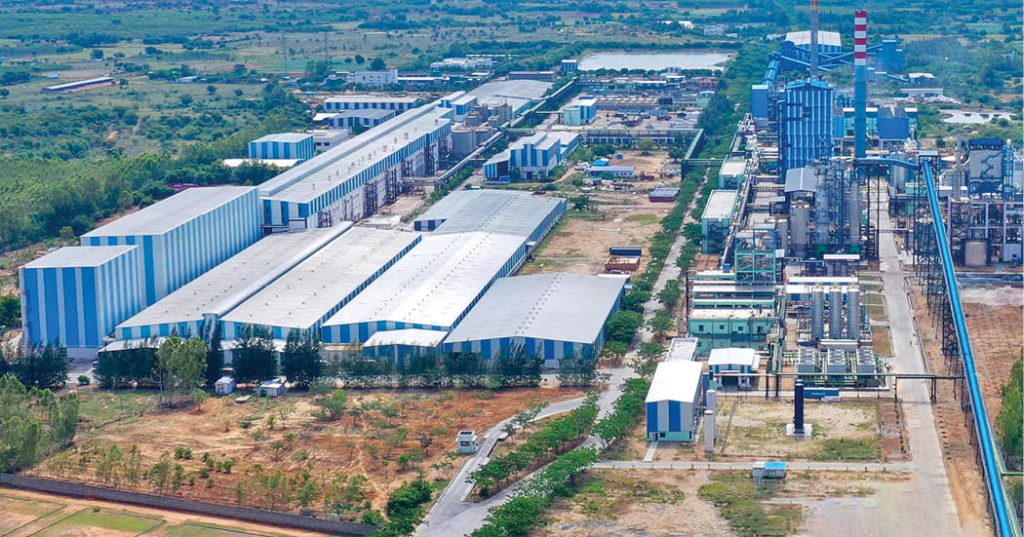
Advanced Fibre Line Upgrades (Valmet Continuous Cooking G3): TNPL’s primary furnish consists of sugarcane bagasse and agricultural residues. These materials suffer from natural, seasonal variations in fibre morphology. To address this variability, TNPL modernised its hardwood kraft pulp production using Valmet Continuous Cooking G3 and TwinRoll Press technology. Advanced process control (APC) software models the chemical cooking and bleaching timeline. It continuously adjusts chemical charging, temperatures, and wash-zone fluid dynamics based on the incoming raw material mix. This ensures highly uniform pulp quality and washing cleanliness at the source, preventing fibre variation from disrupting downstream processes.
PM: How are Advanced Process Control and Model Predictive Control being applied to reduce process variability? Where have they delivered measurable gains?
KJ: In paper mills, Advanced Process Control (APC) and Model Predictive Control (MPC) are applied by wrapping an intelligent automation layer over traditional Distributed Control Systems (DCS) and PID loops. Because papermaking involves extreme time delays (dead times), complex multi-variable interactions, and non-linear dynamics, standard PID controllers often fail, forcing operators to revert to manual control. MPC solves this by using real-time dynamic mathematical models to anticipate process trajectory and proactively adjust multiple variables simultaneously.
Core applications of APC and MPC at TNPL:
Optimisation of the Fibre Line and Bleaching Sequences: TNPL applies APC overlays across its pulp production line, specifically targeting the Valmet Continuous Cooking G3 and Elemental Chlorine Free (ECF) bleaching stages.
Bleaching and cooking involve long process time delays; chemical changes made at the input stage can take over an hour to register downstream. The MPC uses predictive models to calculate the future impact of changes in raw bagasse and wood mixtures. It coordinates chemical charges, temperature profiles and extraction-stage pH levels simultaneously. This prevents the excessive chemical over-dosing that occurs under manual control when trying to compensate for unexpected raw material swings.
Wet-End Chemistry Stability and Retention Control: First-Pass Retention (FPR) of fibres and ash fillers is highly variable in multi-furnishings due to fluctuating drainage speeds and system charge dynamics. An MPC algorithm can balance the inputs of multiple variables, such as coagulant flow, retention polymer dosing and thick-stock dilution.
Cross-Machine Direction (CD) and Machine Direction (MD) Quality Profiles: Handled through the Quality Control System (QCS), large-scale multivariable MPC manages the cross-directional profiles of basis weight, moisture and thickness (caliper). Rather than adjusting a single localised headbox dilution valve, the MPC relies on a detailed spatial interaction matrix. It isolates true MD variations from position-based CD defects, adjusting hundreds of profile actuators in real time to flatten the sheet uniformity curve.
Key areas where APC and MPC have delivered measurable gains:
Implementing these advanced supervisory controls has yielded clear operational returns for TNPL, directly supporting market competitiveness and resource conservation.
Reduction in Profile Variability: Mills typically achieve a 30% to 50% reduction in CD moisture and basis weight 2σ (two-sigma) variability. This extreme flattening of the profile ensures uniform roll build and eliminates converting defects.
Fibre and Furnish Savings: By narrowing basis weight variability, the “target-shifting” typically reduces fibre usage by 0.5% to 1.5% while maintaining minimum strength requirements.
Increased Moisture Efficiency: Flattening the moisture profile allows operators to increase the average moisture target at the reel by 0.5% to 1.0%. Because water replaces expensive fibre in the final sellable product weight, which enables greater fibre efficiency.
Faster Grade Transitions: Grade change recovery times are reduced by adjusting the stock flow, machine speed, jet-to-wire ratios and steam pressures simultaneously, reducing off-specification transition wastes by 40% to 60%.
Energy and Steam Reduction: Preventing over-drying and stabilising the dryer section steam demand reduces overall specific steam consumption by 3% to 7%.
PM: What practical role are AI and machine learning playing in predicting and correcting process deviations before they affect production or quality?
KJ: Rather than relying on reactive automation, AI acts as a proactive overlay that forecasts and corrects process deviations before they degrade paper quality or cause machine downtime.
Real-time roles of AI/ML in modern mills involve:
Predictive Anomaly Detection (Early Warning Systems): Deep learning models ingest thousands of high-frequency data tags, including temperatures, vibrations and motor currents, simultaneously. The AI establishes a baseline for “normal” operation across all variables and flags micro-deviations that human operators cannot detect. For example, in sheet break prediction, an ML model analyses the combined interaction of wet-end retention, wire tension, vacuum levels and dryer section loads. It identifies a known signature pattern of instability and alerts operators 15 to 20 minutes before a break occurs, giving them a window to adjust speed or chemical dosage.
Virtual Sensors (Continuous Quality Estimation): Vital paper qualities like tensile strength, tear and freeness can traditionally only be measured through destructive physical testing in a laboratory every few hours. ML algorithms use real-time process data to calculate these qualities continuously and make real-time strength predictions. For example, an AI model uses continuous inputs from the refiners, including power, flow and consistency, along with press section nip pressures and fibre characteristics, to calculate the paper’s current tensile strength index. If the predicted strength drops below the target, the AI automatically prompts the refiner control loop to add energy before off-specification paper reaches the reel.
Root Cause Analysis (RCA) and Diagnostic AI: When a quality deviation occurs, finding the root cause in a large mill is difficult. Diagnostic AI uses causal inference algorithms to scan historical data, trace the timeline of the deviation and isolate the exact source of the trouble. For instance, if a mill experiences a sudden spike in paper porosity, the AI reviews the process backwards, isolates the exact time the variance started and traces it to a specific raw material batch change in the pulp mill or a chemical pump malfunction three hours earlier.
Autonomous Optimization Overlays: AI acts as an “autopilot” layered on top of existing Distributed Control Systems (DCS) and MPC. It continuously searches for the most cost-effective operating window by balancing chemical costs, energy prices and production speed. For example, in chemical dosage optimisation, wet-end chemistry is highly variable due to changes in recycled fibre quality. A Reinforcement Learning (RL) agent adjusts retention aids and biocides in real time, maintaining perfect sheet retention while preventing chemical over-dosing, resulting in cost savings.
Concrete industry examples are:
ABB Ability™ Performance Optimisation for Paper Mills: Uses predictive ML models to track sheet break risks and pinpoint exactly which section of the machine (forming, pressing, or drying) is driving the instability.
Voith OnCumulus & Papermaking 4.0: Deploys virtual sensors for parameters such as strength and ash content. Mills using this technology can run closer to lower raw material thresholds without risking quality rejection.
Solenis OPTIX™ Applied Intelligence: A machine learning platform that predicts functional product quality, such as dry strength or sizing. In wet-end applications, it has allowed mills to reduce chemical additive costs by up to 25% while stabilising quality parameters.
PM: How are online measurement, smart instrumentation, machine vision, and QCS improving real-time detection and control of process variation? Where do significant measurement or data gaps still remain?
KJ: Technologies enabling real-time detection and process control:
Next-Generation Quality Control Systems (QCS): Traditional scanners move slowly across the paper web, potentially missing fast-occurring variations. Modern platforms, such as the Valmet IQ Scanner, use variable-speed scanning and edge-dwell acceleration. This decouples MD and CD data much faster, allowing the system to correct profile defects before they propagate into major issues. Real-time dashboards provide instant visibility into moisture and basis weight fluctuations, enabling rapid, closed-loop corrections.
Advanced Machine Vision & Web Inspection Systems (WIS): Moving beyond legacy single-camera configurations, modern mills utilise multi-camera edge-vision setups. These tools combine high-speed capture technology with specific light angles to scan 100% of the moving web continuously. The system catches micro-defects such as pinholes, slime spots, edge cuts, and colour variations at machine speeds exceeding 2,000 meters per minute. Integrating WIS with web monitoring tools allows operators to backtrack defects instantly and isolate what caused a sheet break.
Smart Instrumentation & Inline Wet-End Analysers: Rather than relying entirely on manual grab samples, modern mills place smart instruments directly into the process piping. Automated wet-end analysers continuously track total and ash retention, charge demand and drainage properties. This inline data feeds directly into the DCS, stabilising chemical dosing on a minute-by-minute basis.
Current measurement and data gaps:
The Press Section Blind Spot: The press section lacks scanning equipment because the web is too wet and fragile to handle a traversing frame. Operators there cannot directly measure the moisture profile exiting the press section in real time. Mills must estimate how effectively water is being mechanically removed. If a press felt degrades unevenly, the drying section receives a non-uniform thermal load, forcing the mill to over-evaporate water at the reel.
Internal Sheet Structure and Z-Direction Strength: QCS scanners and machine vision systems look primarily at the surface of the paper. They cannot measure internal structural parameters such as Z-directional tensile strength, internal bond strength (Scott Bond) or fibre orientation throughout the sheet layer. Mills therefore still rely heavily on periodic laboratory testing or uncalibrated virtual soft sensors to guess internal strength. True physical failures within the sheet structure are often discovered only after the paper has reached the reel or the customer.
Real-Time Fibre Morphology Instability: While inline freeness sensors exist, they do not track rapid variations in fibre morphology such as micro-fibrillation, individual fibre length distribution, and cell wall thickness. This is especially problematic in mills utilizing high percentages of recycled waste paper. Shifting fibre quality can therefore enter the forming section unnoticed, causing unpredictable variations in drainage and sheet formation that existing feedback loops can only react to after the fact.
The Time-Delay Blur of Scanners: Because a single scanner head must weave back and forth across a massive web, it takes anywhere from 30 to 60 seconds to complete a single profile scan. Any process disturbance that occurs at a frequency faster than the scan time, such as short-term hydraulic pulsations from a headbox screen, is therefore blurred or missed entirely, causing hidden MD variations.
PM: Drives and motion control directly influence speed, tension, synchronisation, and machine stability. How are newer drive and control technologies helping mills reduce variability across the paper machine and associated processes?
KJ: Key drive technologies reducing process variability:
Sectional Direct-Drive Systems (Eliminating Mechanical Slack): Older machines used a single large motor connected to a complex network of line-shafts, belts, clutches and open gears to power different sections, like wire, press, dryers and calender. Modern machines utilise sectional direct-drive systems, where Permanent Magnet Synchronous Motors (PMSMs) are coupled directly to the roll shafts without gearboxes. Removing mechanical transmission components eliminates backlash, torsional vibration and gear play. This ensures that the velocity command sent by the automation system matches the physical rotation of the roll instantly, eliminating micro-jerks that stretch or tear the paper web.
Ultra-Fast High-Bandwidth Inverters & Direct Torque Control (DTC): Modern Variable Speed Drives (VSDs) leverage advanced motor control algorithms like Direct Torque Control (DTC). Rather than relying on traditional pulse-width modulation (PWM) that passes through a separate speed controller loop, DTC calculates the motor’s torque and magnetic flux up to 40,000 times per second. The drive therefore reacts to load changes in milliseconds. For example, when a wet lump of paper enters a press nip, it causes a sudden torque spike. A DTC drive senses this load instantly and adjusts current to maintain exact speed, preventing localised web slack or tension spikes.
Common DC Bus Architectures: Multi-drive systems are engineered with a shared, common DC bus infrastructure, allowing energy to be shared globally across the entire paper machine drive network. The dryer section typically requires heavy motoring power, while the reel or unwind section might be braking and generating electricity. The common DC bus funnels the braked, regenerative energy directly back to the motoring sections. This stabilises line voltage across the mill, preventing electrical grid sags from destabilising adjacent drives or causing micro-speed fluctuations.
Advanced Motion Control Algorithms in Action Electronic Line Shaft (ELS) and Virtual Master Sync: Traditional master-slave drive configurations suffer from a cascade delay: if the first section changes speed, the second section takes a few milliseconds to react, creating a transient tension wave. Electronic Line Shafting (ELS) creates a mathematically perfect “virtual master” clock in the controller, with every drive section referencing this virtual clock simultaneously. If a speed change or grade ramp is initiated, all sections move in absolute synchronisation with zero phase lag, maintaining a consistent sheet draw.
Dynamic Tension and Draw Control (Predictive Slack Management): Paper stretches and shrinks as it transitions from 99% water at the wet end to 5% water at the reel. Motion controllers now utilise dynamic draw control. Instead of keeping speed ratios static, the controller uses load cells or optical sensors to measure web tension continuously. It dynamically alters the speed percentage (draw) between sections to keep web tension perfectly uniform, absorbing raw material variations, such as sudden shifts in fibre length or refining levels, without fracturing the sheet.
Measurable operating gains:
90%+ Reduction in Speed Variation: Modern sectional drives can maintain a steady-state speed accuracy of ±0.001%, virtually eliminating MD basis weight barring caused by speed cycles.
Drastic Decline in Tension-Induced Sheet Breaks: Stabilised web tension and instant load recovery reduce tension-related sheet breaks by 30% to 50%, boosting Overall Equipment Effectiveness (OEE).
Extended Mechanical Asset Life: Eliminating high-frequency torque oscillations protects expensive rolls, bearings and felts from premature wear, smoothing out the overall vibration profile of the machine
PM: How are automation, advanced control, and integrated process data helping mills achieve more consistent paper quality? Which quality parameters have benefited most?
KJ: By combining high-frequency process measurements, Quality Control Systems (QCS), and advanced control loops into a single data infrastructure, mills have moved past simple manual sampling. Today, integrated data platforms allow systems to track mill-wide process adjustments and automatically execute corrections before physical variations harden into the paper web.
How integrated data and automation drive quality consistency:
Closed-Loop Multi-Variable Correction: Modern mills link real-time QCS scanner data directly to wet-end chemistry and headbox actuators. Because the system understands how a change in stock preparation affects the final sheet minutes later, it continuously adjusts fibre refining, dilution valves and chemical pumps. This replaces the conventional method of operators manually making large, reactive adjustments based on lab tests.
True Machine-Direction (MD) and Cross-Machine Direction (CD) Decoupling: Integrated automation platforms use high-speed processing to separate time-based variations (MD) from position-based variations (CD) across the wide paper web. By accurately identifying the root cause of a deviation, the Distributed Control System (DCS) can execute precise corrections, such as altering total stock pump speed for MD errors or adjusting localised slice lip actuators for CD errors, without accidentally worsening adjacent areas.
Upstream Feedforward Adjustments: Integrated data structures allow the paper machine to “see” variations coming from the pulp mill or recycling plant. If a batch of recycled fibre shows a sudden drop in drainage capability, the automation system automatically slows down the machine or adjusts the wet-end retention polymer dosage before that specific batch of stock enters the headbox.
Quality parameters benefiting most:
The integration of advanced control systems has flattened the variation curves of several critical structural and functional paper properties, improving quality across the following parameters:
Moisture Content: Moisture has historically been the most volatile parameter due to uneven drying, edge shrinkage and variable press nip pressures. Modern multi-variable MPC coordinates steam pressure, machine speed and CD moisture spray booms simultaneously. Mills can reduce moisture variability by 40% to 60%. This flat profile eliminates roll-build defects like corrugations and wrinkles, while preventing downstream customer issues like paper curl, cockling and tight edges during printing.
Basis Weight (Grammage): Basis weight uniformity relies entirely on a steady water-to-fibre ratio leaving the headbox. Automated thick-stock valves, paired with high-frequency dilution control loops, neutralise short-term hydraulic and consistency variations. Total basis weight variation is minimised to negligible levels. This extreme stability allows the mill to execute “target shifting”—intentionally running production closer to the lower allowable weight limit without risking a sub-specification product, directly saving raw fibre.
Caliper (Thickness) and Smoothness: Controlled at the calender stack, caliper profile consistency requires immediate thermal management. Automated QCS systems control induction heating coils or variable-crown rolls across the calender width based on real-time thickness measurements. This eliminates localized thick or thin spots, resulting in uniform roll density, excellent reel winding and superior runnability on high-speed commercial printing presses and converting lines.
Tensile and Internal Bond Strength (MD:CD Ratios): Mechanical paper strength depends on the angle and orientation of the fibres as they land on the forming wire. Automated motion control systems keep the headbox jet-to-wire speed ratio locked within micro-tolerances, regardless of overall machine speed changes. This guarantees predictable, uniform directional strength, and drastically minimises web snap risks during high-speed printing, corrugated box forming or packaging conversion.
PM: As control systems become more intelligent, how is the operator’s role in process control and decision-making changing?
KJ: As control systems become more intelligent, the papermaking operator’s role is shifting fundamentally.
Operators are transitioning from reactive loop-tenders to proactive system supervisors and process strategists. Instead of manually chasing individual set points, modern operators manage the higher-level boundaries of an autonomous system. Today, the operator’s role is shifting:
From Reactive Tuning to Exception Management: Previously, operators constantly monitored individual PID loops. They spent their shifts manually adjusting thick stock valves, tweaking dilution slice positions, or changing steam pressures to counter process drift. Now, intelligent control systems handle these coupled variables autonomously. The operator now acts as an “exception manager”, stepping in only when the system flags an anomalous pattern it cannot resolve internally, or when a physical asset requires immediate mechanical inspection.
From Executing Changes to Evaluating Scenarios: Earlier, during a grade change, operators manually adjusted speed, basis weight and dryer profiles in stages based on personal experience. This created wide performance variances between different shifts. Today, the automation system calculates and executes the optimal multi-variable transition trajectory. The operator’s role is to verify the boundary constraints of the new grade, such as checking raw material availability or downstream converting readiness, and authorising the system to run the transition autopilot.
From Hunting Data to Validating AI Insights: When paper strength or moisture drifted out of specification, operators had to wait for laboratory results, examine historical trends and determine the root cause. But today, AI-driven diagnostic platforms analyse thousands of data tags instantly. Instead of hunting for the problem, the operator reviews a prioritised list of recommendations generated by the system, such as a “92% probability that a wet-end retention drop is caused by low polymer flow on pump B, with a recommendation to increase stroke by 4%. The operator then evaluates and approves these high-level actions.
New skills required for modern papermakers:
To successfully manage intelligent control systems, the modern operator’s skillset must shift from purely mechanical intuition towards systems and data literacy:
Model Performance Monitoring: Operators must recognise when an MPC or AI model is operating outside its calibrated boundary limits, for example, due to an unusual recycled fibre blend, and know when to safely adjust constraints or override the automation.
Data-Driven Problem Solving: Instead of adjusting a valve based on physical sound or sight, operators use digital twins and soft-sensor dashboards to visualise chemical, hydraulic and thermal dynamics that are invisible to the naked eye.
Mill-Wide Systems Thinking: Because intelligent systems link fibre preparation, wet-end chemistry and the dry-end into one interconnected loop, operators must understand how a decision in one section propagates through the entire process sequence.
PM: What typically prevents a mill from achieving the full benefits of advanced automation and intelligent control? Please tell us more about issues such as legacy systems, data quality, system integration, instrumentation, workforce capabilities, etc.
KJ: Despite massive investments in Advanced Process Control (APC) and AI, many mills fail to capture the full economic benefits of these technologies. The roadblocks are rarely caused by the algorithms themselves; instead, they stem from foundational gaps in hardware, fragmented data, and human resistance. The primary barriers preventing mills from achieving full automation maturity include the following:
Legacy systems and infrastructure bottlenecks:
DCS Processing Limits: Legacy Distributed Control Systems (DCS) often lack the memory and processing power to handle the high-frequency data calculation required by modern AI overlays or large-scale Model Predictive Control (MPC).
Proprietary Data Silos: Older automation platforms frequently rely on closed, proprietary communication protocols, making it expensive to extract data into a modern cloud platform or data lake without custom-built APIs or middleware.
High Latency: Legacy networks often update data at 1-second to 5-second intervals. This slow refresh rate is insufficient to capture high-frequency wet-end hydraulic variations, rendering real-time edge analytics ineffective.
The “garbage in, garbage out” data dilemma:
Uncalibrated Physical Sensors: Advanced software depends entirely on the accuracy of physical instruments. If a basic consistency transmitter or flow meter drifts out of calibration, the MPC or AI model processes inaccurate data and issues incorrect control commands.
Fragmented Data Environments: Lab testing data from Quality Management Systems (QMS), process data from historians, and business tracking data from ERP often run on completely separate servers. Without automated time synchronisation, AI models cannot accurately link upstream fibre properties to the final paper quality at the reel.
Missing High-Frequency Tags: Standard data historians often compress data to save storage space, removing the micro-vibrations and sub-second pressure spikes needed to train predictive anomaly detection models.
Smart instrumentation & maintenance deficits:
The Cost of “Blind Spots”: Critical zones like the press section lack continuous online scanning. Trying to run an advanced drying optimiser without real-time moisture data exiting the press section forces the model to rely on estimates.
Neglected Valve Mechanics: An intelligent controller can calculate the perfect control move down to the millimetre, but if the physical control valve suffers from mechanical backlash, stiction or poor tuning, it cannot execute the command accurately.
Insufficient Instrumentation Maintenance: Mills regularly invest millions in advanced software while underfunding the instrument technician teams required to clean, calibrate, and service the specialised sensors that feed the system.
Workforce capabilities and change management:
The “Black Box” Scepticism: If operators do not understand how an AI model or MPC arrives at a recommendation, they will not trust it. When the system makes an unexpected move, sceptical operators often switch the loop back to manual control, reducing the benefits of automation.
The Erosion of Basic Process Skills: Relying heavily on automation can cause younger operators to lose touch with physical papermaking intuition. If the advanced control system fails or encounters an edge-case scenario, the workforce may struggle to stabilise the machine manually.
Skill Gaps in System Maintenance: Traditional mill engineers are experts in mechanical and chemical processes, but they often lack training in data science, Python, or advanced control theory. When the vendor leaves, the mill lacks the internal expertise to retune models as the machine ages or grade mixes change.
Also Read: Paper Mart Emagazine Aug-Sep, 2026
PM: Can you share a recent implementation that measurably reduced variability or improved quality consistency? What results were achieved, and where should mills prioritise investment next?
KJ: TNPL has achieved a major milestone in process stabilisation by shifting from isolated, selective automation loops to a highly integrated “Smart Mill” infrastructure.
Some of the key implementations and results achieved by the mill are as follows:
Integration of the Valmet Auto Paper Lab with ERP and AI: Rather than relying exclusively on manual, retrofitted grab samples from the machine reel, TNPL integrated its automated testing laboratory (Valmet Auto Paper Lab) directly with its Enterprise Resource Planning (ERP) architecture and machine-learning models. This framework slashed quality testing time and minimised cross-shift variability. Real-time quality tracking allows the Distributed Control System (DCS) to make localised, rapid corrections to production parameters, drastically stabilising structural properties, reducing off-specification paper waste, and ensuring uniform reel building.
Advanced Fibre Line Upgrades (Valmet Continuous Cooking G3 & TwinRoll Press): To eliminate variations stemming from changing raw material batches, especially seasonal fluctuations in bagasse and agricultural residues, TNPL modernised its hardwood kraft pulp production line using Valmet’s Continuous Cooking G3 and TwinRoll Press technology. This minimised fibre morphology fluctuations at the source. The combination ensures highly uniform pulp quality and superior washing cleanliness, while significantly lowering chemical consumption and specific steam demands in the bleaching and cooking cycles.
Mill-Wide Advanced Process Control (APC): TNPL deployed broad APC overlays designed to network smart sensors and process data from the pulp mill through to the wet end. This integration has directly optimised chemical additive functionality, lowering overall chemical expenditures while preventing the severe retention swings that typically trigger web weakness and sheet breaks.
Where mills should prioritise investment next:
Wet-End Stabilisation & Retention Control: Invest in accurate, continuous consistency sensors and automated retention measurement loops to control ash and fines, preventing sheet breaks and basis weight drift.
AI and Advanced Process Control (APC) Integration: Move beyond basic automation by layering machine learning predictive models over legacy Quality Control Systems (QCS) to manage multi-variable constraints in real time.
Digital Reliability & Lubrication Routes: Digitally map equipment health, focusing first on vibration monitoring of critical bearings and automated lubrication routes to convert emergency breakdowns into planned downtime.