
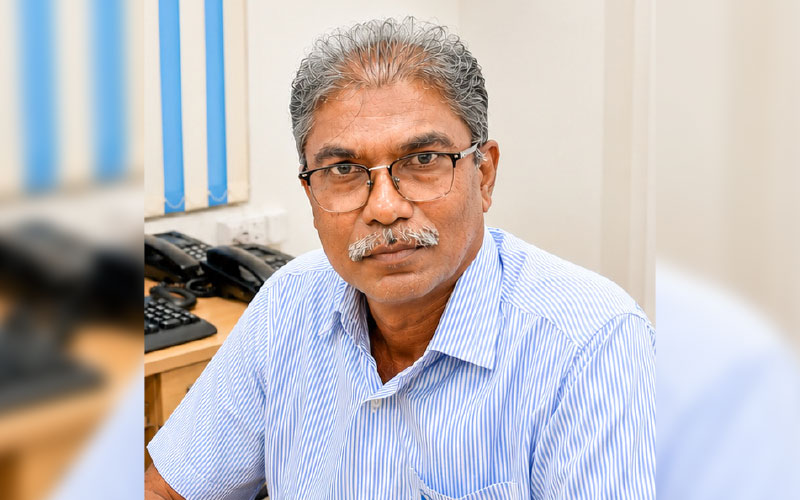
In an exclusive interaction with Paper Mart, Mr. P. Prince Tholkappian, Chief General Manager (Production & Project Coordination), Tamil Nadu Newsprint & Papers Limited, shares TNPL’s technological approach is ‘highly-integrated’ than ‘selective’ where automation and digitalization are one-stop, end-to-end solutions, connecting various sections, from pulping to finished paper, under centralized digital frameworks. It balances high-capacity operations with the practical constraints, resulting in an integrated, resource-intensive mill that delivers tangible performance gains such as sustainability, resource efficiency, and market competitiveness. TNPL’s vision for “Smart Mill” is built on the foundation of horizontal and vertical integration, where process equipment, automation, and utilities function as a unified responsive ecosystem.
Paper Mart: Could you walk us through the current technology landscape in your mill, particularly the key systems deployed across process areas such as stock preparation, paper machines, automation, energy, water, and chemical control, and indicate whether these are fully integrated or implemented in a more selective manner?
P. Prince Tholkappian: At TNPL, the technology landscape reflects a progressive transition from conventional process management to an integrated, data-driven manufacturing ecosystem aimed at optimizing resources across its writing & printing paper, paperboard, and tissue paper production lines. The key technology domains include stock preparation & pulping, paper machines, automation, energy & steam management, and water & chemical control.
TNPL employs advanced hardwood kraft pulping systems and collaborates with Valmet for state-of-the-art pulping technologies. These systems are designed to maximize fiber yield while ensuring efficient chemical recovery and resource utilization.
The mill operates high-speed, next-generation paper machines capable of producing multiple grades of paper. These machines are increasingly integrated with digital technologies that enhance operational predictability, process stability, and overall production optimization.
Automation forms the backbone of TNPL’s operational excellence. The mill utilizes a combination of Distributed Control Systems (DCS) and Quality Control Systems (QCS) to maintain consistent product quality, improve process control, and minimize production downtime.
TNPL has also invested significantly in technologies that reduce energy and steam consumption through continuous performance monitoring and regular energy audits. Modern Effluent Treatment Plants (ETP), along with process innovations for water recycling and reuse, have substantially lowered the mill’s water footprint.
The mill’s technology strategy is built on an integrated rather than selective approach. Automation and digitalization are implemented as end-to-end solutions, seamlessly connecting operations from pulping through finished paper production under centralized digital platforms.
These technology initiatives have delivered measurable improvements in sustainability, resource efficiency, and market competitiveness. TNPL has successfully reduced water consumption per unit of production while strengthening its overall environmental performance.
By networking equipment and leveraging Smart Sensors and Big Data Analytics, TNPL has optimized resource utilization, operational efficiency, and profitability. The mill has also implemented an Advanced Process Control (APC) system to reduce chemical consumption. Through periodic technology upgrades and continuous modernization, TNPL remains aligned with global quality standards, ensuring its competitiveness in an industry increasingly driven by sustainability, green technologies, and high-speed manufacturing.

Watch: Top Paper Companies 2023
PM: How would you assess the extent to which your installed technologies are being optimally utilized in day-to-day operations, and what factors, in your experience, prevent full utilization of these systems?
PT: At TNPL, assessing technology utilization is an ongoing process that balances high-capacity operations with the practical challenges of managing an integrated, resource-intensive manufacturing facility.
TNPL consistently maintains high levels of capacity utilization. The mill recently achieved a record production of over 6,34,000 MT (Paper – 4,34,294 MT; Paper Board – 2,00,075 MT). We evaluate technology performance through three key dimensions: operational consistency, resource efficiency, and energy self-sufficiency.
Our automated systems, including the integration of Automated Storage and Retrieval Systems (ASRS) with ERP, have significantly streamlined high-volume logistics and inventory management. The effectiveness of these technologies is clearly reflected in our environmental performance. For example, specific water consumption has been reduced substantially from 40 m³/ MT in 2016-2017 to 26 m³/MT in 2025-26 through mill-wide water conservation initiatives and circular economy practices.
By deploying advanced AFBC boilers and modern fuel-handling systems, we ensure a reliable, 100% self-sufficient steam and power supply, which is essential for maintaining stable day-to-day operations.
While our technologies are highly advanced, certain operational factors can occasionally limit their full utilization:
Integration Bottlenecks: A higher number of stock keeping units (SKUs) combined with smaller order quantities can lead to underutilization of storage systems.
Process-Related Challenges: Extensive resource recycling, although environmentally sustainable, introduces technical complexities. For instance, continuous recycling of EOP water in the pulp mill results in heavy scale formation within equipment, increasing the likelihood of breakdowns and necessitating periodic maintenance shutdowns.
Raw Material Variability: Variations in the quality and availability of raw materials such as bagasse and wood, along with fluctuations in imported coal prices, create operational uncertainties that digital systems can effectively monitor but cannot completely eliminate.
PM: In your view, which technologies or systems within your mill are currently underutilized or not delivering their full potential, and what are the underlying reasons: whether operational, economic, skill-related, or linked to process variability?
PT: At TNPL, while we remain an industry leader in resource efficiency, certain advanced technologies and systems still face practical challenges that prevent them from achieving their full potential. Our assessment highlights a few key areas where opportunities for further optimization exist.
Predictive Maintenance & AI Analytics: Although we have extensive sensor networks supported by DCS and QCS platforms, the transition from reactive and preventive maintenance to fully AI-driven predictive maintenance is still evolving. Large volumes of operational data are continuously generated, but the complete potential of Big Data Analytics to predict minor equipment failures before they result in downtime has yet to be fully realized.
Advanced Water Recycling Systems: Despite achieving significant reductions in water consumption, complete closure of water recycling loops continues to be challenging. The utilization of recycled process water from the ETP is often moderated to maintain stable process chemistry and product quality.
Skill Gap in Data Interpretation (Skill-Related): While our operators possess strong expertise in papermaking, transitioning towards data-driven operations requires a different set of analytical skills. There is a continuing need to bridge the gap between conventional process expertise and the ability to interpret advanced analytical dashboards for real-time operational decision-making.
Process Chemistry Variability (Technical): Extensive recycling of process water, although environmentally sustainable, leads to the accumulation of dissolved solids and scale deposits. This variability in process chemistry can affect the sensitivity and accuracy of advanced sensors, generating signal “noise” that limits the effectiveness of sophisticated automated control systems.
PM: Despite increasing levels of automation, are there specific areas where manual intervention continues to play a significant role in your operations, and what drives the need for such overrides?
PT: At TNPL, while state-of-the-art automation forms the backbone of our production processes, human expertise continues to play a critical role in ensuring operational reliability. We consider automation as the ‘autopilot,’ while our operators serve as the ‘pilots’ who intervene whenever process conditions become unpredictable or require informed decision-making.
Areas where manual intervention remains significant include:
Raw Material Management (Bagasse & Wood Handling): Unlike wood-based mills, TNPL’s primary dependence on bagasse (sugarcane fiber) introduces considerable variability in raw material characteristics. Due to its fibrous nature and high moisture content, bagasse can cause clogging or bridging in hoppers, making manual intervention necessary to clear flow blockages and maintain a consistent feed to the digesters.
Final Quality Inspection & Visual Defect Assessment: While Quality Control Systems (QCS) accurately monitor parameters such as GSM and moisture, certain visual attributes—including subtle shade variations and minor surface imperfections—still require the trained judgment of experienced paper technicians during final reel inspections.
Customized Finishing & Packaging: Although our finishing operations increasingly utilize Business Process Automation (BPA), manual overrides are often required in cutting and palletizing processes when executing customized, short-run customer orders involving non-standard reel widths or specialized packaging specifications.
Maintenance of Recycled Water Systems: Extensive water recycling can result in scale deposits on sensors and pipelines. Until physical cleaning is carried out, operators are required to manually calibrate or temporarily override automated sensor readings that may be affected by mineral buildup, ensuring stable and reliable process control.

Over the past five years, TNPL has utilized its Mill Expansion Plan and strategic technology interventions to convert resource efficiency into a measurable competitive advantage. By emphasizing digital process control and continuous innovation, the company has achieved industry-leading performance benchmarks.
PM: Which sections of your mill continue to face the greatest operational challenges or variability despite the presence of modern equipment and systems, and what are the key issues you encounter in these areas?
PT: At TNPL, despite being one of the most technologically advanced paper mills in India, certain process areas continue to experience operational variability. These challenges arise not from limitations in the equipment itself, but from the complex interaction between non-conventional raw materials and the highly integrated circular processes adopted across the mill.
As the world’s largest bagasse-based paper mill, one of our greatest sources of variability originates from the raw material itself. Unlike wood chips, bagasse is a seasonal agricultural fiber with significant variations in pith content and moisture levels. Even with advanced de-pithing and wet-bulk storage systems, maintaining a consistently uniform fiber feed to the digesters remains challenging, placing additional demands on the automated control systems within the pulping process.
Our strong commitment to water circularity has enabled industry-leading reductions in water consumption, but it also creates a tightly controlled process environment. In sections such as the bleach plant, continuous reuse of process water leads to the accumulation of dissolved solids and chlorides, increasing the risk of corrosion and equipment scaling. Even advanced DCS and QCS platforms cannot completely eliminate these effects without periodic physical maintenance and intervention.
Some of the key challenges encountered include raw material heterogeneity (operational) and sensor fouling (technical). The fibrous nature of bagasse can result in unexpected bridging within silos and uneven moisture distribution, often requiring manual adjustments to feed rates or operating speeds to maintain consistent pulp quality.
Similarly, in highly circular water systems, sensors measuring pH, conductivity, and flow are susceptible to rapid scale buildup. This can lead to data drift, where inaccurate sensor readings cause automated control systems to overcompensate, ultimately increasing process variability rather than reducing it.
PM: How effectively are different systems within your mill (such as process equipment, automation platforms, chemical dosing, and utilities) integrated with one another, and where do gaps in coordination most impact overall performance?
PT: At TNPL, the vision of a “Smart Mill” is founded on strong horizontal and vertical integration, where process equipment, automation platforms, and utility systems operate as a unified, responsive ecosystem.
Our integration strategy is built around a centralized digital backbone that seamlessly connects key operational areas:
DCS–QCS Integration: Our Distributed Control Systems (DCS) and Quality Control Systems (QCS) are closely integrated, enabling real-time feedback and process control. When deviations in paper GSM or moisture are detected, the system automatically initiates corrective actions such as adjusting chemical dosing and steam pressure within the utility systems.
ERP and Logistics Integration: Our ERP platform is fully integrated with the Automated Storage and Retrieval System (ASRS), allowing production data to flow directly into inventory management. This integration minimizes manual intervention across the supply chain while supporting just-in-time chemical procurement and efficient dispatch of finished products.
Energy–Process Synchronization: Our captive power plants and AFBC boilers are integrated with the mill’s steam demand monitoring systems. This enables the utility section to increase or reduce steam and power generation in response to the operational requirements of the paper machines, thereby maximizing overall thermal efficiency.
Despite these strong integrations, certain coordination challenges remain, particularly at the interface between different generations of technology and across cross-functional processes.
Legacy and Modern Equipment Integration: As older facilities, particularly at the Kagithapuram unit, are modernized, integrating legacy mechanical equipment with contemporary digital communication protocols can occasionally result in data latency. Although these delays are measured in seconds, they can affect the precision required during high-speed grade changes.
Chemical–Biological Integration in the ETP: While chemical dosing throughout the mill is highly automated, coordination between mill process variations and the biological performance of the Effluent Treatment Plant (ETP) continues to operate through a hybrid manual-digital approach. Rapid production grade changes can alter effluent characteristics faster than the biological treatment process can respond, requiring operator intervention to maintain treatment efficiency.
Cross-Plant Integration (Paper and Cement): TNPL’s unique “Byproducts-to-Wealth” model enables paper mill byproducts to be utilized in cement manufacturing. However, real-time coordination between byproduct generation in the paper mill and consumption at the cement plant still experiences minor scheduling gaps, occasionally resulting in inventory accumulation or variations in feed supply.
These coordination gaps have the greatest impact on resource optimization during transition periods such as grade changes and production start-ups. To further strengthen system integration, TNPL is actively exploring Industrial Internet of Things (IIoT) solutions to close these remaining gaps and move toward a truly seamless, end-to-end digital manufacturing ecosystem.
PM: Over the past three to five years, what measurable improvements have you achieved through technology deployment in terms of energy efficiency, water consumption, chemical usage, productivity, or product quality, and could you share specific examples or figures where possible?
PT: Over the past five years, TNPL has leveraged its Mill Expansion Plan and continuous technology interventions to convert resource efficiency into a measurable competitive advantage. Our emphasis on digital control systems and process innovation has enabled us to achieve industry-leading performance benchmarks.
We have recorded measurable improvements across key areas, including water consumption, energy efficiency and self-sufficiency, productivity and capacity, chemical usage and recovery, and overall product quality.
Through the implementation of advanced effluent recycling systems and closed-loop process water management, we have significantly reduced water intensity. Our specific water consumption for paper production has decreased from approximately 40 m³/MT to 26 m³/MT, making TNPL one of the most water-efficient bagasse-based paper mills in the world.
By upgrading to high-pressure AFBC (Atmospheric Fluidized Bed Combustion) boilers and optimizing steam and power cycles, we have maintained 100% power self-sufficiency. In addition, the installation of Variable Frequency Drives (VFDs) and energy-efficient pumping systems has consistently reduced specific power consumption year after year.
Technology-driven debottlenecking initiatives at our Kagithapuram and Mondipatti units have significantly enhanced production capacity. During FY 2025–26, TNPL recorded its highest-ever total production of 6.34 lakh MT, demonstrating the reliability of our integrated automation systems in sustaining high-speed, efficient operations.
The adoption of modern Oxygen Delignification (ODL) technology and advanced recovery boilers has further optimized our chemical recovery cycle. We consistently achieve chemical recovery efficiencies exceeding 97%, substantially reducing the requirement for make-up chemicals while lowering the overall environmental impact.
The implementation of advanced Quality Control Systems (QCS) with automated scanning technology has improved control over critical quality parameters such as GSM, moisture, and brightness. This has resulted in a noticeable reduction in internal waste (broke) and customer-end rejections, while achieving a Customer Satisfaction Index (CSI) of 8.13 against the target score of 7, particularly for our premium writing and printing paper grades.
A notable example of our technology-driven “By-products-to-Wealth” initiative is our cement plant, which utilizes 100% of the lime sludge generated during the paper manufacturing process. Over the past three years, the plant has scaled up production to approximately 2.35 lakh MT of cement annually, transforming a major environmental liability and disposal cost into a profitable and sustainable revenue stream.
At TNPL, we are evolving from a manufacturing organization that adopts technology into a technology-driven enterprise focused on producing sustainable products.
PM: Have there been instances where technology investments did not deliver the expected outcomes, and what lessons have emerged from those experiences in terms of selection, implementation, or integration?
PT: At TNPL, our digital transformation journey has been highly successful overall, but it has also provided valuable learning experiences. Like any large-scale industrial organization, we have encountered situations where the gap between the expected technical performance and actual operational outcomes offered important insights for shaping future capital investment (CAPEX) decisions.
Instances of Sub-Optimal Outcomes
The “One-Size-Fits-All” Automation Challenge: During the initial phases of automation, certain imported control systems—originally designed for wood-based pulp mills operating in temperate climates—did not deliver the expected level of performance when applied to bagasse-based pulping. Variations in silica content and the unique fiber characteristics of sugarcane residue resulted in sensor drift, leading to inconsistencies in pulp quality despite the deployment of advanced technologies.
Predictive Analytics Without Full Utilization: We invested in advanced data acquisition and analytics platforms that generated large volumes of operational data. However, without a parallel investment in specialized data analytics expertise at the shop-floor level, these systems initially functioned more as monitoring tools than as the proactive decision-support systems we had envisioned.
Advanced Water Recycling Constraints: Certain investments in high-end water recovery and filtration systems encountered operational challenges because scaling within our highly circular water process proved more severe than anticipated by the equipment suppliers. This resulted in higher maintenance requirements and unplanned downtime, partially offsetting the anticipated economic benefits of improved water recovery.
Key Lessons Learned
Customization is Essential (Selection): We recognized that technologies must be adapted to suit non-wood fiber processing conditions. As a result, we now prioritize technology partners who offer flexible control algorithms that can be customized for the unique characteristics of bagasse and locally available hardwood species.
The Importance of Human Capability (Implementation): One of our key learnings has been that technology delivers value only when supported by skilled people. Every major technology implementation is now complemented by structured competency development programs through our Learning and Development Centre, enabling operators to effectively interpret and utilize process data rather than simply respond to system outputs.
Holistic System Integration (Integration): We have moved away from implementing technologies in isolation. Experience has shown that improvements in one process area can create operational pressures elsewhere—for example, higher paper machine speeds placing additional demands on the effluent treatment system. Consequently, every major technology investment is now evaluated through mill-wide impact assessments before implementation.
Operational Reliability Over Theoretical Efficiency: We now place greater emphasis on equipment robustness, operational reliability, and ease of maintenance rather than focusing solely on theoretical efficiency ratings. In the demanding environment of a paper mill, a system that consistently delivers 90% efficiency with high reliability often provides greater long-term value than one offering 95% efficiency but requiring frequent intervention due to sensitivity-related issues.
PM: When planning technology upgrades or investments, how do you approach the balance between cost and performance, and do you typically favor incremental improvements or more integrated, system-wide modernization?
PT: At TNPL, our approach to technology investments is guided by a long-term vision of sustainable growth and resource circularity. Balancing cost and performance is not simply a financial decision; it is a strategic effort to align our “By-products-to-Wealth” philosophy with global competitiveness and operational excellence.
When evaluating new technologies, our focus extends beyond the initial capital cost to the Total Cost of Ownership (TCO) and the long-term gains in resource efficiency. We prioritize investments that deliver measurable reductions in specific consumption, whether in water (with a target of maintaining the benchmark of 26 m³/MT), energy, or chemicals.
As a global leader in bagasse-based papermaking, we give preference to technologies that can effectively manage high process variability. We believe that investing in robust, high-performance systems delivers greater long-term value through reduced downtime, improved operational reliability, and consistent product quality, which are critical for profitable, high-volume manufacturing.
While TNPL continues to maintain its existing assets through structured maintenance programs, our current CAPEX strategy places greater emphasis on integrated, system-wide modernization rather than isolated or piecemeal technology upgrades.
System-Wide Modernization (Project-Based Approach): For major transformation initiatives, such as the Mill Revitalisation Program (MRP) at Unit I and the Phase II expansion at Unit II, we adopt fully integrated technology solutions. This ensures that the pulping, paper machine, and recovery sections operate on a common digital platform, minimizing data silos and improving overall process coordination.
Strategic Incremental Improvements (Continuous Improvement Approach): At the same time, we selectively implement incremental upgrades for targeted debottlenecking. Examples include deploying an Automated Storage and Retrieval System (ASRS) or upgrading specific Distributed Control System (DCS) nodes to enhance operational performance without requiring complete plant shutdowns.
Preference for End-to-End Solutions: We increasingly partner with technology providers capable of delivering integrated, end-to-end solutions. This approach minimizes interface issues between multiple vendors while ensuring seamless synchronization across our automation platforms, including QCS, DCS, and ERP, enabling faster and more effective real-time decision-making.
Our investment philosophy is centered on building resilient and future-ready manufacturing ecosystems. We invest in comprehensive modernization whenever it has the potential to elevate our overall operational baseline, while using incremental technological improvements to maximize the performance and value of our existing assets.
Also Read: Emami Paper Mills’ Roadmap to Technological Excellence: Continuous Upgradation, Selective Modernization & Disciplined Integration
PM: Looking ahead, what do you believe will drive the next level of efficiency and competitiveness in Indian paper mills: greater adoption of new technologies, better utilization of existing systems, or stronger integration across processes? What specific changes would make the most meaningful impact in your own operations?
PT: For TNPL, the next phase of competitiveness in the Indian paper industry will not be driven by a single breakthrough technology, but by the convergence of digital intelligence and circular economy practices. While investment in new technologies remains important, the greatest gains in efficiency will come from how effectively these systems are integrated into everyday operations.
Key Drivers of Future Competitiveness
Deeper Integration over Standalone Adoption: The next level of operational excellence lies in stronger integration across processes. In a diversified manufacturing ecosystem like TNPL—which produces paper, paperboard, tissue paper, and cement—the objective is to evolve from having “automated sections” to creating a truly “autonomous ecosystem.” For example, when the paper machine’s steam demand can automatically optimize boiler fuel usage while simultaneously adjusting effluent treatment parameters, the mill achieves a level of operational synchronization that significantly enhances resource efficiency and lowers overall costs.
Closing the Utilization Gap through AI: Greater competitiveness will also depend on maximizing the value of existing operational data. Indian paper mills are already rich in data but often limited in actionable insights. The transition from reactive monitoring to AI-driven predictive analytics will enable earlier detection of equipment issues, improve process stability, and better manage process chemistry—particularly in non-wood pulping, where raw material variability remains a key challenge.
Looking specifically at TNPL’s multi-product operations, three initiatives would have the greatest impact:
Real-Time “By-products-to-Wealth” Integration: One of the most significant opportunities lies in establishing a fully integrated digital connection between our paper mill and cement plant. Automating the real-time movement of process by-products based on the cement kiln’s operating conditions would minimize inventory bottlenecks and maximize the value derived from our by-products.
Advanced Fiber Morphology Control: As a global leader in bagasse-based papermaking, technology capable of continuously sensing and responding to fiber variability before it reaches the headbox would be transformative. Such capability would enable us to consistently achieve virgin-fiber quality standards while utilizing 100% agricultural residues, despite seasonal variations in raw material characteristics.
Digital Twin for Water and Chemical Systems: Developing a Digital Twin of our closed-loop water and chemical circuits would allow us to simulate the effects of water recycling on scaling, corrosion, and process chemistry. This would help us further reduce water consumption beyond the current benchmark of 26 m³/MT while safeguarding equipment reliability and process stability.
The future of the Indian paper industry lies in the evolution of the “Connected Mill.” At TNPL, our vision is to progress from being a manufacturing organization that utilizes technology to becoming a technology-driven enterprise that delivers sustainable, high-quality products through intelligent and fully integrated operations.
For TNPL, the future of competitiveness in the Indian paper industry will be shaped not by a single technology, but by the integration of digital intelligence, process innovation, and circular economy practices.