
Sidhu Engineering Works showcased its flagship product line, RoboCleaner, highlighting advanced fabric cleaning and automation solutions for the pulp and paper industry. With over 20 years of experience, the company is focused on improving machine reliability, reducing water consumption, and addressing long-standing operational challenges faced by mills. In an interaction with Paper Mart, Mr. Rahul Basra, Director, Sidhu Engineering Works discussed Sidhu Engineering’s India-first motorized trim cutter, high-speed-compatible RoboCleaner systems, and a breakthrough dryer screen cleaning solution, offering mills a cost-effective alternative to expensive imported technologies amid tightening margins and rising competition.
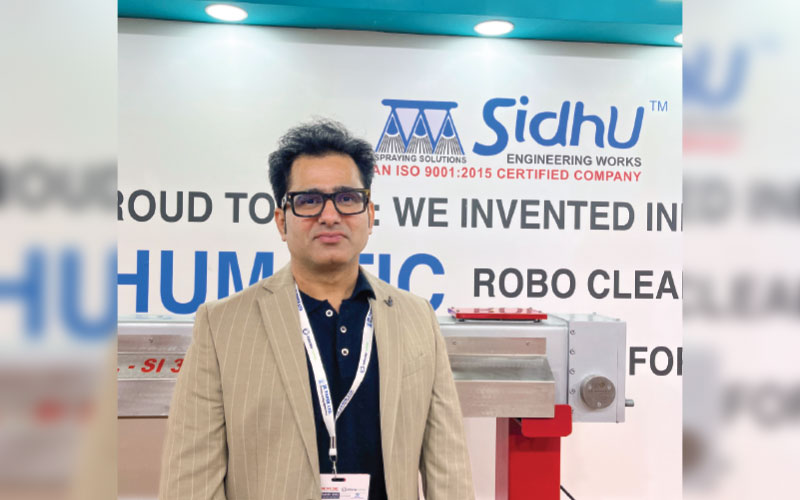
Paper Mart: Tell us about your participation at Paperex 2025?
Rahul Basra: At Paperex 2025, we are displaying our latest RoboCleaner technologies, including RoboCleaner systems for the wire section, press section, and SLDS dryer screens. We have also introduced, for the first time in India this year, our Siddumatic motorized edge trim cutter, which is an automated solution. These four products are the key highlights at our stall.
By God’s grace, we have received a huge response. Many of our existing customers and industry colleagues visited our stall, and both the first and second days were very good. A lot of visitors appreciated our invented products, which is very encouraging.

Watch: Top Paper Companies 2023
PM: Could you explain the core concept behind the RoboCleaner system?
RB: RoboCleaner is a product designed for high-speed paper machines. Its primary function is to clean fabrics using very low water consumption, as water is a precious resource. Our motto is to save water globally and remain environmentally friendly. With RoboCleaner, mills can reduce fresh water consumption on paper machines by up to 90 percent, which is a major USP.

We have also introduced, for the first time in India this year, our Siddumatic motorized edge trim cutter, which is an automated solution.
PM: What trends and challenges do you see in the paper industry today?
RB: The biggest trend in the Indian paper industry right now is technology adoption, including AI-based solutions. The market is extremely competitive, margins are low, and mills are under pressure to improve efficiency and productivity. Those who believe in technology and invest in it will succeed.
As for challenges, paper production in India is currently higher than demand, which has reduced paper prices and margins. However, demand for kraft and recycled paper is increasing steadily. I believe that within the next two years, demand and supply will balance, leading to better margins.
With RoboCleaner, mills can reduce fresh water consumption on paper machines by up to 90 percent, which is a major USP.
PM: You mentioned a new development related to dryer screen cleaning. Could you elaborate?
RB: Dryer screen cleaning is one of the most challenging areas for paper mills. For many years, Indian mills depended on European solutions, which were extremely expensive, often costing over one crore rupees, making them unaffordable for most mills. As a result, many mills compromised on machine performance.
This year, Sidhu Engineering Works successfully launched an India-made RoboCleaner for dryer screens. Over the last three months, we have installed this system in some leading paper mills and achieved 100 percent positive results. This is a major breakthrough, and many mills are now approaching us for this solution at an economical price.
Also Read: Roto Pumps Launches New Range of Pumping Solutions for the Paper and Pulp Industry
PM: Any closing thoughts you would like to share?
RB: People know me as a technology-driven person, and that trust reflects in the response we received at the exhibition. Our focus is to continue developing practical, affordable, and innovative technologies for the paper industry.
This year, Sidhu Engineering Works successfully launched an India-made RoboCleaner for dryer screens. Over the last three months, we have installed this system in some leading paper mills and achieved 100 percent positive results.