
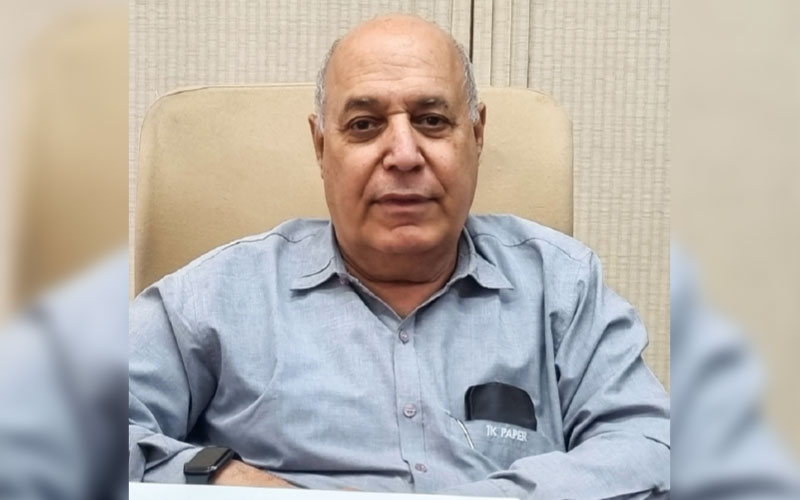
In an exclusive interview with Paper Mart, Mr. Pavan Kumar Suri, Technical Advisor, shares that JK Paper Limited’s core processes such as stock preparation, paper machines, pulp mills utilities, chemical recovery, and water management are controlled through a centralized DCS/QCS platform. The company balances cost and performance in technologies by focusing on lifecycle value and ROI rather than upfront costs. In the last 3–5 years, the company has achieved improvements in energy efficiency, water consumption, and chemical optimization through advanced automation, process control, and resource management initiatives, improving its productivity and reducing downtime. The next level of competitiveness will come through better utilization of existing technologies and stronger integration across processes, supported by digitalization and AI-based analytics.
Paper Mart: Could you walk us through the current technology landscape in your mill, particularly the key systems deployed across process areas such as stock preparation, paper machines, automation, energy, water, and chemical control, and indicate whether these are fully integrated or implemented in a more selective manner?
Pavan Kumar Suri: Our mill operates at a high degree of automation and integration. Stock preparation, paper machines, pulp mills utilities, chemical recovery, and water management are controlled through a centralized DCS/QCS platform. Online monitoring is available for key quality, energy, and process parameters. While core production processes are fully integrated, some auxiliary and support systems are selectively automated and interfaced with the central control system. We are continuously enhancing digitalization, process analytics, and energy optimization across the mill.

Watch: Top Paper Companies 2023
PM: How would you assess the extent to which your installed technologies are being optimally utilized in day-to-day operations, and what factors, in your experience, prevent full utilization of these systems?
PKS: Overall, we are utilizing a significant portion of the available technology capabilities; however, there is always scope for improvement. The main constraints to full utilization are changing production requirements, varying raw material quality, operator skill levels, legacy equipment interfaces, and the need to balance process stability with advanced optimization features. In some cases, lack of real-time data integration, training gaps, and limited use of analytics tools also prevent organizations from realizing the full potential of installed systems. Continuous training, digitalization, and performance reviews help improve utilization over time.

The key lesson for successful technology deployment depends not only on selecting the right technology and assumption considering overall impact but also on effective implementation, integration, operator adoption, and continuous performance monitoring.
PM: In your view, which technologies or systems within your mill are currently underutilized or not delivering their full potential, and what are the underlying reasons: whether operational, economic, skill-related, or linked to process variability?
PKS: The most underutilized technologies are typically advanced process control, predictive maintenance, and data analytics tools.
The reasons for under utilization are usually operator adoption challenges, raw material variability, integration issues with older systems, and a stronger focus on production continuity than optimization. With better training and digital integration, these systems can deliver much greater value.
PM: Despite increasing levels of automation, are there specific areas where manual intervention continues to play a significant role in your operations, and what drives the need for such overrides?
PKS: Yes, despite high levels of automation, manual intervention remains important in areas such as raw material handling, finishing house, startup and shutdown operations, quality troubleshooting, maintenance activities, and handling process upsets.
These interventions are typically driven by raw material variability, changing customer requirements, unexpected equipment behaviour, sensor inaccuracies, or situations where operator experience and judgment can respond more effectively than predefined control logic. The objective is always to minimize manual overrides while maintaining safety, quality, and production stability.
PM: Which sections of your mill continue to face the greatest operational challenges or variability despite the presence of modern equipment and systems, and what are the key issues you encounter in these areas?
PKS: The greatest challenges are typically in raw material handling and finishing house.
The main issues are raw material variability, quality consistency, and process stability. Despite modern technology, these areas require continuous optimization and close operational attention.
In the last 3–5 years, we have achieved improvements in energy efficiency (5–10%), water consumption (10–20%), and chemical optimization (3–8%) through automation, process control, and resource management initiatives. We have also improved productivity through higher machine efficiency and reduced downtime, while quality consistency has benefited from advanced monitoring and control systems.
PM: How effectively are different systems within your mill (such as process equipment, automation platforms, chemical dosing, and utilities) integrated with one another, and where do gaps in coordination most impact overall performance?
PKS: Core process, automation, chemical, and utility systems are largely integrated through DCS/QCS platforms. However, integration gaps between legacy systems, maintenance data, quality systems, and energy management can sometimes impact optimization and decision-making. Better data connectivity and analytics remain key improvement opportunities.
PM: Over the past three to five years, what measurable improvements have you achieved through technology deployment in terms of energy efficiency, water consumption, chemical usage, productivity, or product quality, and could you share specific examples or figures where possible?
PKS: In the last 3–5 years, we have achieved improvements in energy efficiency (5–10%), water consumption (10–20%), and chemical optimization (3–8%) through automation, process control, and resource management initiatives. We have also improved productivity through higher machine efficiency and reduced downtime, while quality consistency has benefited from advanced monitoring and control systems.
PM: Have there been instances where technology investments did not deliver the expected outcomes, and what lessons have emerged from those experiences in terms of selection, implementation, or integration?
PKS: Yes, some investments have delivered lower-than-expected benefits due to unrealistic assumptions during project evaluation. The key lesson is that successful technology deployment depends not only on selecting the right technology and assumption considering overall impact but also on effective implementation, integration, operator adoption, and continuous performance monitoring.
Also Read: TNPL’S Integrated Technological Approach Translates Into Performance Gain, Resource Efficiency and Market Competitiveness
PM: When planning technology upgrades or investments, how do you approach the balance between cost and performance, and do you typically favour incremental improvements or more integrated, system-wide modernization?
PKS: We balance cost and performance by focusing on lifecycle value and ROI rather than upfront cost alone. We typically implement incremental improvements for continuous optimization, but for major bottlenecks or strategic objectives, we prefer integrated modernization that delivers long-term operational and business benefits.
PM: Looking ahead, what do you believe will drive the next level of efficiency and competitiveness in Indian paper mills: greater adoption of new technologies, better utilization of existing systems, or stronger integration across processes? What specific changes would make the most meaningful impact in your own operations?
PKS: I believe the next level of competitiveness will come primarily from better utilization of existing technologies and stronger integration across processes, supported by digitalization and AI-based analytics. For our operations, the greatest benefits would come from improved process integration, predictive maintenance, energy optimization, and real-time performance monitoring rather than simply adding more standalone technologies.