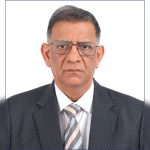
In an exclusive interaction with Paper Mart, Mr. SVR Krishnan, CEO, Sripathi Paper and Boards Pvt. Ltd., shares that the technology upgrades/ capex investments are made very judiciously in the mill, considering the cost vs performance criteria, purpose alignment and the objective of the company. Keeping the ESG compliance in mind, the mill evaluates the total cost of ownership (TCO), rather than focusing solely on the upfront cost of equipment and machinery, when making purchasing decisions.
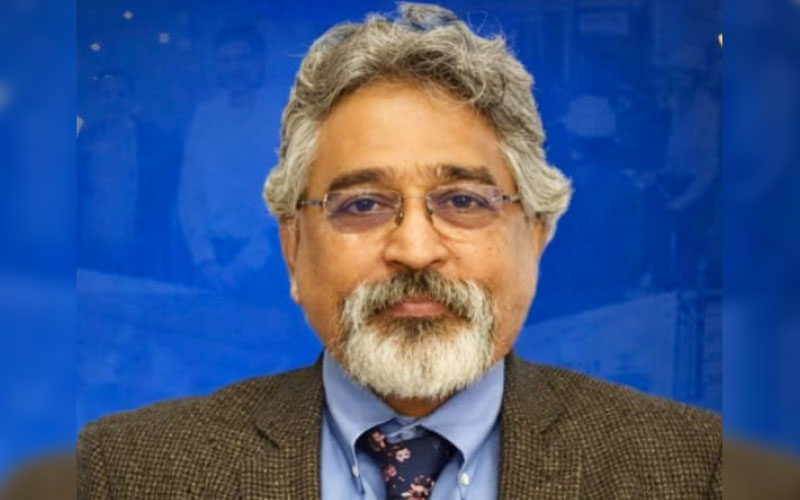
Paper Mart: Could you walk us through the current technology landscape in your mill, particularly the key systems deployed across process areas such as stock preparation, paper machines, automation, energy, water, and chemical control, and indicate whether these are fully integrated or implemented in a more selective manner?
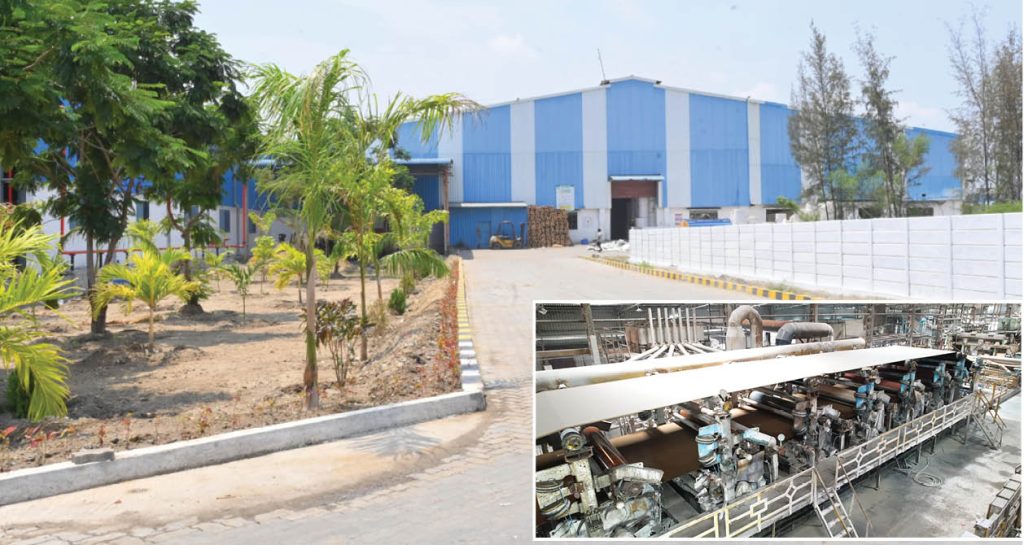
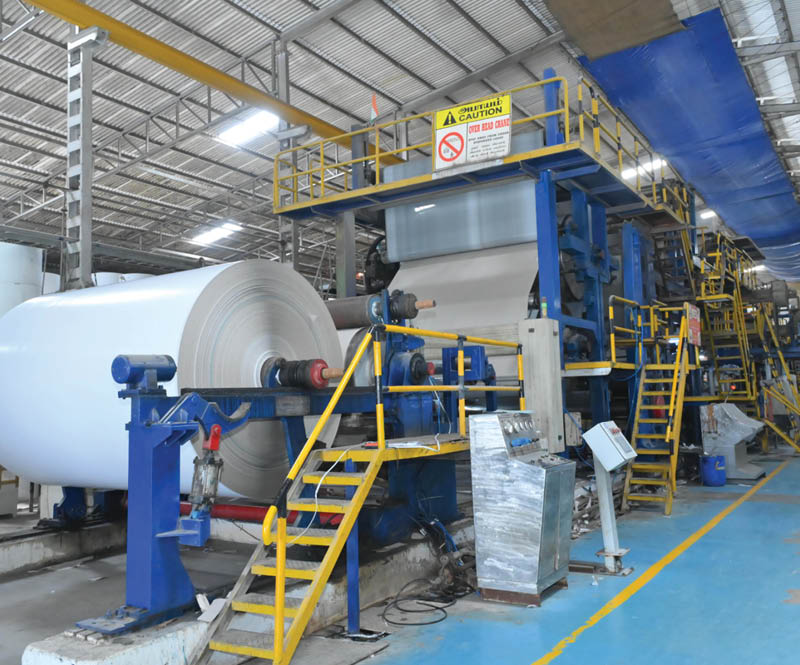
SVR Krishnan: As on date Sripathi Paper & Boards mill is like “One-Stop-Shop” for writing & printing papers, newsprint, kraft paper varieties and coated & uncoated packaging boards, with the capacity of 300 tonnes per day of paper and 500 tonnes per day of packaging boards. The paper machines are quite old but well maintained with the minimum required automation controls. The board machines are equipped with modern DCS, QCS and other on-line control systems.
The board machine #2 has been rebuilt by Bellmer, for the multi fourdrinier wires and press section, with the incorporation of shoe press, in the year 2016-17 and this machine makes the best quality of the coated packaging boards and uncoated liner boards for the match industry.
Majority of the wet end equipment is supplied by Voith and AFT and the process and quality control systems by Valmet. Sripathi Paper and Boards also has the POM system by AFT, for faster quality and grade changes and with a typical ZLD plant, for all the grades of paper and board.
We don’t let out any process water outside, even on our own land. Our freshwater consumption is hardly 1500m3 per day, which works out to less than 2m3 per tonne, which is one of the lowest in the country, for a mill making multiple grades of brown, grey and white paper/paperboard etc.
In the energy front, we have installed and commissioned energy efficient vacuum blowers on the selected board machine and paper machine and have also installed and commissioned our first NRSW & RDF (Non-Recycled Solid Waste and Residue Derived Fuel) multi fuel boiler, with the capacity of 60 TPH from Thermax and 10 MW TG from Siemens. With this, we will be substantially reducing the fossil fuel/coal consumption and dependence on the state grid.

Watch: Top Paper Companies 2023
PM: How would you assess the extent to which your installed technologies are being optimally utilized in day-to-day operations, and what factors, in your experience, prevent full utilization of these systems?
SK: The assets and the selected technologies are fully leveraged and utilised in day-to-day operations. As we are operating the mill in the water stressed region, the quality of the ground water is so hard that the load on the DM plant and RO systems is very high and the specific chemical consumptions are also higher, compared to others. We are working on these issues now with very renowned experts in the water chemistry field.
PM: In your view, which technologies or systems within your mill are currently underutilized or not delivering their full potential, and what are the underlying reasons: whether operational, economic, skill-related, or linked to process variability?
SK: The machines are not delivering their full potential, with respect to their installed capacity, due to the issues related to the water chemistry and the under performance of the process and specialty chemicals, used in the stock preparation and also at the short circulation/approach flow systems.
It is more related to the water resource/water scarcity and also the financial feasibility of an elaborate system for the freshwater treatment and Effluent Treatment Plant (ETP), in the given scenario of the market and the realisation for the paper mills.
For any paper mill to operate on a continuous basis, they are well connected systems and integrated with one another. … Stronger integration of the processes are more important these days for the design of the well-connected factories/ manufacturing facilities. We need to be agile and swift in shifting the gears, to stay competitive.
PM: Despite increasing levels of automation, are there specific areas where manual intervention continues to play a significant role in your operations, and what drives the need for such overrides?
SK: There are minimum required levels of automation at the mill, and we need to have physical manual intervention, in the areas of raw material handling & sorting, paper tail passing and in the finishing house operations & material handling.
Ours being the ground floor machine, the broken handling during every web break is very labour intensive and time consuming. Sometimes the breaks at the dryer section, or the coater sections, take more than 30-40 minutes, which otherwise would hardly take less than 10 minutes in most of the other mills.
With this kind of wastepaper quality coming down post COVID, and the waste paper prices keep going up due to various geo-political reasons, we need to go for the cheaper raw material alternatives and engage a good number of labourers for the sorting operations to maintain the required final product quality.
Old facilities like ours, having lower capacity machines, for each grade of production, do not have conveyors at every location for the reels and pallets movements. All the reels and the pallets are handled manually by contract labourers in all the finishing houses.
PM: Which sections of your mill continue to face the greatest operational challenges or variability despite the presence of modern equipment and systems, and what are the key issues you encounter in these areas?
SK: As already explained, the fresh water treatment plant and ETP face the greatest challenges, due to the poor fresh water quality/availability and the poor quality of the processed water, after the treatment plant.
Any correction of the layout and additional equipment is proving to be more expensive, in terms of the shut/isolation requirement and the capex for both the plants, considering the complexity of the operation for making various grades at the same facility/ location.
PM: How effectively are different systems within your mill (such as process equipment, automation platforms, chemical dosing, and utilities) integrated with one another, and where do gaps in coordination most impact overall performance?
SK: All these are fundamental requirements now, for any paper mill to operate on a continuous basis, they are well connected systems and integrated with one another. It is to be mentioned here that the technology and the systems are selected only based on the design similarity, which can be easily swapped and balanced with respect to capacity with the downstream operation.
It is the Human Intelligence (HI) backed up by Artificial Intelligence (AI) that results in Business Intelligence (BI).
PM: Over the past three to five years, what measurable improvements have you achieved through technology deployment in terms of energy efficiency, water consumption, chemical usage, productivity, or product quality, and could you share specific examples or figures where possible?
SK: We have done many technological advancements like replacing the inefficient vacuum pulps with the vacuum blowers, with the saving of 15-17% energy, additional sheet cutter debottlenecking the conversion constraints to improve our on time delivery (OTD).
We are one of the paper mills which has the lowest fresh water consumption less than 2m3 per tonne, and has installed web detecting & defect identification cameras considering the issues with the process water quality/system deposits which cause holes and with all these we have launched three new brands of packaging boards and two new brands of paper (one in kraft and one in writing & printing paper).
PM: Have there been instances where technology investments did not deliver the expected outcomes, and what lessons have emerged from those experiences in terms of selection, implementation, or integration?
SK: No such negative experience so far, as all the investments are very thoughtfully made.
PM: When planning technology upgrades or investments, how do you approach the balance between cost and performance, and do you typically favor incremental improvements or more integrated, system-wide modernization?
SK: Here, in Sripath Paper and Boards, technology upgrades/ capex investments are made very judiciously, considering the cost vs. performance, alignment with the purpose and objective of the company, by keeping the ESG (Environment, Social, Governance) compliance in mind. When we talk of cost, we consider the TCO (Total Cost of Ownership) not the cost of the equipment/ machinery alone.
Also Read: Valmet Advocates for Integrated Machinery Architecture, Actionable Tools & System Optimization in Indian Mills
PM: Looking ahead, what do you believe will drive the next level of efficiency and competitiveness in Indian paper mills: greater adoption of new technologies, better utilization of existing systems, or stronger integration across processes? What specific changes would make the most meaningful impact in your own operations?
SK: In my opinion, there must be the convergence of new/contemporary technology, policy governance and sustainability. While we talk about sustainability, it automatically covers the fullest leverage and utilisation of the existing assets and resources.
Stronger integration of the processes are more important these days for the design of the well-connected factories/ manufacturing facilities. We need to be agile and swift in shifting the gears, to stay competitive.
It is the Human Intelligence (HI) backed up by Artificial Intelligence (AI) that results in Business Intelligence (BI). Hence my slogan for Success is “Triple P” (People – Planet- Profit) , take care of the first two ‘Ps’, and third ‘P’-Profit will follow.