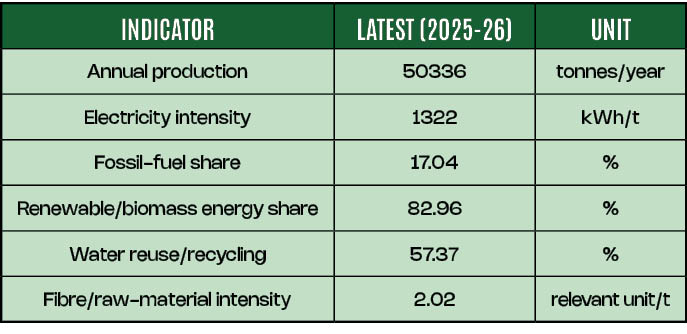
In an exclusive interview with Paper Mart, Ms. Ruchi Bhaisora, Ecology Lead, Pakka Limited, discusses the company’s ongoing efforts to advance the green transition through adopting renewable energy, process efficiency and circular resource management. Pakka’s initiatives include biomass-based power generation, biogas recovery and reuse, upgrades to effluent treatment, water management, and improved sludge management. The company is also strengthening sustainable fibre sourcing through the use of sugarcane bagasse, while recovering process chemicals with an overall efficiency of 95% and reprocessing 70.44% of its total solid waste in FY2025–26. Under Project Jagriti, a 15 MW power plant is in the final stage of commissioning, expected to raise the mill’s installed power-generation capacity from 8.5 MW to 23.5 MW. Ms. Bhaisora also outlines the company’s priorities for 2030, including water positivity, a 50% reduction in absolute Scope 1 and Scope 2 greenhouse gas emissions, expanded green cover, improved air quality and the development of compostable flexible packaging solutions.

Paper Mart: What measurable progress has your mill made since 2022–23?
Ruchi Bhaisora: Pakka has taken the following steps in our journey towards green transition-
Renewable Energy Expansion: Since 2022–23, our mill has continued to strengthen its renewable energy infrastructure to reduce dependence on grid electricity. Our existing facilities comprise two power plants with installed capacities of 2.5 MW and 6 MW, respectively, utilizing rice husk, pith, and biogas as fuel. Under Project Jagriti, a new 15 MW power plant is at the final stage of commissioning. Upon commissioning, our total installed power generation capacity will increase from 8.5 MW to 23.5 MW, representing an increase of approximately 176%. This expansion is expected to enhance the utilization of biomass-based renewable energy, improve energy self-reliance, and reduce our reliance on grid-supplied electricity, thereby supporting our long-term environmental sustainability objectives.
Effluent Treatment Plant (ETP) Upgradation: We have replaced the conventional lagoon-based treatment system with an Anaerobic Reactor (IC Reactor) to improve the treatment of high-COD wastewater. This technology supports anaerobic treatment and biogas recovery, enabling the recovered biogas to be utilized as fuel in the power boiler. The upgrade also reduces the land requirement for wastewater treatment. Additionally, the aeration system has been upgraded to Integrated Fixed-Film Activated Sludge (IFAS) technology, supported by an energy-efficient screw blower. These improvements enhance biological treatment performance and help optimize energy consumption in the wastewater treatment process.
Sludge Management Improvement: We have installed screw press and belt press systems to improve sludge dewatering and reduce sludge volume. This helps minimize the quantity of sludge requiring transportation and disposal, thereby improving waste handling efficiency.

Watch: Top Paper Companies 2023
PM: How is the mill reducing energy use and carbon emissions?
RB: Pakka is committed to reducing energy consumption and carbon emissions through a combination of renewable biomass-based power generation, biogas utilization, and continuous energy-efficiency improvements. Key initiatives include optimizing motor capacity, installing Variable Frequency Drives (VFDs) to regulate energy use according to process requirements, optimizing operating processes and interlocking equipment to prevent unnecessary operation. Additionally, biogas recovered from wastewater treatment is reused as boiler fuel, improving resource utilization and reducing reliance on other fuels. Together, these measures enhance operational energy efficiency, minimize energy losses and contribute to reducing the mill’s carbon footprint.

Pakka is committed to reducing energy consumption and carbon emissions through a combination of renewable biomass-based power generation, biogas utilization, and continuous energy-efficiency improvements.
PM: How far has water use been reduced?
RB: Our mill continues to strengthen its water conservation and recycling practices to improve water-use efficiency and reduce freshwater dependency.
Water Reuse and Recycling: We have increased the reuse and recycling of water within our operations. The water reuse rate improved from approximately 33.57% in 2022–23 to 57.37% in 2025–26, representing an increase of approximately 23.80 percentage points. This reflects our continued efforts to maximize water reuse and minimize freshwater demand through improved water management practices.
PM: What is changing in fibre sourcing and efficiency?
RB: Pakka uses sugarcane bagasse, an agricultural residue, as its primary fibre source for manufacturing pulp, paper, and compostable packaging. Raw materials are sourced within a 200 km radius, helping support local supply chains and reduce transportation-related emissions. The use of bagasse promotes the productive utilization of agricultural by-products and provides a renewable alternative to conventional wood-based fibres. In parallel, the company is exploring alternative fibre sources to further diversify its raw material options and strengthen the sustainability of its sourcing practices.

PM: What has improved in effluent, emissions and chemicals?
RB: Effluent Management: Wastewater treatment capabilities have been strengthened through technological upgrades, improving the treatment process and supporting better control over effluent quality. Continuous monitoring of BOD, COD, suspended solids, pH, and color helps assess treatment effectiveness and maintain compliance with environmental standards.
Air Emissions: Emission monitoring, pollution-control systems (ESP, Wet scrubber), preventive maintenance, and boiler-operation optimization support the control of particulate matter emissions.
Chemical Management: Chemical management focuses on efficient dosing, minimizing avoidable consumption, and recovering and reusing chemicals wherever technically feasible. This supports better resource utilization and helps reduce process losses. Additionally, our chemical recovery plant currently achieves an overall recovery efficiency of 95%. This reflects effective recovery and reuse of process chemicals, helping minimize chemical losses and reduce the requirement for fresh chemical inputs.
PM: How much of the mill’s waste is now being recovered or reused?
RB: During FY 2025–26, our mill reprocessed 70.44% of its total solid waste, reflecting our commitment to resource efficiency, waste minimization, and circular economy practices.
Our key waste recovery and valorization initiatives include:
Fiber Recovery and Reuse: Fibrous waste generated from various machines and the pulp mill is transferred to our egg tray manufacturing plant, where the fibers are recovered and utilized in egg tray production. This initiative helps minimize waste disposal and converts process residue into valuable products.
Lime Sludge Valorization: Lime sludge generated during our manufacturing operations is supplied to the cement industry for beneficial utilization, enabling resource recovery and reducing the quantity of waste requiring disposal.
During FY 2025–26, our mill reprocessed 70.44% of its total solid waste, reflecting our commitment to resource efficiency, waste minimization, and circular economy practices.
PM: What are the mill’s next measurable targets?
RB: Achieve Water Positivity by 2030: We aim to become water-positive by 2030 by replenishing more freshwater than we consume across our operations. This will be achieved through initiatives such as rainwater harvesting, pond rejuvenation, and groundwater recharge. Our progress will be measured by the volume of freshwater replenished compared with the total freshwater consumed by the mill, ensuring a positive contribution to local water resources.
Reduce Absolute Scope 1 and Scope 2 GHG Emissions by 50% by 2030: Our target is to reduce absolute Scope 1 and Scope 2 greenhouse gas emissions by 50% against the established baseline. We plan to achieve this through improved energy efficiency, increased utilization of renewable energy, and reduced dependence on grid electricity.
Expand Green Cover, Enhance Biodiversity and Improve Air Quality by 2030: Having already developed a Miyawaki forest near our plant, Pakka aims to further expand green cover through the development of an additional Miyawaki forest and the strengthening of green belt areas within and around the plant premises. The initiatives will focus on planting native species, promoting local biodiversity, and improving the surrounding environment.
Improve Air Quality and Maintain AQI Below 100 by 2030: Additionally, we aim to maintain the Air Quality Index (AQI) below 100 by 2030 through continuous air-quality monitoring, effective emission control measures and regular maintenance and optimization of pollution-control systems. Progress will be tracked through green-cover expansion, sapling survival rates, and air-quality monitoring data.
Also Read: Paper Mart Emagazine Oct-Nov, 2026
PM: What will make the next significant difference?
RB: Enhancement of In-house Renewable Power Generation – (Final Stage of Commissioning):
A key initiative to improve our environmental performance is the expansion of our in-house power generation capacity through Project Jagriti. The mill currently operates two power plants with capacities of 2.5 MW and 6 MW, using rice husk, pith, and biogas as fuel. An additional 15 MW power plant is in the final stage of commissioning.
Once operational, the total installed generation capacity will rise from 8.5 MW to 23.5 MW, an increase of approximately 176%. This development is expected to increase the contribution of biomass-based energy to our power requirements, lower reliance on external electricity sources, and strengthen the integration of renewable energy into our operations.
Water Resource Conservation and Replenishment (Target: Water Positivity by 2030)
Another major focus area is the responsible management of water resources, with the objective of achieving water positivity by 2030. Planned and ongoing efforts include rainwater collection, restoration of ponds and groundwater recharge to support the replenishment of local water sources. We have already adopted nine ponds for restoration and rejuvenation.
The effectiveness of these measures will be assessed by comparing freshwater replenished against freshwater consumed by the mill. The initiative is expected to improve water resource availability in the surrounding area, promote sustainable water use and reduce the overall impact of our operations on local freshwater reserves.
Development of Flexible Packaging
Another major focus area is the development of flexible packaging.